

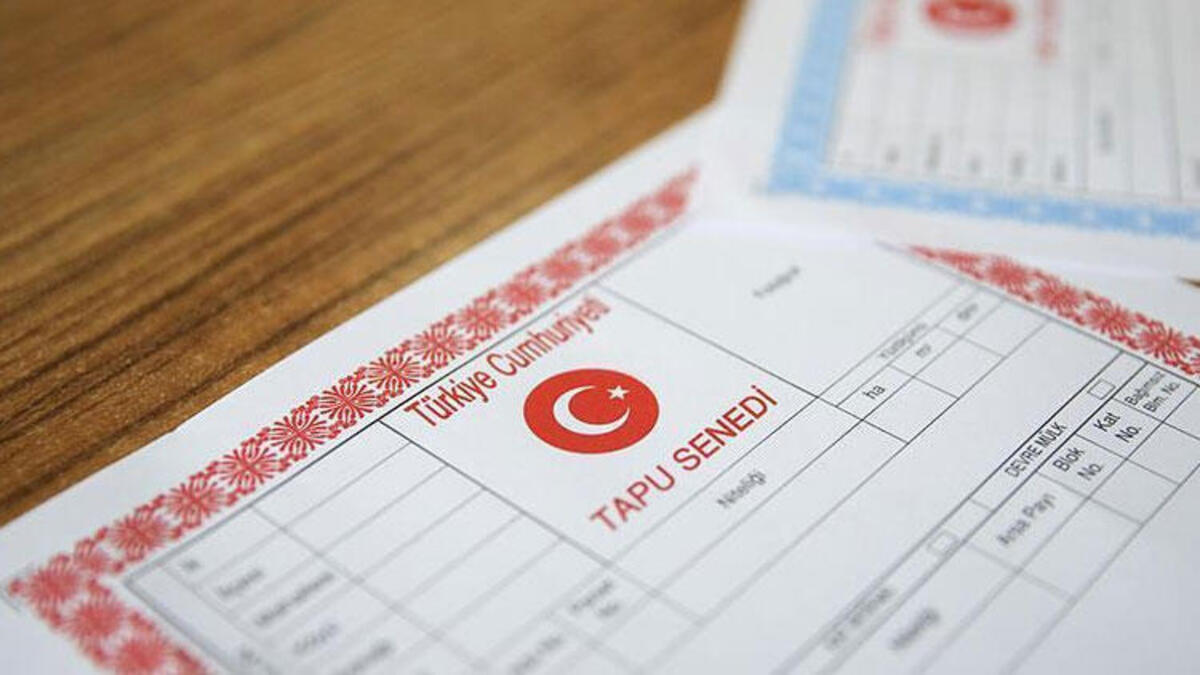
Vasiyetname: How to Make a Turkish Will for Your Property
Turkish law decides what happens to Turkish real estate, and it recognises its own will instrument — the vasiyetname. Here are the three forms it comes in, the formalities that make each one stand up, and the reserved shares no will can cut out.
A will made at home is not the instrument Turkish law is looking for
Most foreign owners of Turkish property have made a will somewhere. It was drawn up in London or Berlin or Dubai, it lists the house, the pensions and the bank accounts, and somewhere in it there is a line about “any other property I may own”. The assumption is that the apartment in Antalya travels with everything else. It does not, at least not automatically, because succession to real estate located in Turkey is assessed under Turkish law and registered by a Turkish land registry that will want to see something it recognises.
Our guide to inheritance law in Turkey sets out that rule and what the heirs of a foreign owner actually have to do. This guide is the other half of the question: not what happens if you do nothing, but what the Turkish instrument looks like if you decide to do something. That instrument is the vasiyetname — a will made in one of the forms the Turkish Civil Code (Law No. 4721) recognises.
What follows is the structure of the three recognised forms, the formalities that decide whether each one survives a challenge, the limits on what you can direct, and the sequence worth following. It is a briefing rather than legal advice. Statutory wording and practice change, every family is different, and a will is exactly the document where a formality defect only shows up when you are no longer available to fix it. Confirm the current position with a licensed Turkish lawyer before you act on anything here.
Vasiyetname — At A Glance
The framework as the sources consulted describe it
Making a vasiyetname, in the order that actually works
Written as a sequence because the commonest failures are ordering failures — people choose a form before they know what they are allowed to direct.
Establish which assets Turkish law reaches
Before drafting anything, separate your Turkish real estate from the rest of your estate. The point of the exercise is not to produce a single global document but to know which of your assets Turkish succession rules govern, and whether your existing arrangements already do something sensible with them. For most foreign owners this is one apartment or one villa, and the answer is quick.
Work out your reserved-share position
The reserved portion (saklı pay) decides how much of the estate you can actually direct. It depends on who survives you — children, a spouse, parents — so it has to be calculated against your real family, not in the abstract. Until you know the free portion, you do not know what there is to write a will about.
Choose the form deliberately
The official will made before a notary is the default for anyone with property and heirs in more than one country, because it is drafted by an official, witnessed, and kept on file. The handwritten will is quicker and private but fails on small formality defects. The oral will is an emergency instrument and is not an estate-planning choice at all.
Draft in language that survives translation
A Turkish will that disposes of Turkish real estate should identify the property the way the register does — province, district, block and parcel — rather than by a marketing name or a street address. Our guide to the tapu and the title deed system explains which identifiers matter, and parsel sorgu is how you look them up.
Execute it with the right people in the room
For an official will this means a competent official and two witnesses, none of whom may be a beneficiary or closely related to one. The exclusions are strict and they are the single most common reason an otherwise sensible will is attacked later. Check the list before the appointment rather than at it.
Make sure it can be found
A will nobody knows about does nothing. An official will is held by the official who drew it up; a handwritten one can be deposited with a notary or magistrate for safekeeping. At minimum, one person who will outlive you should know the Turkish will exists, which form it takes and who to contact about it.
Review it when the facts change
A vasiyetname can be revoked or replaced at any time while you have capacity. Marriage, divorce, a new child, selling the Turkish property or buying another one all change either the reserved-share arithmetic or the subject matter. A will that was right in 2020 and has not been looked at since is a document working from stale facts.
What each form of vasiyetname requires
Turkish law recognises three. They are not interchangeable, and the formalities are what decide whether the document holds.
Official will (resmî vasiyetname)
Drawn up by a competent official — a notary, a justice of the peace or another officer authorised by law — in the presence of two witnesses. The testator reads and signs the text, the official dates and signs it, and the testator declares before the two witnesses that the document contains their last wishes. Articles 532 to 537.
Handwritten will (el yazılı vasiyetname)
Must be written out entirely in the testator’s own hand, carry a clear date and be signed by hand. No witnesses are needed. A will of this kind that contains typed text fails the form requirement. It can be deposited with a notary, magistrate or authorised officer, open or sealed. Article 538.
Oral will (sözlü vasiyetname)
Available only in extraordinary circumstances where neither other form is possible — imminent danger of death, illness, war. The testator declares their wishes to two witnesses; one records them with the place and date, both sign, and it is presented to the competent court. Articles 539 to 541.
The oral will expires
An oral will is a stopgap, not a plan. Once the testator is again able to make a will in one of the other two forms, the oral will lapses one month later. Anyone relying on one as their arrangement for a Turkish property has an arrangement with an expiry date on it.
Who cannot officiate or witness
For an official will, the sources consulted exclude those lacking capacity to act, those barred from public service by court decision, people who cannot read and write, and the testator’s spouse, descendants and blood relatives, as well as siblings and their spouses. Involving an excluded person puts the will at risk.
Capacity is judged at the moment of signing
Article 502 requires the testator to have reached fifteen and to have sound judgement. Capacity is assessed at the time the will is executed, which is why contemporaneous evidence of it — and an official rather than a private form — matters so much where a challenge is foreseeable.
Choosing between the official and the handwritten will
For an overseas owner the practical choice is almost always between these two. The oral will is included only to show why it is not an option.
| Official (Arts. 532–537) | Handwritten (Art. 538) | Oral (Arts. 539–541) | |
|---|---|---|---|
| Available as a planning choice | Да | Да | Emergency only |
| Official drafts the document | Да | Нет | Нет |
| Witnesses required | Two | Нет | Two |
| Must be fully handwritten | Нет | Да | Нет |
| Dated and signed by the testator | Да | Да | Recorded by a witness |
| Usable if you cannot read or write | Да | Нет | Да |
| Held on file by an official | Да | Only if deposited | Нет |
| Risk of being lost or suppressed | Low | Higher | Higher |
| Exposure to formality defects | Lower | Higher | Highest |
| Expires by operation of law | Нет | Нет | One month |
| Revocable while you have capacity | Да | Да | Да |
For an owner who lives outside Turkey, the official will is usually the better instrument, and the reason is evidential rather than legal. A will drawn up by an official in front of two witnesses, held on file and capable of being produced on request, is a much harder document to attack than a sheet of paper found in a drawer whose date, handwriting and the testator’s state of mind are all now matters of argument. The handwritten will is perfectly valid, and it is free — but it puts every one of those questions on your heirs at the one moment you cannot help them.
There is a language dimension too. A will that disposes of Turkish real estate will be read by Turkish officials and, if contested, a Turkish court. Working through a notary with a sworn translator present is how most foreign owners square the need to understand what they are signing with the need for the document to function in Turkish. If you cannot travel, note that a will is a personal act — a power of attorney lets someone handle a property transaction on your behalf, not make your will for you.
Own property in Turkey and no Turkish will in place?
We work with licensed Turkish lawyers on succession and title. Tell us what you own and we will point you at the right person.
Vasiyetname and Turkish wills — frequently asked questions
What foreign owners of Turkish property ask most often about making, limiting and challenging a Turkish will.
Where to go next
The rest of our succession and title library for foreign owners of Turkish property.
- Inheritance law in Turkey — what happens to your property when you die, and what your heirs must do.
- The tapu and title deed system — how Turkish ownership is recorded and which identifiers matter.
- Takyidat and encumbrance checks — reading what is registered against a property, not just who owns it.
- Hisseli tapu: shared title deeds — what co-ownership gives you, and how it complicates succession.
- Power of attorney in Turkey — what someone can and cannot do on your behalf.
- Do you need a lawyer to buy in Turkey? — when independent Turkish legal advice earns its fee.
- Legal services — title deed work, due diligence and succession support.
- Turkey property guides — the full library for foreign buyers and owners.
Sources
The statutory framework described above is reproduced from the following commentaries on Turkish Civil Code No. 4721, all retrieved on 14 October 2026. The official text of the Code is published by the Turkish government at mevzuat.gov.tr, which we were unable to reach while preparing this article; where the sources below did not supply a figure, none has been stated here.
- Gürülkan Çakır Günay Avukatlık Ortaklığı, “Making a Will in Türkiye: Formalities and Key Considerations”, dated 9 October 2023 — forms, formalities and excluded witnesses.
- CBHukuk, “Validity Requirements for a Last Will and Testament in Turkey”, last updated 5 October 2026 — article numbers for the three forms, capacity and reserved shares.
- Istanbul Lawyer Firm, “Wills in Turkey: Drafting, Probate and Inheritance Distribution”, published 5 July 2025 and updated 10 May 2026 — reserved-share fractions, the reduction action and the Article 559 time limits.
This guide is general information, not legal advice. Turkish statutory wording, thresholds and procedure change, and a will is the one document whose defects surface when you are no longer able to correct them. Confirm the current position with a licensed Turkish lawyer before acting.
Get your Turkish property into your estate plan
Tell us what you own in Turkey and how your affairs are arranged at home, and we will connect you with a licensed Turkish lawyer who handles succession for foreign owners. We do not give legal advice ourselves — we make sure the person who does has the title position in front of them.



Присоединиться к обсуждению