

Inheritance Law in Turkey: What Happens to Your Property When You Die
If you own real estate in Turkey, Turkish law decides how it passes on — whatever passport you hold and whatever your will at home says. Here is the rule that catches foreign owners out, and the process their families will actually have to run.
One rule decides almost everything: where the property is.
Most foreign owners of Turkish property have given the question some thought and arrived at a comfortable answer. They are British, or German, or Emirati; they made a will at home; the apartment in Antalya will pass with everything else. It is a reasonable assumption and it is the wrong one, for a reason that has nothing to do with anybody’s nationality.
Under Article 20 of Turkey’s International Private and Procedural Law No. 5718, succession is as a general rule governed by the national law of the deceased — with one carve-out. Turkish law applies to real estate situated in Turkey. That carve-out is not a technicality. It is the whole answer for the single largest asset most foreign owners hold in the country.
The principle behind it is called lex rei sitae: rights over real property are governed by the law of the place where the property sits. As the framework is summarised in the International Bar Association’s June 2026 overview of foreign heirs and Turkish real estate, the transfer of real estate located in Turkey by way of inheritance, and its registration at the land registry, will be assessed under Turkish law whether or not the deceased or the heir is a foreign national.
This guide sets out what that means in practice: which law applies to what, the document your heirs cannot proceed without, why the notary route is closed to them, what happens when Turkish ownership restrictions collide with an inheritance, and the point at which the land registry stops waiting. For the ownership mechanics underneath all of this, start with our explainer on the Turkish title deed, and see our legal services overview.
Turkish Succession — The Framework
What governs which part of a cross-border estate
What owners assume, and what Article 20 actually does
None of these assumptions are foolish. They are simply based on how succession works somewhere else, and Turkish real estate does not follow that pattern.
| The assumption | What the law actually provides | What it means for your family |
|---|---|---|
| “My home country’s law covers everything I own.” | Article 20 of Law No. 5718 carves out real estate situated in Turkey and applies Turkish law to it. | Analyse the estate asset by asset. The Turkish apartment sits under a different legal system from the rest. |
| “My will at home deals with the villa.” | A foreign will cannot override the Turkish rules governing Turkish real estate. | Have a Turkish lawyer review the will against the Turkish asset and identify where they diverge. |
| “The heirs can sort it out at a notary.” | Under Article 71/B of the Notary Public Law, notaries cannot issue a certificate of inheritance for foreign nationals. | Budget for a court application to the competent Civil Court of Peace, not an afternoon at a notary. |
| “We already have a probate document from home.” | A foreign certificate of inheritance must be recognised by a Turkish court before it can be used. | Treat recognition as a separate proceeding with its own timeline, and start it early. |
| “Ownership rules only apply when you buy.” | Article 35 of Land Registry Law No. 2644 restrictions apply to inherited property as well as purchased property. | Check nationality limits, area caps and military zones against your heirs, not just against yourself. |
| “There is no rush to register.” | After two years, the land registry directorate may petition a court independently under Additional Article 1 of the Land Registry Law. | Register while the family still controls the process, rather than waiting for the state to start one. |
| “If nobody claims it, it just sits there.” | Article 20 provides that heirless immovable property in Turkey passes to the Turkish State. | Make sure someone actually knows the property exists. Unclaimed is not the same as safe. |
Why your estate may be governed by two legal systems at once
The instinct to treat an estate as one thing is strong, and in a purely domestic case it is correct. Cross-border estates do not work that way, and Turkish property is a textbook illustration of why.
Article 20 sets a general rule and an exception, and both matter. The general rule is that inheritance is subject to the national law of the deceased. The exception is that Turkish law applies to immovable property located in Turkey. So a German national who dies owning a Berlin bank account, a portfolio of shares and an apartment in Fethiye is not leaving one estate under one law. The apartment is dealt with under Turkish law because it is in Turkey; the movable assets are analysed separately.
The rest of Article 20 fills in the surrounding machinery. Provisions on the opening of the succession, the acquisition of the estate and its distribution are subject to the law of the place where the estate is located. Immovable property in Turkey with no heirs passes to the Turkish State. The form of an inheritance agreement may be governed by one of several alternative laws, and capacity to make a testamentary disposition is determined by the national law of the person making it at the time it was executed.
There is a further layer that foreign owners should raise deliberately rather than wait to be told about. Turkish succession law contains protected-share rules for certain close family members, of the kind that limit how freely an estate can be directed away from them. Whether the disposition you have in mind is achievable under Turkish law, and what a protected share would mean for your particular family, is precisely the sort of question that is cheap to ask in advance and expensive to litigate afterwards. Ask it while you are alive.
The certificate of inheritance, and why the notary cannot help
Nothing moves in a Turkish estate until the heirs have been formally identified. The document that does that is the certificate of inheritance — the veraset ilamı — and it establishes who the legal heirs are and in what proportions. The Land Registry will not transfer title into anybody’s name without it.
In an ordinary domestic case a certificate of inheritance can be obtained from a notary, which is why families often arrive expecting a brief administrative errand. Where the heirs are foreign nationals that route is closed. Under Article 71/B of the Notary Public Law, notaries cannot issue a certificate of inheritance for foreign nationals, and the certificate must instead be obtained from the competent Civil Court of Peace.
The court will need evidence, and the evidence usually has to travel. The petitioner must produce authenticated documentation, translated into Turkish, establishing both the death and the family relationship being claimed. Death, marriage and birth records issued abroad have to be legalised in the country that issued them and then translated by a sworn translator before a Turkish court will act on them. None of this is difficult; all of it takes time, and almost all of that time is spent on paperwork moving between countries rather than on anything a court does.
Once the certificate exists, registration at the Land Registry requires it to be presented alongside identification and, where someone is acting for an heir, the documents evidencing that authority. For heirs who cannot travel, a properly drawn power of attorney is what makes the process workable at a distance; our legal services page covers how that is normally handled.
When Turkish ownership limits meet an inheritance
Turkey places conditions on the acquisition of real estate by foreign nationals, and those conditions do not evaporate because the property is arriving through a death rather than a sale. This is the part of Turkish succession that most surprises families, and the part most worth checking in advance — because unlike almost everything else here, it can change what the heirs end up owning.
Article 35 of Land Registry Law No. 2644 is the source of the constraints. It imposes nationality-based limitations, nationwide caps on the total area a foreign individual may hold, district-level percentage limits, prohibitions on acquiring property inside military zones, and development obligations attaching to certain properties. Our guide to whether foreigners can buy property in Turkey sets out how the same framework applies on the way in; the point here is that it also applies on the way down.
What happens when a restriction genuinely bites is more sensible than people fear, and it is worth stating plainly because the alternative rumour — that the family simply loses the asset — is both common and wrong. Where an impediment to acquisition applies, the property is liquidated and converted into monetary value, and the heir receives the proceeds rather than the title. The economic entitlement is preserved. What is restricted is the ownership itself.
If a sale is the likely outcome for your family — whether because of a restriction or simply because the heirs do not want the property — it is worth understanding that side of the transaction too. Our guide to selling property in Turkey covers the disposal process, and our overview of property taxes in Turkey covers the recurring obligations that continue to attach to a property while an estate is being resolved.
Six things to understand before you need them
Each of these is a place where families reliably lose time, usually because nobody explained the concept until it was already urgent.
Lex rei sitae
Rights over real property follow the law of the place where the property sits. It is why an apartment in Turkey is a Turkish succession question regardless of everyone’s nationality.
Veraset ilamı
The certificate of inheritance: the document establishing who the heirs are and in what shares. For foreign heirs it comes from the Civil Court of Peace, not from a notary.
Recognition of a foreign judgment
A certificate of inheritance issued abroad has to be recognised by a Turkish court before it can be used in Turkey. Plan it as its own proceeding.
Article 35 restrictions
Nationality limits, area caps, district percentage limits and military zone prohibitions under Land Registry Law No. 2644 — applied to inheritances as well as purchases.
Liquidation in place of transfer
Where an heir cannot lawfully acquire the property, it is converted into money and the value paid across. The entitlement survives even when the ownership cannot.
The two-year mark
Inherited property left unregistered for two years may prompt the land registry directorate to petition a court on its own initiative. Drift has a deadline.
What your heirs will actually have to do
Written as the order of operations, because running these steps out of sequence is what turns a manageable process into an expensive one.
Establish what is actually in the Turkish estate
Identify the property precisely — the title deed record, the land registry office it sits under, and any encumbrances registered against it. Heirs frequently begin with an address and a rough memory, and the first weeks go on turning that into a registry reference. An owner can spare their family all of it by writing it down now.
Take Turkish advice on which law reaches which asset
Article 20 splits a cross-border estate. Before anyone files anything, establish which assets Turkish law governs and which are analysed under the deceased's national law, because the answer determines who needs to do what and in which country.
Assemble and legalise the evidence of death and relationship
Death certificate, marriage and birth records, identity documents. These must be authenticated in the country that issued them and translated into Turkish before a Turkish court will act on them. This step is almost always the longest, and it is the one that can be started immediately.
Apply to the Civil Court of Peace for the certificate of inheritance
Where the heirs are foreign nationals the notary route is unavailable under Article 71/B of the Notary Public Law, so the certificate comes from the competent court. If a certificate already exists from the home country, the parallel task is having it recognised by a Turkish court.
Check the heirs against the acquisition restrictions
Run the Article 35 checks against the people actually inheriting: nationality limits, the national area cap, the district percentage limit and military zone status. Do this before registration is attempted rather than discovering an impediment at the counter.
Register the transfer at the Land Registry
Present the certificate of inheritance together with identification and, where an heir is represented, the documents evidencing that authority. Registration is what makes the heirs owners of record — and it is the step that stops the two-year clock running.
The four things an owner can do now that save the most later
Everything above describes work that falls to somebody else, at a point when they are least equipped to do it. Almost all of the cost and delay in a cross-border Turkish estate is created before the death, by omission — and can therefore be removed before the death too.
Write down what you own, precisely. Not “the flat in Alanya” but the title deed details, the land registry office, the parcel and block references and where the deed is kept. Families routinely spend the first month of an estate reconstructing information the owner could have recorded on one page.
Have your existing will read against your Turkish asset. The question is not whether the will is valid where you made it, but whether it does what you think it does to the part of your estate Turkish law governs.
Check your likely heirs against the acquisition rules. If your heirs hold a nationality subject to limitations, or the property is land rather than an apartment, or it sits near a military zone, find out now what that means. A restriction discovered in advance is a planning problem; discovered afterwards it is a forced sale.
Tell somebody the property exists. It sounds trivial and it is the most common failure of all. Article 20 provides that heirless immovable property in Turkey passes to the Turkish State, and property nobody knows about is functionally heirless. At minimum, one person who will outlive you should know the asset is there and who to call about it.
Own property in Turkey and unsure where your family would stand?
We work with licensed Turkish lawyers on title, succession planning and land registry matters for non-resident owners.
Inheritance law in Turkey — frequently asked questions
The questions foreign owners and their families ask most often about wills, certificates and getting a Turkish property into the right names.
Where to go next
The rest of our library for foreign owners, from title deeds and taxes to selling and day-to-day management.
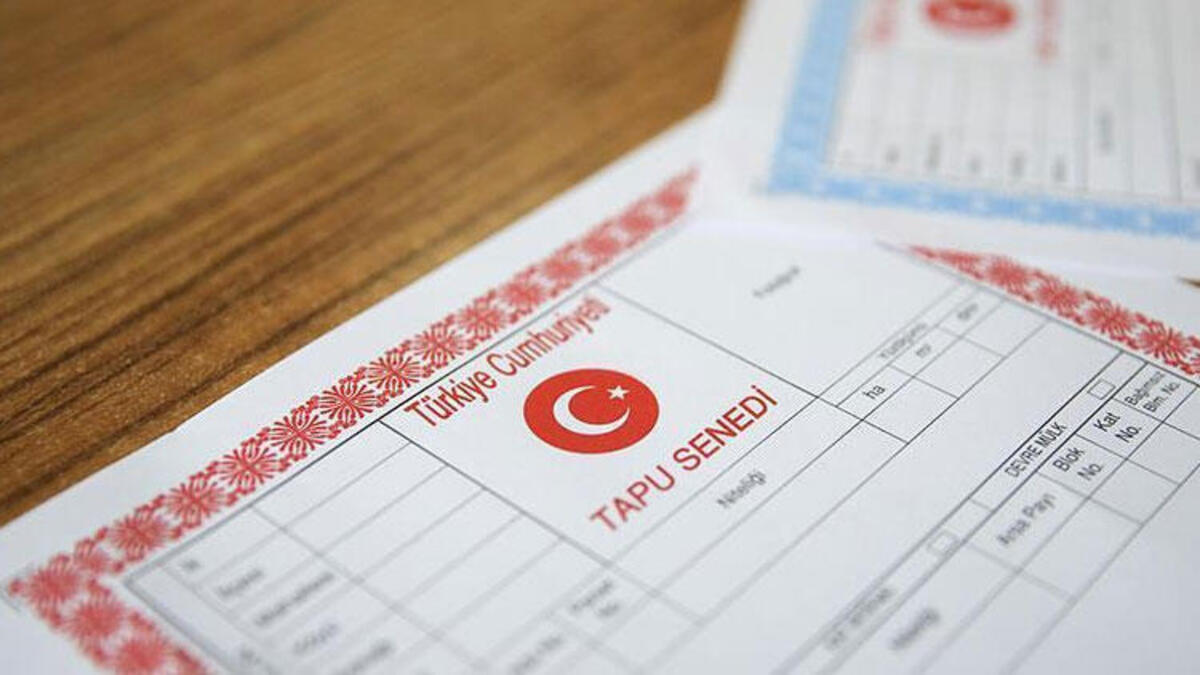
- The Turkish title deed (tapu) — how ownership is recorded and what the deed actually shows.
- Legal services — title work, due diligence and power of attorney for non-resident owners.
- Property taxes in Turkey — the recurring obligations attached to owning Turkish real estate.
- Selling property in Turkey — the disposal process, for heirs and owners alike.
- Can foreigners buy property in Turkey? — the acquisition rules that also govern inheritances.
- Buying property in Turkey: seven pitfalls — the checks that protect ownership from the outset.
- Property management in Turkey — keeping a property running from abroad.
- All Turkey property guides — the full index of our guides for international owners.
Make your Turkish property simple for the people who come after you
Tell us what you own in Turkey and we will put you in front of licensed Turkish lawyers who handle succession, title and land registry work for non-resident owners. It is a short conversation now and a great deal of difficulty removed later.
Buyer’s Guide · Турецкое гражданство · Контакт