
İntifa Hakkı: What a Usufruct on a Turkish Title Deed Means
A usufruct splits a Turkish property in two: someone else holds the right to use it and take its income, while the owner holds what is left. It is registered on the deed, it survives a sale, and it is one of the few encumbrances that can leave you owning a property you cannot enter.
Ownership and the right to use a property are not always the same thing
Turkish property law lets the bundle of rights that normally sits with an owner be pulled apart. The commonest way this happens is the intifa hakkı, the usufruct: a limited real right that gives its holder the use of a property and the fruits it produces, while the registered owner keeps what Turkish practice calls bare ownership — the title, stripped of the right to enjoy the thing.
For a foreign buyer this matters for one blunt reason. A usufruct registered against a property does not disappear because the property is sold. The owner may sell, transfer or encumber the title, and the usufruct carries on against the new owner exactly as it did against the old one. It is entirely possible to complete a purchase, hold a valid tapu in your own name, and have no right to live in the property, let it, or take a lira of rent from it.
This guide explains what a usufruct gives and takes, how it is created and ended, what a buyer should do when one appears in the register, and why it is not automatically something to walk away from. It is a briefing rather than legal advice. Confirm the current position with a licensed Turkish lawyer before you rely on anything here — and before you sign anything over a property that carries one.
İntifa Hakkı — At A Glance
The framework as the sources consulted describe it
What to do when a usufruct appears in the register
A usufruct is not automatically a reason to walk away. It is a reason to stop, price it properly and get the structure of the deal right before any money moves.
Pull the full encumbrance record, not the front of the deed
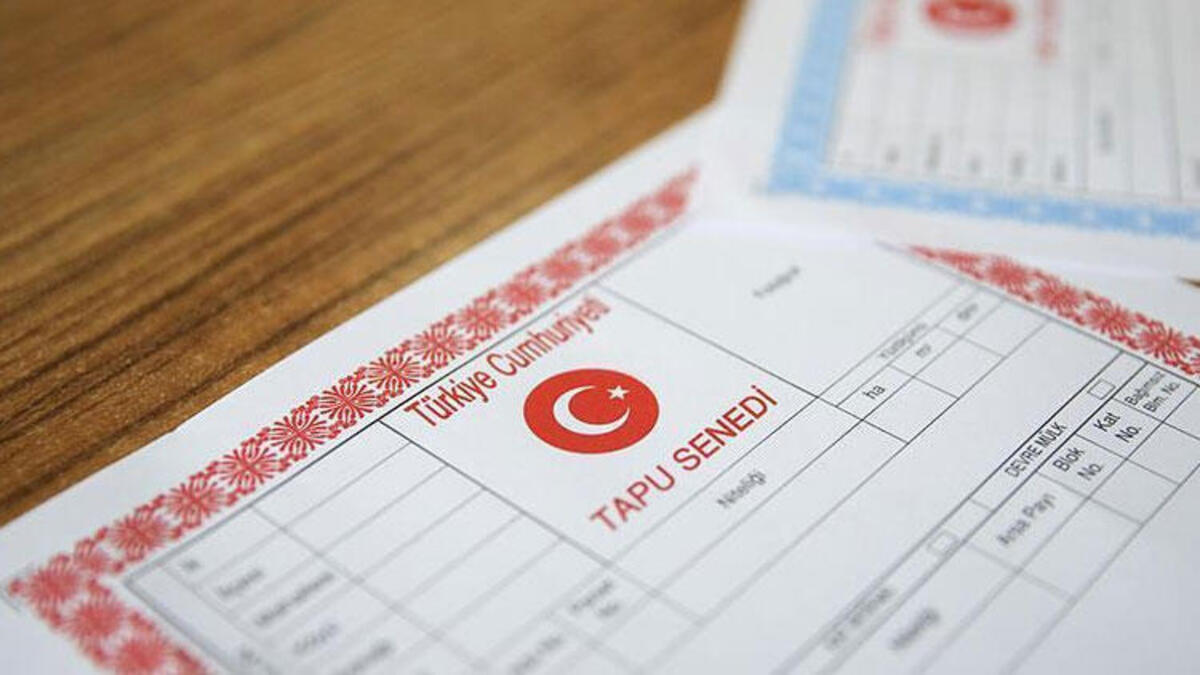
A usufruct is a registered right, which means it appears in the land registry record rather than on the face of a deed certificate. Our guide to takyidat and encumbrance checks covers how to obtain and read that record; Web Tapu is the online route. Looking only at who is named as owner is precisely how buyers miss this.
Establish who the holder is and on what basis
A usufruct held by an individual and one held by a company behave very differently, because the first ends on a death nobody can schedule and the second runs to a term. Find out which you are dealing with, when it was registered, and whether the registration records a term at all.
Work out when it can actually end
For a natural person the right ends on the holder’s death. That is the whole answer, and it is why bare ownership subject to a lifetime usufruct is so hard to value: the duration is unknowable. For a legal entity it ends at the agreed term, or when the entity ceases to exist if no term was set, and in no case may it exceed one hundred years.
Decide whether you are buying ownership or bare ownership
These are different products at different prices and they should never be conflated in a negotiation. If the usufruct is staying in place, you are buying bare ownership, and the listing price, the yield assumptions and your financing all have to be built on that footing rather than on the property’s vacant value.
If the usufruct is meant to go, make its removal a condition
Termination does not clear the register by itself. Even where the right has ended — on death, on expiry of its term, or by the holder renouncing it — an application has to be made to the land registry directorate to cancel the entry. If the deal depends on the property arriving unencumbered, the cancellation must happen before completion, not be promised after it.
Get the rental and occupation position in writing
The holder of a usufruct is entitled to the property’s fruits, and may allow someone else to use the right unless the arrangement says otherwise. That means a property can be occupied by a tenant whose relationship is with the usufruct holder and not with you. Establish who is in the property, under what agreement, and what happens to that agreement on completion.
Have a Turkish lawyer price the structure, not just read it
A usufruct is one of the situations where independent Turkish advice genuinely earns its fee, because the question is commercial as much as legal. Our guide to using a lawyer to buy in Turkey covers what that engagement should include.
The six things that decide what a usufruct is worth to you
Drawn from the provisions the sources consulted cite. Each one changes either what the holder can do or what the owner is left holding.
The holder gets use and the fruits
Under Article 794 a usufruct may be established over movables, immovables, rights or an entire estate, and unless the parties agree otherwise it gives the holder the full use of the asset together with its natural and legal fruits. Natural products and yields arising during the usufruct belong to the holder.
The owner keeps bare ownership — and can still sell
The registered owner retains the power to dispose of the property: to sell it, transfer it or encumber it. What the owner cannot do is use it. And because the usufruct is a registered real right, it survives that sale and binds whoever buys.
Over land, it exists only once registered
Article 795 sets the method of creation by asset type: possession for movables, assignment for receivables, and registration in the land registry for immovables. The transaction is made by formal deed before the authorised land registry officer, and the real right arises on registration — not on the agreement behind it.
It cannot be inherited, but its use can be lent
A usufruct is personal to its holder and does not pass to heirs. Article 806 none the less lets the holder allow another person to exercise the right, unless the arrangement says otherwise or the circumstances require personal use. Where that happens, the owner may assert their rights directly against the person using it.
The holder has to look after the property
The holder must use the property without damaging its intrinsic value, and bears the costs of its upkeep and operation. If the holder fails to take the measures the property needs, Articles 812/2 and 812/3 allow the owner to take them instead, at the holder’s expense. Either party may ask for a notarised record of the property under Article 811.
Ending it and clearing it are two separate events
Article 796 lists the grounds on which a usufruct terminates, including the complete destruction of its subject matter, and Article 797 governs duration. But for immovables the entry stays on the register until the owner applies to the land registry directorate to have it cancelled.
Full ownership, bare ownership and the usufruct holder
The same property, split three ways. This is the table worth having open during a negotiation over a property that carries a registered usufruct.
| Owner, no usufruct | Bare owner (usufruct in place) | Usufruct holder | |
|---|---|---|---|
| Named on the title deed | Да | Да | No — registered as a right |
| May live in the property | Да | Нет | Да |
| May let it and keep the rent | Да | Нет | Да |
| Takes the natural products and yields | Да | Нет | Да |
| May sell or mortgage the title | Да | Да | Нет |
| Bound by an existing usufruct on purchase | — | Да | — |
| Bears upkeep and operating costs | Да | Нет | Да |
| Must not damage the property’s substance | — | — | Да |
| May let another exercise the right | — | — | Yes, Art. 806 |
| Right passes to heirs | Да | Да | Нет |
| Position on the holder’s death | — | Becomes full owner | Right ends |
Read down the middle column and the shape of the risk is obvious. A bare owner has every obligation of ownership and almost none of its benefits, for a period that, where the holder is an individual, nobody can put a date on. That is not a defect in the law — it is the arrangement working exactly as the parties who created it intended. The defect is only ever in a sale process that prices bare ownership as though it were the whole thing.
It also explains why the last row is where the value sits. A lifetime usufruct is a wasting right: when it ends, the bare owner becomes the full owner automatically, without paying anything further and without a fresh transfer. Buyers who understand that sometimes buy bare ownership deliberately, at a discount, as a patient position. What nobody should do is buy it by accident. For how limited real rights of this kind sit alongside other entries on a Turkish deed, see our guides to geçit hakkı and rights of way and to hisseli tapu and shared ownership.
Found a usufruct on a property you were about to buy?
We read the full land registry record as standard, and we will tell you plainly whether what you are buying is ownership or bare ownership.
İntifa hakkı and usufruct in Turkey — frequently asked questions
What buyers and owners ask most often about usufruct rights registered against Turkish property.
Where to go next
The rest of our title and due diligence library for foreign buyers of Turkish property.
- Takyidat and encumbrance checks — how to obtain and read the full land registry record.
- The tapu and title deed system — what a Turkish title deed records and what it does not.
- Web Tapu — Turkey’s online land registry and what you can check with it.
- Hisseli tapu: shared title deeds — the other way a Turkish property can be less yours than it looks.
- Geçit hakkı and rights of way — another limited real right that travels with the land.
- Ecrimisil: compensation for occupation — what an owner can claim when someone else uses the property.
- Vasiyetname: making a Turkish will — the instrument that often creates a usufruct in the first place.
- Inheritance law in Turkey — how Turkish succession works for foreign owners.
- Legal services — title deed work, due diligence and power of attorney.
Sources
The provisions described above are reproduced from the following commentaries on Turkish Civil Code No. 4721, both retrieved on 14 October 2026. The official text of the Code is published by the Turkish government at mevzuat.gov.tr, which we were unable to reach while preparing this article.
- Gözde Esen Sakar, Sakar Law Office, “Usufruct Right Under Turkish Law”, published on Mondaq, 25 May 2023 — Articles 794, 795, 796, 797 and 806, the formal deed requirement under the Land Registry Law, and the rule that the real right arises on registration.
- Av. Gökhan Akgül, “The Right of Usufruct in Turkish Law”, 8 May 2025 — Articles 804, 811 and 812/2–812/3, the owner’s retained power of disposal, and the survival of the usufruct on a sale.
This guide is general information, not legal advice. We have deliberately not stated land registry fees, tax valuation percentages or any figure for what bare ownership is worth relative to full ownership, because we could not source them. Confirm the current position, and the price of any property carrying a usufruct, with a licensed Turkish lawyer and a licensed valuer before you commit.
Know what you are actually buying
Send us the property and we will pull the full land registry record before anything is signed — owner, annotations, encumbrances and any registered right of use. If what is on offer is bare ownership rather than ownership, you will hear it from us before you hear it from a lawyer.



Присоединиться к обсуждению