Geçit Hakkı: Right of Way and Land With No Legal Road Access in Turkey
A plot can be genuine, correctly registered and lawfully yours, and still be unreachable and unbuildable. Access is a separate right from ownership in Turkish law — and it is the one buyers most often assume rather than check.
Owning the land and being able to reach it are two different questions
Buyers looking at land in Turkey tend to concentrate, quite reasonably, on whether the title is good. Is the seller the registered owner? Is the parcel what it claims to be? Are there encumbrances? Those are the right questions, and a careful buyer gets clear answers to all of them — and can still end up with a plot they cannot lawfully reach or build on.
The reason is that under Turkish law access is a distinct right from ownership. Your title deed tells you that a defined parcel belongs to you. It does not, by itself, tell you that you are entitled to cross the land between that parcel and the public road. If the route in between belongs to somebody else and no right has been registered over it, what you have is a neighbour’s goodwill — and goodwill does not transfer with their land when they sell.
Turkish law does provide a remedy. Article 747 of the Civil Code gives an owner whose land has no sufficient access to the public road a claim to demand passage from neighbours, in return for full compensation. But a claim is not the same thing as a right. One you have to pursue, against named neighbours, in an order the statute fixes, and pay for. The other sits in the land register and comes with the parcel.
This guide sets out what the Civil Code actually provides about rights of way, how an easement is created and recorded, why a plot without road frontage is a zoning problem as well as a practical one, and the checks to run before you commit. It is written for buyers who are not resident in Turkey. For the wider picture on buying plots, see our guide to land for sale in Turkey.
Right Of Way — Key Provisions
Turkish Civil Code No. 4721 and Zoning Law No. 3194
What Turkish law actually provides
Two articles do most of the work, and they do quite different jobs.
Article 747 — compulsory passage
Article 747 of the Civil Code, headed zorunlu geçit, provides that an owner who does not have sufficient passage from their immovable to the public road may demand of their neighbours that a right of way be granted, in return for full compensation. Three things in that sentence repay attention.
- It is a demand, not an automatic entitlement. The right has to be asserted and, if it is resisted, established.
- It is conditional on there being no sufficient passage. The test is about adequacy of access to the public road, not about convenience or preference.
- It is paid for. The compensation reflects the restriction placed on the neighbour’s ownership, and it is a cost that belongs in your purchase arithmetic.
The article then fixes an order. The right is exercised first against the neighbour from whom the passage is most appropriately demanded having regard to the previous ownership and road situation, and thereafter against the neighbour who would suffer the least harm. A third paragraph adds that the compulsory passage is determined by having regard to the interests of both sides. So neither the existence of the route nor its position is for the buyer to choose.
Article 748 — other rights of way
Article 748 deals with a different set of passages: the right of an owner to enter neighbouring land temporarily in order to work, improve or build on their own property, together with field roads, animal watering routes, winter passages, log-sliding routes and chutes and similar passages. These are subject to the provisions of special legislation, and where there is no special provision, local custom applies.
The third paragraph of article 748 is the one a buyer should know. Rights of way arising directly from statute come into existence without registration in the land register; those among them that are permanent in nature are shown in the declarations column. This is why reading only the ownership face of a title deed is insufficient. Some access rights will not appear as registered easements at all, and the declarations column is where the permanent ones surface.
Six ways an access problem reaches a foreign buyer
None of these is exotic. All of them are routine, and all are visible in advance if someone looks.
The track that is not a road
A well-worn route runs to the plot and everyone uses it. It crosses private land and appears nowhere in the register. It is use by tolerance, not a right.
The plot split from a larger holding
A parcel is divided and sold off. The piece at the back has no frontage, and no easement was registered in its favour at the time of the split.
The neighbour who sells
Access was genuinely agreed with the adjoining owner, verbally or in a side letter. That owner sells, and the new owner is bound by nothing.
The parcel that cannot be built on
Zoning Law article 8 requires frontage onto a public road before a building may be constructed or a parcel created. No frontage means the development plan stalls.
The easement nobody read
A right of way exists — over your parcel, in favour of someone else’s. Easements burden as well as benefit, and they sit in the same part of the record.
The claim that has to be litigated
Article 747 gives a remedy, but pursuing it means identifying the correct neighbour under the statutory order and paying full compensation.
How a right of way becomes a right that travels with the land
The Civil Code is specific about what it takes, and informal arrangements do not qualify.
A right of way that genuinely attaches to your parcel is an easement — in Turkish, an irtifak hakkı. Article 779 defines an easement in favour of an immovable as a burden placed on one immovable in favour of another, which obliges the owner of the burdened property either to refrain from exercising certain powers that ownership would give them, or to tolerate the owner of the benefiting property using the burdened property in a particular way. The article adds that obligations to do something cannot be the independent subject of an easement; they can only be attached to it as an ancillary performance.
The formalities are where informal arrangements fail. Article 780 states plainly that registration in the land register is required for the creation of an easement. Article 781 adds that a contract for the creation of an easement is valid only if it is drawn up in official form. Together those two provisions mean that a right of way promised in a private sale contract, a letter, or a handshake is not an easement over the neighbour’s land, whatever the parties intended.
- Article 780 — registration in the land register is required to create an easement; provisions on immovable ownership apply to its acquisition and registration unless otherwise provided.
- Article 781 — the contract creating an easement must be in official form to be valid.
- Article 782 — an owner of two immovables may create an easement on one in favour of the other, which is how access is properly preserved when land is divided.
- Article 783 — an easement comes to an end on deletion of the registration, or on the total loss of either the burdened or the benefiting immovable.
There is one further place to look. Article 1012 governs the declarations column of the register, and article 748 provides that permanent rights of way arising directly from statute are shown there. So the full record has more than one relevant part, and a check that stops at the ownership page will miss both registered easements and declared statutory passages. Our guides to the Turkish title deed and to the takyidat encumbrance check explain how to pull and read the complete record.
Informal access versus a registered right of way
These look identical when you stand on the plot. They behave completely differently once something changes.
| Access by tolerance | Registered easement | |
|---|---|---|
| Appears in the land register | Нет | Да |
| Binds the neighbour’s future buyer | Нет | Да |
| Survives the neighbour selling or dying | Нет | Да |
| Can be withdrawn at will | Да | Нет |
| Requires official form to create | Not applicable | Yes — art. 781 |
| Supports a frontage position for zoning | Нет | A question for the municipality |
| Transfers to you automatically on purchase | Нет | Yes — it runs with the parcel |
| Costs money to establish | No — and gives nothing | Yes — compensation payable |
| Enforceable if access is blocked | Нет | Да |
How to check access before you buy
Every one of these happens before money moves, and none of them is expensive relative to a plot purchase.
Look at the parcel on the cadastral map, not from the roadside
A parcel enquiry shows the plot’s boundaries and its neighbours. What you are looking for is whether any boundary actually touches a public road, rather than whether a vehicle can currently reach the gate.
Pull the complete land register record
Request the full record for the parcel, including the easements and the declarations columns, not a photograph of the front of the deed. Registered rights of way in your favour and burdens running against you both live there.
Identify who owns the land you would be crossing
If the route to the public road crosses another parcel, establish who owns it and on what basis anyone currently uses it. A seller who cannot answer that has told you something useful.
Ask the municipality about frontage and the zoning position
Zoning Law article 8 requires frontage onto a public pedestrian or vehicular road before a building may be constructed or a parcel created. If you intend to build, this is the enquiry that determines whether you can.
Price the cost of securing access
If there is no registered right, the realistic routes are a negotiated easement registered in official form, or an article 747 claim with full compensation. Both have a cost and a timescale. Both belong in the price you offer.
Have a Turkish lawyer confirm the position before any payment
Independent legal advice should confirm whether a right of way exists, whether it is registered, who would have to be a party to any claim, and whether the parcel can be developed as you intend.
Looking at a plot and not certain it has legal access?
We check the parcel against the cadastral map and the full land register record, and tell you whether access is a registered right or somebody’s goodwill.
Geçit hakkı — frequently asked questions
The questions buyers ask most often about rights of way, access and landlocked parcels in Turkey.
Where to go next
The related guides on buying land, reading the register and checking what a parcel actually is.
- Land for sale in Turkey — what to check before buying a plot as a foreign buyer.
- Buying agricultural land in Turkey — the rules that apply to farmland and rural parcels.
- Parsel sorgu: checking a parcel online — how to look up a Turkish land parcel and its boundaries.
- İmar durumu: the zoning status enquiry — what the municipality can tell you about what a parcel permits.
- İfraz and tevhit: splitting and merging land — how parcels are divided, and where access gets lost.
- Takyidat: the encumbrance check — reading what is registered against a Turkish property.
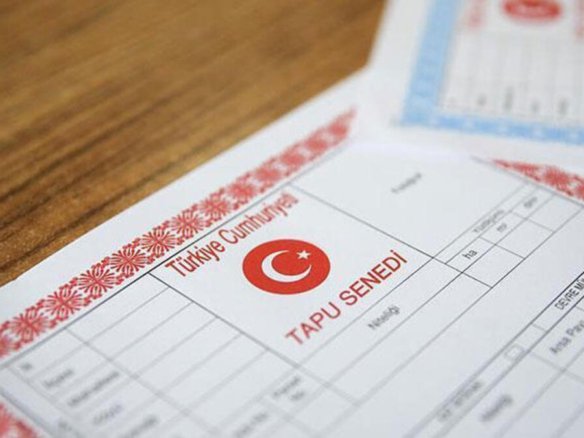
- The Turkish title deed (tapu) explained — what the land register records and how to read it.
- Hisseli tapu: shared title deeds — what changes when a parcel is owned in undivided shares.
- Using a lawyer to buy property in Turkey — what independent legal representation should cover.
- All Turkey property guides — the full library, by subject.
Have the access position checked before you buy the plot
Tell us the parcel you are considering and we will check it against the cadastral map and the full land register record, establish whether a right of way is registered, and set out what securing access would involve. We work with licensed Turkish lawyers.