

Buying Agricultural Land in Turkey: What Foreign Buyers Need to Know
A field costs a fraction of an apartment, and that is exactly why buyers underestimate it. Agricultural land sits under a second body of law that controls how it can be divided, how it must be used and what happens when the owner dies — and none of it is visible on the listing.
Agricultural land is not cheap property. It is different property.
Most foreign buyers meet Turkish agricultural land by accident. They are looking at a village house with a paddock attached, or an olive grove with a ruin on it, or a plot near the coast that costs less per square metre than anything else they have seen. The price looks like an opportunity. What is rarely explained is that the parcel is not simply a cheaper version of a residential property — it is a category of asset that Turkish law treats separately, with its own statute, its own ministry and its own set of things the owner is obliged to do.
Two laws govern the purchase, and a buyer needs both to line up. Land Registry Law No. 2644 controls who may acquire real estate in Turkey as a foreign national and how much of it. Soil Conservation and Land Use Law No. 5403 controls what happens to agricultural land once it is owned: how it is classified, whether it can be split, how it must be used, and what heirs must do with it. A transaction can clear the first and fail the second, and buyers usually discover this after the money has moved.
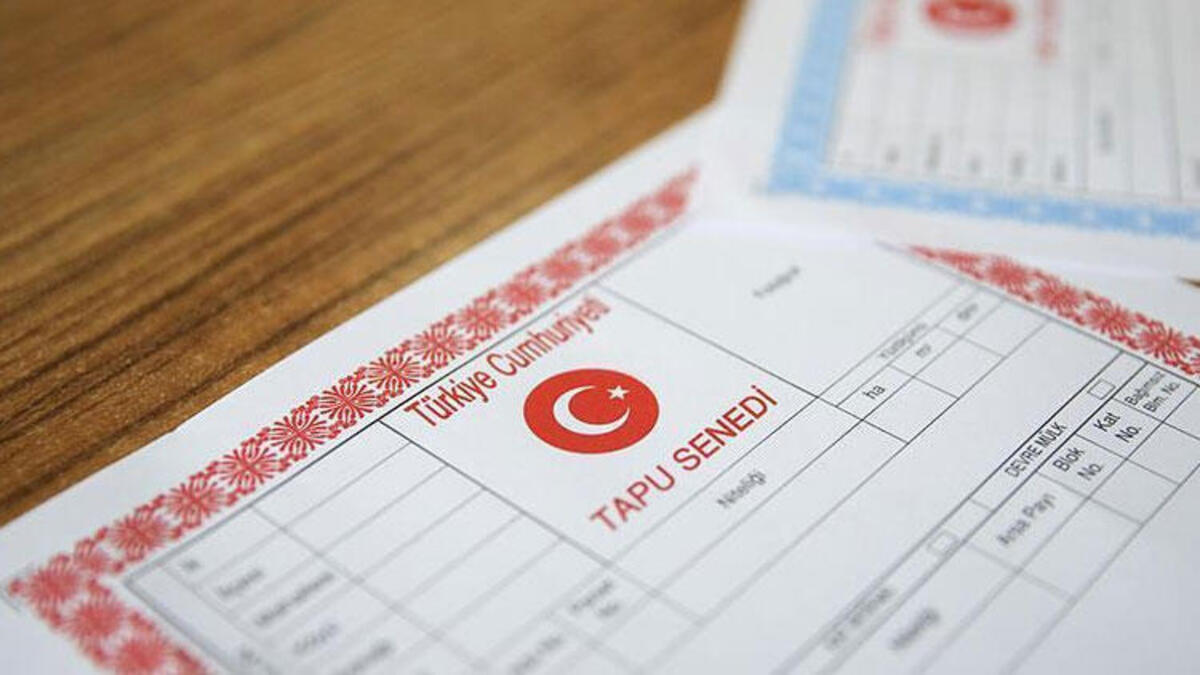
This guide sets out the framework as it stands, the sequence a careful purchase follows, and the constraints that most often surprise foreign owners after completion. It is written for buyers who are not resident in Turkey and who are relying on other people to inspect and verify on their behalf. For the broader picture on buying land of any kind, see our guide to land for sale in Turkey, and for the document at the centre of every purchase, our explainer on the Turkish title deed (tapu).
Agricultural Land — Foreign Buyer Constraints
What has to be true before, and after, title transfers
The two ceilings every foreign buyer is measured against
Article 35 of Land Registry Law No. 2644 is the provision that decides whether a foreign individual can acquire a given parcel at all. It sets out that the total area of real estate and independent, permanent limited property rights acquired by foreign individuals cannot exceed 10 per cent of the privately owned land area within a district, and cannot exceed 30 hectares per person nationwide. The President has the authority to double the maximum amount that can be acquired per person nationwide.
The national ceiling is cumulative, not per purchase
This is the detail that catches repeat buyers. The 30-hectare figure is not a limit on any one transaction; it is a limit on everything a single foreign individual holds in Turkey at a given moment, assessed across all parcels together. A buyer who acquired land in one province several years ago and is now looking at a second parcel elsewhere is measured on the combined total. Because the Land Registry is a central system, the aggregation is straightforward for the authorities to run — and enforcement against holdings that exceed the ceiling can include an order to dispose of the excess within a defined period, with the State acquiring it at a price that may not reflect what the owner paid.
The district ceiling is about the district, not about you
The 10 per cent limit works differently and is frequently misread. It is not a cap on your share; it is a cap on the aggregate share of privately owned land in a district that may be in foreign hands. That means a parcel can be refused because of purchases made by other people entirely, in areas that are already popular with foreign buyers. Nothing about your own file changes the answer. This is why the district check belongs at the start of a purchase, before a deposit is discussed, rather than being treated as a formality that the Land Registry will sort out on the day.
Reciprocity and nationality
Turkish law applies a reciprocity condition to foreign individual land ownership, and the eligible list is maintained at government level rather than being open to all nationalities equally. Reciprocity is a threshold question: it determines whether the acquisition can proceed at all, before area ceilings are even reached. Buyers holding dual nationality sometimes have more than one route available, and which passport is presented at the Land Registry can change the outcome. That is a question for a lawyer, not an agent. Our guide to whether foreigners can buy property in Turkey covers the general position, and our note on dual citizenship in Turkey is worth reading alongside it.
Where foreigners cannot buy at all
Two categories of restriction override everything above. Foreigners are prohibited from acquiring and leasing real estate in military prohibited zones and security zones. In special security zones, foreigners may acquire and lease real estate only with the permission of the governor's office. Agricultural land is disproportionately affected by this, simply because rural parcels are more likely than city apartments to sit near installations, borders or coastal strips that fall within a restricted designation. A military clearance check is part of the standard purchase process and should never be deferred until after a payment.
How a careful agricultural land purchase runs
The order matters more than it does on a residential purchase, because several of the checks below can kill a deal outright rather than merely reduce the price.
Establish what the land actually is
Before anything else, establish the parcel's classification under Law No. 5403 and its registered designation at the Land Registry and cadastre. Agricultural land is classified by capability, and Class I and Class II land carries the strictest protection: conversion to non-agricultural use requires a permit from the Provincial Directorate of Agriculture and a decision at a higher level of government. A buyer who intends to build is buying a permission problem, not a plot.
Run the nationality and ceiling checks
Confirm reciprocity for your nationality, then calculate your cumulative national holding against the 30-hectare ceiling and check the district against the 10 per cent limit. Do this before a deposit is discussed. These are the two tests most likely to stop a transaction for reasons that have nothing to do with the parcel itself.
Obtain military zone clearance
The clearance check confirms the parcel does not sit inside a military prohibited zone or security zone, and identifies whether it falls in a special security zone requiring the governor's permission. On rural land this is not a formality. Treat a refusal to progress the check, or pressure to pay before it completes, as a reason to stop.
Read the title deed record in full, including annotations
The tapu records the owner, but the pages behind it record what is registered against the parcel — mortgages, liens, disputes and formal annotations. On rural land, watch in particular for a forest annotation, which can carry serious consequences for a parcel sitting inside a finalised forest cadastre boundary. Our guide to the forest annotation on a Turkish title deed explains what it means and why it matters.
Identify who holds pre-emption rights
Neighbouring agricultural landowners and co-owners have the right to purchase the land at the same price offered by a third-party buyer. A transfer completed without serving the required notification on all eligible holders is voidable within the statutory period. Establish early who those parties are, and make sure the notifications have been properly served rather than assumed.
Decide the ownership structure before you sign
Individuals are not the only route. Foreign nationals may also acquire through a Turkish limited company or joint stock company, which sits under a different part of the framework and brings Foreign Direct Investment Law No. 4875 into play for companies with foreign shareholders. Structure changes the ceilings, the tax position and the succession position, and it is far cheaper to decide before purchase than to restructure afterwards. See our guide to buying property in Turkey through a company.
Register, then diarise the post-completion obligations
Completion is the start of the owner's duties, not the end. If the land is unbuilt, the two-year project application clock starts. The productive use obligation runs continuously. If you will not be in Turkey to manage the parcel, agree in advance who will, and on what authority — our note on power of attorney for Turkish property covers how that is usually handled.
Six constraints that surprise foreign owners
None of these appear on a property listing. All of them attach to the land the moment it is yours.
You usually cannot split it
Parcels at or above the minimum size for their class are treated as indivisible. Division, allotment and increasing the number of shareholders are prohibited, with narrow exceptions. Informal splits between friends or family generally cannot be registered.
You are expected to farm it
Law No. 5403 imposes an ongoing obligation to use the land in line with its agricultural capability classification. Buying a field and leaving it idle is not a neutral act; it is a breach of the condition the ownership rests on.
Unbuilt land carries a clock
A foreign owner of land with no buildings on it must apply to the relevant public authority within two years to develop a project on it. The deadline runs from title transfer, and nobody sends a reminder.
Neighbours can step in front of you
Adjoining agricultural landowners and co-owners hold pre-emption rights at the same price as your offer. Skip the notification and the transfer can be challenged and set aside within the statutory period.
Building on it is a separate battle
Converting Class I or Class II agricultural land to non-agricultural use requires a Provincial Directorate of Agriculture permit and a decision at a higher level. Assume nothing can be built until a permit says otherwise in writing.
Title cancellation is a live remedy
Tapu iptali has been applied for misuse, breach of the productive use commitment, exceeding the Article 35 ceiling through later purchases, and zone restrictions imposed after acquisition — with no guaranteed compensation at market value.
Agricultural land vs a residential property, for a foreign buyer
The same buyer, the same budget, two very different sets of obligations.
| Question | Agricultural land | Residential property |
|---|---|---|
| Subject to the Article 35 area ceilings | Yes — 30 ha national, 10% district | Yes — same ceilings apply |
| Second statute governs use after purchase | Yes — Law No. 5403 | No equivalent use obligation |
| Can normally be divided between buyers or heirs | No — indivisibility rules apply | Yes, subject to ordinary rules |
| Owner has an ongoing duty to use it productively | Да | Нет |
| Third parties can pre-empt your purchase | Yes — neighbours and co-owners | Нет |
| Deadline imposed on heirs after death | Yes — one year to resolve | No equivalent statutory deadline |
| Two-year project obligation if unbuilt | Yes, where there are no buildings | Not applicable once built |
| Building or changing use is straightforward | No — permits and higher-level decision | Generally, within existing zoning |
| Liquid and easy to resell | Usually slower, narrower buyer pool | Broader resale market |
| Suitable for a passive, hands-off investor | Rarely — obligations are active | More often yes |
Succession is the part nobody plans for
On a Turkish apartment, inheritance follows the ordinary rules and the property can, in principle, be held by several heirs together. Agricultural land cannot work that way, because the law that prevents parcels being divided also prevents them being quietly fragmented through successive generations of inheritance. The response in Law No. 5403 is a deadline.
Heirs have one year from inheriting to resolve ownership, and there are four permitted routes. The land can be transferred to one or several of the heirs. The heirs can establish a family property partnership by notarial deed. They can form a limited liability company in which all of them are partners. Or they can sell the land to a third party. If nothing is done within the year, the Ministry may initiate legal action to force the transfer.
For a foreign-owned parcel, this is a demanding timetable. The heirs may be outside Turkey, may not speak Turkish, and may be dealing with probate in another country at the same time. Documents will need apostille and sworn translation, and a Turkish lawyer will be required in practice. The year is not generous. The realistic answer is to decide the succession route at the point of purchase — which is one of the strongest arguments for considering a company structure at the outset rather than holding the land personally. Our guide to inheritance law in Turkey sets out the wider position.
The productive use obligation in practice
The obligation to keep agricultural land in productive use aligned to its capability classification is, for most foreign owners, the hardest condition to satisfy honestly. Someone who lives abroad and visits twice a year is not going to farm an olive grove personally. The usual answers are a local tenant farmer, a sharecropping arrangement, or a management agreement with a neighbouring producer. All of these are workable, and all of them need to be documented rather than left as a handshake, because the point of the documentation is to be able to show, years later, that the land was used as required.
This is also where buyers should be honest with themselves about what they are buying. If the attraction of the parcel is purely that it is cheap and might be rezoned one day, the obligations above are a poor fit and the risk of a use-related challenge is real. If the attraction is a genuine intention to produce something on the land, or to build a home on a parcel where the conversion route has already been checked and confirmed, the picture is very different.
For the wider set of due diligence steps that apply to any Turkish purchase, our guide to the pitfalls foreign buyers still fall into covers the checks that sit upstream of all of this, and our overview of taxes in Turkey for foreigners explains where the ongoing costs of ownership sit. If you want the full library, start at our Turkey property guides, and engage a lawyer to buy property in Turkey before, not after, you pay a deposit.
Considering a rural parcel and unsure what it actually permits?
We run the classification, ceiling, zone and annotation checks before anything is signed, working with licensed Turkish conveyancers.
Buying agricultural land in Turkey — frequently asked questions
The questions foreign buyers ask most often about ceilings, division, use obligations and what happens after completion.
Have the land checked before you commit
Tell us the parcel you are considering and we will establish its classification, its title record and annotations, the zone position and whether the purchase sits inside the Article 35 ceilings — before anything is signed.


Присоединиться к обсуждению