

Can Foreigners Buy Property in Turkey?
Yes — and it is more straightforward than most buyers expect. Turkey removed the reciprocity condition in 2012, and you do not need a residence permit to purchase. What remains is a set of clearly defined limits: a personal cap on land area, a district-level ceiling, and zones where foreign ownership is not permitted at all. Here is exactly where the boundaries sit.
individual may hold
foreign-owned private land
condition was abolished
in order to buy
Open to foreign buyers, with limits that are worth knowing before you look
The question foreign buyers ask first is usually the wrong one. It is rarely whether you can buy property in Turkey — for the overwhelming majority of nationalities you can, in your own name, with full freehold title recorded centrally by the land registry. The more useful question is where the boundaries sit, because Turkey's restrictions are not spread evenly. They are concentrated in two places: how much land any one foreign individual may accumulate, and where that land is allowed to be.
For most of the twentieth century, buying here depended on the principle of reciprocity. A foreign national could acquire property only if their own country extended the same right to Turkish citizens, which quietly excluded a great many buyers for reasons that had nothing to do with them personally. Law No. 6302, which entered into force on 18 May 2012, abolished that condition. Eligibility is now determined by Presidential decision, taking account of international bilateral relations and national interests, rather than by whatever your own country's property law happens to say.
The practical effect was to open the market very widely. It did not, however, make it unrestricted, and the restrictions that remain are the ones that catch people out — not because they are obscure, but because they tend to surface late, after a buyer has already chosen a property and formed an attachment to it.
The two ceilings that apply to individuals
A foreign natural person may acquire real estate and limited rights in rem anywhere in Turkey up to 30 hectares in total, with the Cabinet able to grant a larger area where it sees fit. Alongside this sits a second, quite different limit: total acquisition by foreign natural persons may not exceed ten per cent of the total district area where private property is allowed.
These two work differently and it is worth being clear about how. The 30 hectare figure is personal and nationwide — it follows you, aggregating everything you own across the country. The ten per cent figure is not personal at all; it is a district-level ceiling shared across every foreign buyer in that district. In principle a district can therefore reach its limit and close to further foreign purchases while you remain nowhere near your own allowance. For anyone buying an apartment, a villa or a single plot, neither ceiling is remotely in play — a hectare is ten thousand square metres. They matter to buyers assembling land, and they matter to anyone being told that a restriction does not exist.
Where foreign ownership is not permitted
This is the harder boundary. Foreign natural persons may not acquire or lease real estate within prohibited military zones or military security zones. Within special security zones, acquisition is possible but only with the permission of the governor's office. There is no route around either rule, and no amount of goodwill from a seller changes it.
What makes this manageable is that the check does not fall to you. Land registry directorates examine, of their own motion, whether a property lies within a military forbidden zone or a security zone, working from military forbidden zone maps held centrally and updated with data from the General Staff. What makes it occasionally painful is the timing: because the examination happens once an application is in, a buyer can get some distance into a purchase before learning that the parcel was never available. Land near coastlines, borders and installations is where this most often bites.
Foreign ownership at a glance
The rules that govern who may buy, and where
How a foreign purchase actually proceeds
The sequence below is the one a well-run transaction follows. Most problems foreign buyers report are not caused by a step being done badly — they are caused by a step being skipped because it seemed procedural at the time.
Establish that you are eligible and the property is not restricted
Before money moves, two questions need answers: whether your nationality is currently able to acquire property in Turkey, and whether the specific parcel sits in a prohibited military zone, a military security zone or a special security zone. The first is a matter of current Presidential decision and is best confirmed directly with the land registry rather than from a published list. The second is checked ex officio by the land registry directorate against military forbidden zone maps.
Get a tax number, then a Turkish bank account
The Turkish tax number is the key that unlocks the rest of the process. With it you can open a bank account, which is where your purchase funds should land. Keep the transfer trail clean and in your own name — reconstructing it later, when you want to sell or to prove the source of funds, is far harder than doing it correctly at the outset.
Run title and building due diligence
Obtain the current title deed record and read the annotations, not just the ownership line. Confirm the occupancy permit, the condominium title status, the zoning designation, and whether the property carries any mortgage, lien or dispute. This is the stage at which an independent Turkish lawyer earns their fee, and the stage most commonly skipped.
Commission a valuation report if your route requires one
For a straightforward purchase this is no longer compulsory following Circular No. 2024/4 of 13 June 2024. If you are buying in order to apply for Turkish citizenship by investment, the valuation report is still required, and it must come from an appraiser licensed for the purpose. Establishing which route you are on before you commission anything avoids both an unnecessary cost and a missing document.
Apply at the land registry and complete the transfer
The application is made to the land registry directorate, which carries out its own checks including the military zone examination. Both parties, or their properly authorised representatives, attend for the transfer. Purchase funds must move through the channels Turkish law requires rather than passing directly to the seller in cash.
Register utilities, insurance and your ongoing obligations
After the deed is issued, compulsory earthquake insurance and utility subscriptions need to be arranged, and the property enters the annual municipal property tax cycle. If you intend to let the property, rental income brings its own declaration obligations. These are routine, but they start immediately rather than at some later point.
What you will be asked for, and what you should ask for
Half of this list is what the Turkish authorities require from you. The other half is what you should require from the property before you commit — and it is the half buyers most often leave to chance.
Passport and certified translation
Your passport must be translated into Turkish and notarised. If you are buying through a representative rather than attending in person, the power of attorney has to be drawn up correctly at a Turkish notary or a Turkish consulate abroad — a general power of attorney is frequently rejected at the land registry because it does not expressly grant the authority to buy and register immovable property.
Turkish tax number and bank account
A tax number is issued free of charge and is needed before almost anything else, including opening a bank account. Funds should reach Turkey through the banking system with a clear paper trail from you, the named buyer, because the land registry and your future exit from the investment both depend on being able to evidence where the money came from.
Military and security zone clearance
The land registry checks ex officio whether the parcel sits inside a prohibited military zone or a security zone. You cannot waive this and it is not a formality — it is a genuine gate that occasionally stops transactions on land near coastlines, borders and installations, regardless of what the seller believed.
The annotations page of the title deed
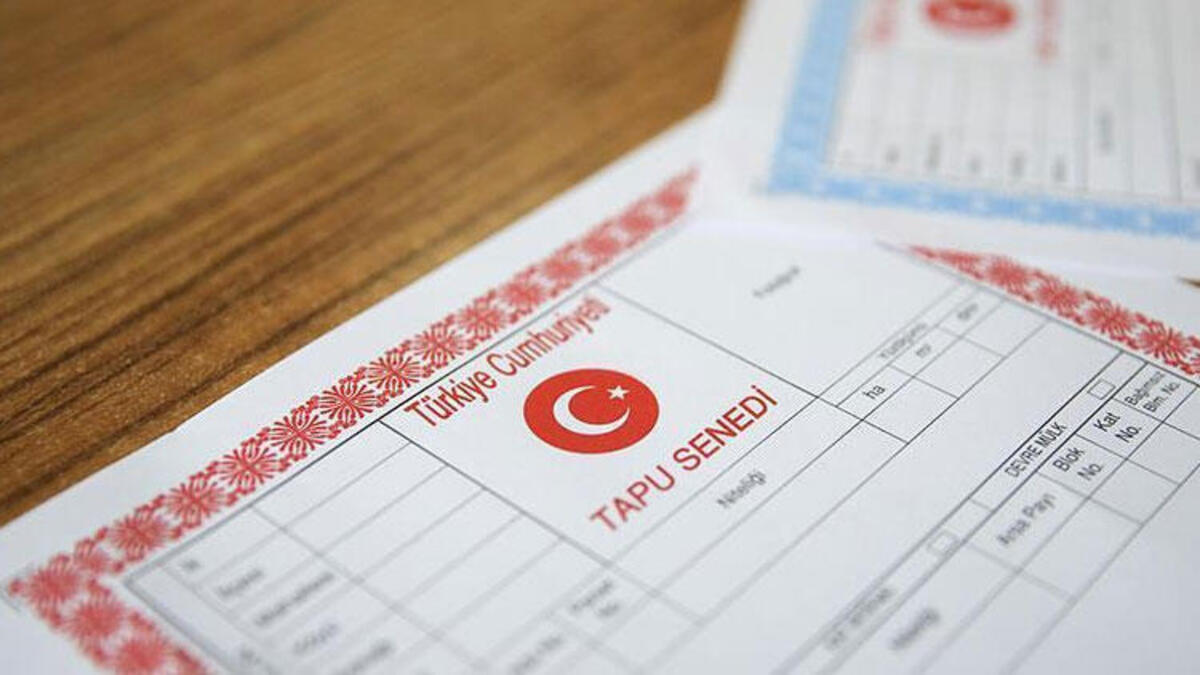
The tapu records far more than the owner's name. Mortgages, liens, disputes and formal annotations sit on the deed and travel with the property. Property bought under the citizenship route carries an annotation preventing resale for three years, and that annotation stays on the record until it is formally removed even after the period expires.
Occupancy permit and condominium title
Ask whether the building holds its occupancy permit and whether the unit has full condominium title rather than construction servitude. A building can be finished, occupied and still not properly certified, and that gap becomes your problem on resale rather than the developer's.
Zoning, forest and cadastral status
Beyond the military check, confirm the parcel's zoning status and whether any forest or cadastral annotation attaches to it. Land that looks like an ordinary building plot can sit partly within boundaries that restrict what may be built or that put the title itself in question.
Buying personally or through a Turkish company
The ceilings that apply to foreign individuals do not apply in the same way to a Turkish company with foreign capital, which is assessed instead against its stated business purpose. For a single home the distinction is academic; for a portfolio it often decides the structure.
| Question | Foreign individual | Turkish company with foreign capital |
|---|---|---|
| Subject to the 30 hectare personal cap | Да | Нет |
| Subject to the 10% district ceiling | Да | Нет |
| Barred from prohibited military zones | Да | Да |
| Residence permit needed in order to buy | Нет | Нет |
| Valuation report for a standard purchase | Not required | Not required |
| Can qualify the owner for citizenship by investment | Да | Нет |
| Purchase must serve the entity's stated business purpose | Not applicable | Да |
Only trading companies with legal personality may acquire property in Turkey — foundations and associations may not. A company established in Turkey is treated as foreign-owned where foreign investors hold fifty per cent or more of it, or where they hold the power to appoint or dismiss the majority of its directors. Such a company is not measured against the 30 hectare and ten per cent ceilings; it is measured against whether the acquisition is necessary for the business activities set out in its articles of association.
That sounds like a straightforward advantage, and for genuine commercial acquisitions it can be. It is not a device for stepping around the individual limits, and it carries its own accounting, filing and tax consequences that a single residential purchase rarely justifies. It also does not help with the citizenship route, which is available to individuals rather than corporate owners. Read the citizenship by investment requirements before choosing a structure, because the two objectives can pull in opposite directions.
Eligibility is the beginning, not the end
Establishing that you may buy settles the legal question and none of the practical ones. Ownership in Turkey carries a recurring set of obligations, and they begin immediately rather than at some comfortable later date.
There is an annual municipal property tax, calculated on the property's registered value, with rates that vary according to the type of property and whether it sits within a designated metropolitan municipality. There are one-off costs at the point of transfer. If you let the property, rental income is taxable and brings a declaration obligation of its own. If you eventually sell, the timing of that sale affects how the gain is treated. These rates and thresholds are revised regularly, which is precisely why this article does not quote them — a stale percentage is more damaging than no percentage at all. Our guide to property taxes in Turkey covers the categories in detail, and should be read alongside current confirmation from your adviser.
Compulsory earthquake insurance must be in place before the land registry will complete a transfer, and utility subscriptions cannot be opened without it. It insures the structure rather than your contents, so treat it as the legal floor rather than as cover.
If you are buying with a longer stay in mind
Property ownership does not itself grant the right to live in Turkey, but it can support a residence permit application, and the two are frequently confused. The permit is a separate application with its own documentation, fees and renewal cycle — see what a Turkish residence permit costs and our residence permit overview. If your intention is citizenship rather than residence, the qualifying route runs through a property purchase of at least USD 400,000 or the equivalent in foreign currency, carrying a title deed restriction on resale for at least three years.
Where buyers most often go wrong
Almost none of the difficulties foreign buyers run into are caused by the eligibility rules. They are caused by what happens after eligibility is assumed and attention moves on: annotations on the title deed that were never read, a building without its occupancy permit, a payment routed outside the channels Turkish law requires, or a valuation report commissioned for a purchase that no longer needed one. We have written these up in detail in seven pitfalls foreign buyers still fall into, and it is the natural companion to this page.
If you would rather start from the market than from the rules, our Turkey property guides collect the area and process material in one place, and the buyer's guide sets out how a purchase runs from first viewing through to handover.
Not sure whether your nationality or your chosen property qualifies?
We will confirm eligibility and run the zone and title checks before you commit to anything.
Foreign property ownership in Turkey: common questions
The questions we are asked most often about eligibility, limits and restricted zones.
Check eligibility before you fall in love with a property
Tell us your nationality and the property you are considering, and we will confirm whether you are able to acquire it and whether the parcel sits in a restricted zone — before any money moves. We work with licensed Turkish conveyancers and appraisers.



Присоединиться к обсуждению