


Kemer Property for Sale: A Foreign Buyer’s Guide
Kemer is not one town but seven settlements strung along a coast road, pinned between the Mediterranean and the Bey’s Mountains. That geography decides almost everything that matters to a buyer here — what can be built, where it can be built, and which months the place actually works.
A resort strip, not a single address
The first thing to understand about buying in Kemer is that “Kemer” on a listing can mean any of several quite different places. The municipality runs as a ribbon down the coast south-west of Antalya, and it takes in Beldibi, Göynük, Kemer town itself, Kiriş, Çamyuva, Tekirova and Çıralı, together with the inland villages of Arslanbucak and Kuzdere. These are not interchangeable. The distance between the northern end and the southern end is substantial, the character changes as you go, and so does how much of the year the place is awake.
The second thing is the terrain. The Lycian coast here is rugged and hemmed in by mountains, which historically limited development to small ports and today limits it in a more bureaucratic way. The coastal D400 highway, completed in the 1960s, is what made the strip reachable and therefore buildable. Behind it the land rises quickly into the Bey’s Mountains, much of which is protected as coastal national park, and pine forest comes down close to the shore in places. Flat, unencumbered, freely developable land is not abundant here, and that shapes what is on the market.
The third thing is who the market here serves. Kemer has been a package-holiday coast for decades, and in recent years it has catered heavily to Russian-speaking visitors — to the point where staff along the strip are often more comfortable in Russian than in English. That is a straightforward fact about the local market rather than a judgement on it, but it is useful context. It tells you something about who the rental demand comes from, who the competing buyers are, and what the resale audience is likely to look like.
What follows is a practical guide to the area for someone buying from abroad: where the settlements differ, what the land constraints actually mean in a transaction, and the order in which to run the checks. We have deliberately not published price figures. Asking prices on this coast move with the exchange rate and with the season, and a number printed in an article is stale within weeks — you should get current figures for the specific settlement and property type you are looking at.
Kemer at a glance
Geography, access and administration
Mountains, forest and a national park
In most Turkish coastal markets the questions a foreign buyer needs to ask are about the building: who built it, does it have its permits, what is registered against it. Those questions apply in Kemer too. But here there is an additional layer that catches people out, and it comes from the landscape.
The municipality is squeezed between the sea and the Bey’s Mountains. Behind the narrow coastal shelf, much of the hinterland is protected as coastal national park. Pine forest runs down close to the shore — the ruins of Phaselis, a Graeco-Roman port south of Kemer with three harbours, sit overgrown by it. Inland from Phaselis, the base station of the Olympos cable car climbs to the 2,365-metre summit of Tahtalı. This is a spectacular setting, and it is also a heavily constrained one.
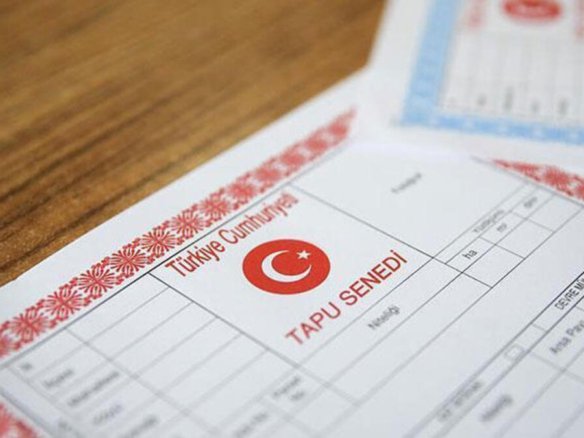
The practical consequence is that the land status of a plot is a live question in Kemer in a way it is not in a dense city district. Where a property sits within or against state forest boundaries, that will normally be recorded as an annotation on the title deed. Annotations are not automatically a reason to walk away — but they are always a reason to stop and understand what you are looking at before any money moves. Our guide to forest annotations on Turkish title deeds covers what the annotation means and what recent legislation changed.
The second local check is the occupancy permit. A building that has not obtained its habitation certificate cannot convert from construction-stage title to full condominium ownership, and that affects everything downstream — utility connections, resale, and in many cases financing. This is a national issue rather than a Kemer-specific one, but on a coast where a good deal of stock was built for the holiday market it is worth treating as a standing question rather than an occasional one. See our guide to the habitation certificate for what to ask for and what it looks like.
None of this makes Kemer a difficult place to buy. It makes it a place where the checks have to be run properly and in order, which is true everywhere and merely more consequential here.
Seven places, one postcode
Listings say “Kemer”. What you are actually buying depends a great deal on which part of the strip it sits in.
Beldibi
The northern end, closest to Antalya and the easiest to reach. Roughly 12 km from Kemer town. Suits owners who will visit frequently and want the shortest road journey.
Göynük
Beaches, restaurants and easy access, sitting between Beldibi and Kemer town. The Bey’s Mountains Coastal National Park is on the doorstep, which is both the appeal and the constraint.
Kemer town
The centre of gravity: the marina, the shops, the bus station and the services that make a place work outside August. The most practical base if the property will be lived in rather than visited.
Kiriş & Çamyuva
Quieter and greener, immediately south of the town. Çamyuva has longer stretches of sand and shingle than the narrow, lounger-packed town beach. A common compromise between access and calm.
Tekirova
Further south and more self-contained, close to the ruins of Phaselis. More seasonal than the town, and further from the airport — check the transfer time for yourself rather than assuming the Kemer figure.
Çıralı / Olympos
The southernmost part of the municipality, and the least developed. Heavily protected and very seasonal. Beautiful, and the least suitable of the seven for anyone wanting year-round amenity.
Which part of the strip suits which buyer
A rough orientation rather than a ranking. The right answer depends entirely on what you want the property to do for you.
| Settlement | Character | Works well for | Check carefully |
|---|---|---|---|
| Beldibi | Closest to Antalya, easy access | Frequent visitors, shortest transfer | How much is genuinely open off-season |
| Göynük | Beaches and restaurants, park on the doorstep | Access plus greenery | Land status against national park boundaries |
| Kemer town | Marina, shops, services, resident population | Living there, not just visiting | Town beach is narrow and shingly |
| Kiriş & Çamyuva | Quieter, greener, longer beaches | Holiday homes wanting calm | Fewer year-round services than the town |
| Tekirova | Self-contained, close to Phaselis | Seasonal use, privacy | Longer airport transfer than Kemer |
| Çıralı / Olympos | Protected, undeveloped, very seasonal | Scenery above convenience | Limited amenity outside summer |
| Arslanbucak / Kuzdere | Inland villages, not coastal | Buyers wanting space away from the strip | No sea frontage; access and services differ |
What the town looks like in February
This is the question that separates a good purchase on this coast from a disappointing one, and it is the hardest to answer from a listing photograph.
Kemer has been a resort coast for decades. The strip was developed for a tourist season, and much of it still runs on one. Kemer town itself has a resident population, a marina, a bus station a kilometre west of the centre, and local bus routes running out to Arslanbucak, Kuzdere and Kiriş — it is a functioning town, not purely a resort. The settlements further south are a different proposition. Businesses that are busy in August are not necessarily open in February, and in the most protected southern parts of the municipality the winter is very quiet indeed.
This cuts two ways, and which way it cuts depends entirely on your purpose:
- If you intend to live there. Visit out of season before you commit. Not for a weekend in October, but in the genuine off-season. Look at what is open, how far you would drive for a supermarket or a pharmacy, and whether the community you met in summer is actually there in winter.
- If you intend to let it. Seasonality shapes both your income pattern and your management burden. A property that is in demand for a concentrated summer season needs managing in a different way, and for a different number of changeovers, than one with year-round tenants. Our guide to property management in Turkey covers what that actually involves.
- If it is a holiday home for your own use. Seasonality matters least, and the quieter southern settlements become more attractive rather than less. This is the profile Kemer suits best, and it is worth being honest with yourself about whether it is yours.
One further point on letting. Short-term rental in Turkey now requires a permit, and the rules are not optional or informal. If part of your reasoning for buying in Kemer is holiday letting, understand the permit position before you buy rather than after — our guide to the short-term rental permit sets out what is required. Buying first and investigating the permit afterwards is a common and entirely avoidable mistake.
How a Kemer purchase actually runs
The order matters more than any individual step. Every one of these is a document request rather than a judgement call.
Decide which settlement, and why
Before looking at individual properties, settle on the part of the strip that matches your purpose. Access, seasonality and character vary more between Beldibi and Çıralı than buyers expect, and choosing the property first and the location afterwards is how people end up somewhere that does not suit them.
Get a Turkish tax number
The entry requirement for nearly everything that follows — opening a bank account, paying for the property and registering the transfer. It is straightforward to obtain and doing it early prevents delays later.
Pull the full title deed record and read the annotations
Confirm who legally owns the property and, just as importantly, what is registered against it. Mortgages, liens, disputes and formal annotations all appear here. This single step prevents more foreign-buyer problems than any other.
Establish the land status of the plot
Given how much protected land sits behind this coast, confirm the position of the plot relative to state forest and national park boundaries. Where a forest annotation exists, understand what it means before proceeding rather than after.
Run the military and security zone checks
Confirm the property is not in a prohibited military zone and that no special security zone restriction applies. Check the purchase keeps you inside the national caps that apply to foreign individuals.
Confirm the occupancy permit and title type
Establish whether the building has its habitation certificate and whether the title is still at construction stage. This affects utilities, resale and financing, and it is far easier to resolve before completion than after.
Visit out of season, then complete through the proper channels
See the settlement when it is quiet, not only when it is busy. Then complete with payment routed through the mandatory secure payment system and the transfer registered at the Land Registry — never by paying the seller directly.
Related guides worth reading first
Kemer sits inside a national framework, and most of the questions a buyer has here are answered at that level. These guides cover the ground this one deliberately does not repeat:
- Antalya property for sale — the wider province, and how the city market differs from the coastal strip.
- Antalya vs Alanya — a direct comparison, useful if you are still deciding which stretch of this coast you want.
- Can foreigners buy property in Turkey? — the national eligibility rules, the caps, and the zone restrictions in full.
- Forest annotations on Turkish title deeds — directly relevant on a coast backed by national park and forest.
- The habitation certificate — what it is, why it gates so much, and how to confirm it exists.
- Pitfalls foreign buyers still fall into — the checks, and the order to run them in.
- Holiday homes in Turkey — what a second home actually involves once the purchase is done.
- All Turkey property guides — the full index.
Looking at a property in Kemer?
We run the title, land-status, zone and permit checks as standard, and every transaction settles through the secure payment system.
Buying in Kemer — frequently asked questions
The questions foreign buyers ask most often about this stretch of the Antalya coast.
Ask about Kemer specifically
Tell us which settlement you are considering and what you want the property to do — live in, let out, or visit. We will come back with current figures and the checks that matter for that part of the strip.
Buyer’s Guide · Турецкое гражданство · Контакт


Присоединиться к обсуждению