Houses for Sale in Turkey: What You Are Actually Buying
A “house” in a Turkish listing can mean a villa on a managed site, a detached family home on its own plot, a half of a semi–detached pair, or a stone cottage in a village with no building on the title at all. The legal checks change with each one. Here is how to tell them apart before you commit.
In Turkey, the word “house” hides four different legal situations
Search for houses for sale in Turkey and the results will mix together things that behave very differently once you own them. A three–bedroom villa inside a managed coastal site, a detached family home on a plot in a town, a duplex that occupies the top two floors of a small block, and a restored stone house in a mountain village will all be advertised the same way, often at prices close enough to invite direct comparison.
They are not comparable. What separates them is not the building. It is the plot the building stands on, the category recorded against that plot, и whether the building itself appears on the title at all. Those three things determine whether you can buy it as a foreign national, whether you can insure it, whether you can connect it to utilities in your own name, and whether you can sell it again without an argument.
This guide sets out the house types you will actually encounter, what changes legally between them, and the order to run your checks in. It sits alongside our guides to квартиры на продажу в Турции и villas for sale in Turkey, and the wider Turkey property guides library.
Buying A House — The Fixed Rules
What applies to a foreign individual regardless of house type.
Six kinds of house, and what each one really is
Turkish listings use these terms loosely and English translations blur them further. These are the distinctions that matter to a buyer.
Müstakil ev — the detached house
A standalone building on its own plot, usually with its own entrance, garden and boundary. No shared management and no service charge, which also means no one else is responsible for the roof, the water supply or the access road. The category where unpermitted extensions and missing paperwork turn up most often.
Villa on a managed site
A detached or semi–detached house inside a gated development with shared pools, gardens and security. Legally a condominium: you own your unit and a share of the common parts, you are bound by the management plan, and you pay a recurring charge. Predictable to own from abroad.
Ïkiz ev — the semi-detached pair
Two houses sharing a party wall, common on the Aegean and Mediterranean coasts. Usually sold as separate units with separate titles, but the shared wall, shared roof structure and sometimes a shared plot mean the management plan and the boundary description deserve close reading.
Dubleks — the duplex
A two–storey home inside a larger building, frequently the top two floors with a terrace. Marketed as a house and priced like one, but legally an apartment: it sits inside a condominium with an owners’ assembly and a service charge. Roof terraces are a common source of unpermitted enclosure.
Köy evi — the village house
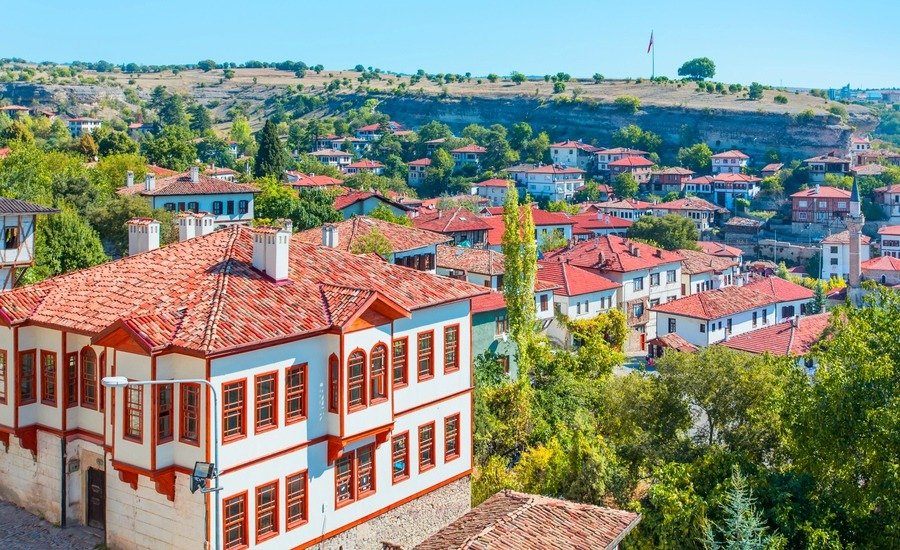
A rural house, often old, often beautiful, often on land registered as agricultural or on a plot where the building was never added to the title. The most likely category to involve a land purchase rather than a house purchase. Requires the most work and produces the most disappointments.
Off-plan and under construction
A house sold before completion, transferred on a construction servitude rather than full unit title, with the habitation certificate still to come. Normal and legitimate, but it is a purchase of a promise, and the protections that matter are contractual. See our guide to buying off-plan property in Turkey.
The title tells you what you own; the annotations tell you what you inherit
Ownership in Turkey is recorded centrally by the Land Registry, and the record is the authority. What the seller says, what the agent says and what the brochure says are all secondary to what the register says. Two distinctions on that record do most of the work when you are buying a house.
The first is kat irtifakı against kat mülkiyeti. A construction servitude records a share of the land together with the right to a specific unit that is planned or being built. Full condominium ownership records the finished, signed–off unit itself. A new build sold on a construction servitude is entirely normal. A house that has stood completed for a decade and is still on a construction servitude is telling you that the final municipal sign–off never happened, and the reason is worth finding out before you buy rather than after. Our guide to the Turkish title deed works through the record line by line.
The second is the annotations page. Mortgages, liens, ownership disputes, rights of way and formal restrictions are recorded there rather than on the summary most buyers are shown. A photograph of the front page of a tapu is not due diligence. Ask for the full record, and have someone who reads Turkish read it.
There is a third question that only really bites on detached and rural houses: is the building on the title at all? On a managed site this is never in doubt, because the whole development was registered as a condominium. On a plot in a village it very much can be. If the register describes land and the sale describes a house, you are being asked to pay for something the register does not acknowledge exists.
The limits are about land and location, not about house type
Turkish law does not tell a foreign buyer which kind of home to buy. It sets boundaries on how much, and where. According to the Presidency of the Republic of Türkiye Investment Office guidance on acquiring property, retrieved on 5 September 2026, a foreign natural person may acquire real estate and limited rights in rem anywhere in Turkey of up to 30 hectares, и total acquisition by foreign natural persons may not exceed ten per cent of the total district area where private property is allowed.
Location restrictions are firmer still. Foreign nationals may not acquire or lease real estate within prohibited military zones or military security zones. Within special security zones they may acquire and lease property only with the permission of the governor’s office. The clearance check that confirms where a property sits is a standard part of the purchase process, and it is not a formality to be left until the end. It is the check that can stop a transaction outright.
There is one further obligation that catches buyers of rural and semi–rural houses. Where the property acquired does not include any previously built construction, the foreign owner must apply to the relevant public administration within two years with a project for developing it. If you are buying a plot with a ruin on it, or a house the register does not recognise, you may be acquiring bare land in the eyes of the law, and that clock starts on the day of transfer. Our guide to land for sale in Turkey covers the plot side in detail, and can foreigners buy property in Turkey covers eligibility.
Countries whose nationals are eligible to acquire real estate in Türkiye are determined at government level, so nationality remains a threshold question rather than an afterthought. Confirm your own position early; it is a five–minute enquiry that occasionally saves a wasted trip.
What changes between one house type and another
The same purchase price can carry very different obligations depending on which of these you are buying.
| House type | Usual title position | Service charge | Main check to run |
|---|---|---|---|
| Villa on a managed site | Full condominium title, building registered | Yes — recurring | Management plan, charge history and the site’s sign-off |
| Duplex in a block | Full condominium title, unit registered | Yes — recurring | Whether the terrace or roof enclosure was permitted |
| Semi-detached pair | Usually separate unit titles | Sometimes | Party wall, roof and boundary description on the register |
| Detached house on its own plot | Varies — check the building is on the title | Нет | Habitation certificate and approved project versus what stands |
| Village or rural house | Frequently land only; category may be agricultural | Нет | Land category, zoning and whether a building exists on the record |
| Off-plan house | Construction servitude until completion | Yes on completion | Contract terms, delivery obligations and the developer’s record |
The habitation certificate, and why detached houses are where it goes missing
The habitation certificate, the iskan, is the municipality’s confirmation that a building was completed in accordance with its approved project and may be lived in. It is the document that closes the gap between a building that exists and a building that is recognised. Without it, the title cannot be upgraded from a construction servitude to full condominium ownership, and putting utility subscriptions into your own name becomes considerably harder. Our guide to the iskan in Turkey sets out how it is obtained and what to do when it is absent.
On a large managed development the certificate is almost always present, because a developer with dozens of units to sell has every commercial reason to obtain it. On a house built privately on a single plot there may have been no such pressure. Nobody was chasing it, the family moved in, and thirty years later the paperwork is still outstanding. That is why the same question — may I see the habitation certificate? — is routine on a site and revealing on a detached house.
The related check is the approved project against the building that is standing. Enclosed balconies, converted basements, added floors, garden rooms and roof extensions are all common, and all are only a problem when they were never permitted. The way to find out is to put the approved drawings next to the building and compare them, which is a job for a surveyor rather than for an afternoon viewing.
Compulsory earthquake insurance sits alongside this. DASK cover must be in place for the title transfer to proceed, and it insures the structure rather than your contents. Our guide to DASK earthquake insurance in Turkey explains the scope, and a detached house on its own plot deserves a structural opinion in addition to the policy rather than instead of it.
The order to run the checks in
Each step is cheap on its own. Run out of order, the expensive ones happen before the ones that would have stopped you.
Confirm your own eligibility
Nationality determines whether you may acquire at all, and the national and district caps determine how much. Settle this before you travel, not after you have found a house you like.
Appoint a lawyer who is not the seller’s
Independence is the whole point. A lawyer introduced by the developer or the agent may be perfectly competent and still be the wrong person to tell you not to proceed.
Pull the full land registry record
Not the front page. The full record, including the annotations, the land category, the plot boundaries and whether the building itself is registered against the plot.
Run the zone and clearance checks
Confirm the property is not inside a prohibited military zone or military security zone, and establish whether a special security zone applies and therefore whether the governor’s permission is needed.
Ask for the iskan and the approved project
Then compare the approved drawings with the building in front of you. On a detached or rural house, have a surveyor do it. Unpermitted work is far cheaper to discover now.
Settle insurance and utilities
Compulsory earthquake cover has to be in place for the transfer. Establish at the same time how water, drainage, electricity and access work, which on a rural plot is rarely as simple as it looks.
Keep the money inside the regulated route
Payments route through the regulated channel rather than directly to a seller, and the declared price on the deed should be the price you actually paid. Anyone encouraging otherwise is creating your problem, not solving it. See our guide to the pitfalls foreign buyers still fall into.
Not sure which kind of house you are looking at?
Send us the listing. We will tell you what the title position is likely to be and what to ask for next.
Houses for sale in Turkey — frequently asked questions
The questions foreign buyers ask most often about house types, title and the checks that matter.
Where to go next
The guides that pair most usefully with this one.
- Виллы на продажу в Турции — regions, title and the checks that matter on a villa purchase.
- Квартиры на продажу в Турции — how to read a listing and a title deed.
- Tapu: how the Turkish title deed works — the record, the annotations and what they mean.
- Iskan: the habitation certificate explained — what it proves and what to do without one.
- Land for sale in Turkey — buying a plot, land categories and the development obligation.
- Best places to live in Turkey — a region-by-region guide for choosing where to look.
- House prices in Turkey — what the official figures actually say.
- Property taxes in Turkey — what owners actually pay, kept current.
Have the title checked before you fall in love with it
Tell us the property and how you intend to use it. We will establish the title position, the zoning and the sign-off status, and tell you plainly if it is not what the listing says it is.
Property Guides · Юридические Услуги · Контакт