
Mirasçılık Belgesi: Turkey’s Certificate of Inheritance, Explained
When an owner of Turkish property dies, the heirs already own it — but they cannot prove it, register it or sell it until one document exists. This is what the mirasçılık belgesi is, where it comes from, and why foreign families almost always take the longer of the two routes to get one.
You inherit at the moment of death. You prove it much later.
Turkish succession law draws a line that trips up almost every foreign family dealing with a death for the first time. Under Article 599 of the Turkish Civil Code, heirs acquire the estate as a whole, by operation of law, at the moment the deceased dies. They acquire the rights in rem, the claims, the other property rights and the possession of movables and immovables directly — and they become personally liable for the deceased’s debts. Nobody has to apply for any of that. It simply happens.
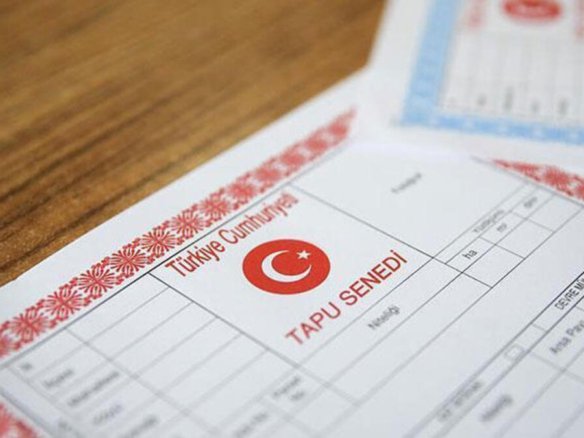
What does not happen automatically is the paperwork. The Land Registry still shows the deceased as the registered owner. The bank still has an account in the deceased’s name. Nothing in the public record reflects the change until somebody produces a document that says, with official authority, who the heirs are. That document is the mirasçılık belgesi — also called a veraset ilamı, and rendered in English as a certificate of inheritance or certificate of succession.
The statutory basis is Article 598 of the Turkish Civil Code (Law No. 4721). Its first paragraph reads, in the official Turkish text: “Başvurusu üzerine yasal mirasçı oldukları belirlenenlere, sulh mahkemesince veya noterlikçe mirasçılık sıfatlarını gösteren bir belge verilir.” In translation: on their application, a document showing their status as heirs is issued to those determined to be legal heirs, by the civil court of peace or by a notary.
Those two issuing authorities are the practical heart of this guide. One is fast and administrative. The other is slower and judicial. Which one applies to your family is not a matter of preference, and for foreign heirs the answer is usually the slower one. This guide covers why, what the document contains, how the title deed transfer actually works once you have it, and the tax rule that stops heirs selling a property they have just successfully registered. For the surrounding framework, see our guide to inheritance law in Turkey.
Mirasçılık Belgesi — At a Glance
The document, the authority and the legal basis
Who the certificate will name
Turkish law does not let the deceased’s wishes override the statutory order entirely, and it does not ask who lived in the property or who paid for it. It works through degrees of kinship, set out in Articles 495 to 501 of the Civil Code.
First degree: descendants
The deceased’s children inherit in equal shares. A child who died before the deceased is replaced by their own descendants, at every level — so grandchildren step into a deceased parent’s place rather than being excluded.
Second degree: parents
Where there are no descendants, the mother and father inherit in equal shares. A parent who predeceased is likewise replaced by their own descendants — which is how the deceased’s siblings, nieces and nephews enter the picture.
Third degree: grandparents
Where there are no descendants, no parents and no descendants of parents, the grandparents inherit equally, again with substitution by their own descendants at every level.
The surviving spouse
The spouse inherits alongside whichever group applies: one quarter of the estate with the descendants, one half with the parents’ group, three quarters with the grandparents’ group and their children — and the whole estate where none of those exist.
Adopted children
An adopted child and their descendants inherit from the adopter as though they were blood relatives, and they keep their inheritance rights in their original family. The relationship is not reciprocal: the adopter and the adopter’s relatives do not inherit from the adopted child.
No heirs at all
Where a person dies leaving no heirs, Article 501 provides that the estate passes to the State. This is the backstop that makes establishing the family tree properly a matter of substance rather than formality.
Why foreign families usually end up in court
Until 2011 there was only one way to obtain a certificate of inheritance in Turkey: you applied to the Sulh Hukuk Mahkemesi, the civil court of peace. That changed when Article 19 of Law No. 6217, dated 31 March 2011, inserted the words “or by a notary” into Article 598, with effect from 1 October 2011. For ordinary Turkish families the reform was a significant convenience: a straightforward succession could be dealt with across a notary’s counter instead of through a court file.
The reason it rarely helps foreign families lies in how a notary reaches a decision. The notary is not conducting an investigation. The notary is reading the Turkish population register — the nüfus kayıtları — and confirming that the family relationships recorded there produce an unambiguous answer. Where the register answers the question on its face, a notary can issue. Where it does not, the notary has nothing to work from.
A foreign heir typically has no Turkish population record at all. A marriage contracted abroad, a child born abroad, a stepfamily, a divorce recorded in another jurisdiction — none of these necessarily appear in the Turkish register in the form a notary would need. Turkish practitioners consistently report the same set of circumstances pushing an application to the court: a foreign national among the heirs, contradictory or incomplete register entries, a dispute over parentage, or the existence of a will.
None of this makes the court route alarming. It is a non-contentious application in the ordinary case, and heirs living abroad do not have to appear in person: a notarised special power of attorney allows a Turkish lawyer to conduct the matter on their behalf. See our guide to powers of attorney for Turkish property for how that document needs to be drawn and legalised.
What the court route does require is realistic planning. It is a judicial process with a file, a hearing and a judgment, and it sits at the front of every other step — you cannot transfer the title deed, close a bank account or deal with the tax office until it has produced a certificate.
Which Route Applies
Read against your own family’s circumstances
Notary route vs civil court route
Both produce a certificate of inheritance with the same legal standing. What differs is who may use each route, and what the process involves.
| Question | Notary (noterlik) | Civil court of peace (sulh hukuk mahkemesi) |
|---|---|---|
| Named in Civil Code Art. 598 | Yes — since 1 Oct 2011 | Yes — the original route |
| Decides on the population register alone | Да | No — can examine wider evidence |
| Available where an heir is a foreign national | Generally no | Да |
| Available where a will exists | Нет | Да |
| Available for an appointed heir or legatee | Нет | Yes — Art. 598/2, after one month |
| Available where register entries conflict | Нет | Да |
| Heir can act through a representative | Yes — power of attorney | Yes — power of attorney |
| Produces a document the Land Registry accepts | Yes — original or certified copy | Yes — original or certified copy |
| Can later be challenged as invalid | Yes — at any time | Yes — at any time |
| Typical route for a foreign family | Rarely available | The usual route |
From death to a title deed in the heirs’ names
The order matters more than the speed. Each step below depends on the one before it, and the document list is the one published by the General Directorate of Land Registry and Cadastre for an inheritance transfer.
Establish the death formally
The death must be capable of proof in Turkey. Where the death occurred abroad, the foreign death certificate will generally need legalisation or an apostille and a sworn Turkish translation before any Turkish authority will work from it. This is administrative rather than difficult, but it is slow if left until someone needs it urgently.
Map the heirs before you apply
Work out, against Articles 495 to 501, who the legal heirs actually are — including anyone who inherits by substitution for a predeceased parent or child. Doing this first tells you whether a notary can help you at all, and it avoids the far more disruptive scenario of an omitted heir surfacing after the estate has been dealt with.
Recognise any foreign succession document
If the family already holds a grant or certificate from another country and intends to rely on it, that document must be approved by the Turkish courts under Article 37 of the Land Registry Law. Treat this as its own project with its own timetable. In many cases it is simpler to apply for a Turkish certificate directly than to import a foreign one.
Apply for the mirasçılık belgesi
Apply to a notary where the succession is plain from the Turkish population register, and to the Sulh Hukuk Mahkemesi in every other case — which, for families with a foreign heir or a will, means the court. Heirs abroad can appoint a Turkish lawyer under a notarised special power of attorney rather than travelling.
Deal with the inheritance and transfer tax
The estate has to be declared to the tax office. The registration of the property itself is not held up while the tax is assessed, but, as the next step explains, the tax position does control what the heirs can do with the property afterwards. Read our guide to the veraset ve intikal vergisi alongside this one.
Assemble the Land Registry file
Four things: identity documents for the parties and any representatives — for foreigners, an identity document issued by their own country or a passport; the representation document where someone acts for an heir; the certificate of inheritance as an original or certified copy; and a DASK earthquake insurance policy where the property is classed as a building.
Lodge the application through Web Tapu
One of the heirs makes the application through Web Tapu, the Land Registry’s online channel. Heirs can see property still registered in the deceased’s name there even before the transfer has been made, which is a useful way to confirm what the estate actually contains.
Pay the fee and attend to sign
The Land Registry Directorate notifies the revolving fund fee by SMS. Once it has been paid, the heirs attend the relevant land registry office at the appointment given and complete the signature stage, at which point the transaction is carried out and the register is updated into the heirs’ names.
Registered in your name is not the same as free to sell
This is the single most commonly misunderstood point in a Turkish inheritance, and it catches heirs precisely because the first half of the rule is so accommodating.
Under Article 19/2 of the Inheritance and Transfer Tax Law (Law No. 7338), as set out in the Land Registry’s own published guidance, the registration of an inherited immovable is carried out without waiting for the inheritance and transfer tax to be assessed — provided the result is reported to the relevant tax office within fifteen days of the registration date. In other words, the state does not make heirs wait for a tax calculation before putting the property into their names.
The second half of the same provision is what matters. Until the inheritance and transfer tax attributable to that property has been paid in full, the property cannot be transferred or conveyed, and no right in rem may be established over it. No sale. No gift. No mortgage.
The practical lesson is to treat the tax position as part of the inheritance process rather than as an afterthought that follows it. If any heir is likely to want to sell, raise finance against the property, or restructure ownership between the heirs, settle the inheritance tax first and confirm in writing that nothing is outstanding against that specific property.
Where several heirs inherit one property together, there is a further layer worth understanding early: the form in which they hold it between themselves, and what has to happen before any one of them can deal with their share. Our guide to shared title deeds in Turkey covers how co-ownership works on the register and the practical consequences for selling.
After Registration — What You Can Do
With inheritance tax still outstanding on the property
Inherited Turkish property and not sure where to start?
We work with licensed Turkish lawyers on succession files, from the certificate of inheritance through to the title deed transfer.
Mirasçılık belgesi — frequently asked questions
The questions foreign heirs ask most often about Turkey’s certificate of inheritance.
Where to go next
The rest of our Turkish succession and title deed library.
- Inheritance law in Turkey — the wider framework, forced heirship and what foreign owners should plan for.
- Vasiyetname: making a Turkish will — how a will changes the succession and why it forces the court route.
- Veraset ve intikal vergisi — Turkey’s inheritance and transfer tax, and how it is declared.
- Tapu: the Turkish title deed — what the register records and how to read it.
- Web Tapu — the Land Registry’s online system and what heirs can see in it.
- Power of attorney for Turkish property — acting from abroad without travelling.
- Hisseli tapu: shared title deeds — co-ownership between heirs and what it means for selling.
- Legal services — title work, due diligence and succession support.
- Turkey property guides — the full library for foreign owners and buyers.
Get the certificate right the first time
Tell us what the estate contains and where the heirs are resident, and we will tell you which route applies, what has to be recognised in Turkey first, and what the Land Registry will need. We work with licensed Turkish lawyers and notaries throughout.
Turkey Property Guides · Юридические Услуги · Контакт