

Değer Artış Kazancı: Turkey’s Capital Gains Tax on Property
Sell a Turkish property within five years of buying it and the gain is taxable. Sell after five years and, for a private owner, it is not. Everything else — indexation, the annual exemption, the filing deadline — hangs off that one line.
A sale is not automatically taxable. A sale within five years is.
Foreign owners selling in Turkey tend to arrive at this subject through a rumour rather than through the law. Someone mentions that there is a tax on selling, or that there is not, or that it only applies to investors. The reality is narrower and much easier to plan around than the rumour suggests, because it turns on a single fact: how long you held the property.
The charge is called değer artış kazancı, which translates roughly as value-increase gain. It sits in Turkey’s Income Tax Law under the category of other earnings and revenues, and it applies to a gain made on disposing of immovable property within five years of acquiring it. Dispose of it after five full years and, provided you are a private individual rather than someone trading in property, the gain falls outside the charge altogether.
That makes the acquisition date the most important date in the file — more important, in planning terms, than the sale price. It also makes this one of the few Turkish property taxes where timing alone can change the outcome completely. If you are approaching the five-year mark, the arithmetic of waiting is worth doing properly before you accept an offer.
This guide walks through each element of that calculation as the Turkish Revenue Administration sets it out, explains the traps that catch foreign sellers specifically, and is explicit about which numbers change every year and therefore should never be taken from an article. If you are at an earlier stage, our guide to selling property in Turkey covers the process itself, and property taxes in Turkey covers what you pay while you own.
Değer Artış Kazancı — Key Facts
How the charge is built, element by element
Five years, counted in days, from the date on the deed
The Revenue Administration states the test plainly: where individuals dispose of property they acquired for consideration within five years of acquiring it, the gain is subject to income tax, and calendar days are the basis for calculating the five-year period.
Two words in that sentence do a great deal of work. Calendar days means this is not a question of tax years. A property bought in October and sold in July five calendar years later has not been held for five full years, and the Revenue Administration’s own worked example uses exactly that kind of near-miss to make the point. If you are close to the line, count the days.
For consideration is the other half. Property acquired without payment — in Turkish, ivazsız, which covers both inheritance and gift — is excluded from this charge entirely, whenever it is sold. The Revenue Administration illustrates this with a taxpayer who inherited an apartment and sold it about two years later: no değer artış kazancı arose, because the acquisition was by inheritance. That is an exclusion from this particular tax rather than from Turkish taxation in general, since inheritance and gift transfers are dealt with by their own separate charge, covered in our guide to Turkey’s inheritance and gift tax.
When does the clock actually start?
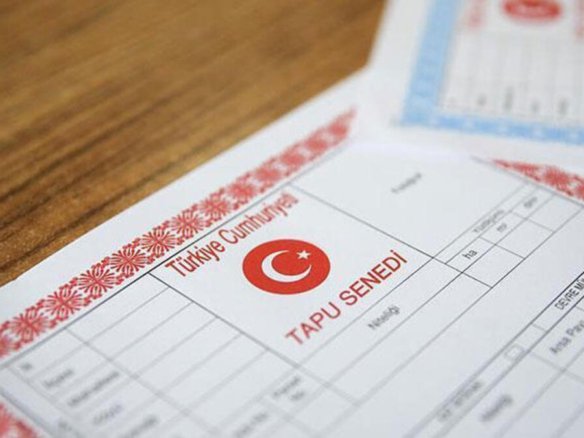
Under Article 705 of the Turkish Civil Code, ownership of immovable property passes on registration at the Land Registry. So the default acquisition date is the date your name went onto the tapu — not the date you signed a contract, not the date you paid, and not the date you got the keys.
There is a well-established exception, and it matters more than it sounds. Where a property was handed over for the owner’s actual use before it was registered — which routinely happens with housing cooperatives, the public housing administration and some developers — the date actual use began can be taken as the acquisition date instead. The Revenue Administration requires that to be evidenced, listing allocation certificates, delivery minutes, and electricity, water, telephone or gas bills as the kind of documents that will do it.
A separate rule catches a specific pattern. Where land is bought or acquired by barter and then divided into parcels within five years and sold off, in whole or in part, in that period or later, the Revenue Administration treats the resulting earnings as commercial income rather than as a value-increase gain. That is a different and generally less forgiving regime.
How the taxable gain is actually built
The order matters. Indexation comes before the exemption, and the exemption is applied to the net gain rather than to the sale price.
Confirm the charge applies at all
Was the property acquired for consideration, and is the disposal happening within five years of acquisition, counted in calendar days? If it was inherited or gifted, stop here. If five full years have passed, stop here. Neither case produces a value-increase gain for a private seller.
Establish the disposal proceeds
The starting figure is everything received in exchange: money, goods in kind, and any other benefit capable of being expressed in money. Turkish law treats a wider set of events as a disposal than most sellers expect, which the cards below set out.
Index the acquisition cost by Yİ-ÜFE
The cost is uplifted by the increase in the Domestic Producer Price Index published by the Turkish Statistical Institute, excluding the month of disposal. Indexation is only permitted where that increase is 10 per cent or more. In practice this is usually the largest single adjustment in the whole calculation.
Deduct the costs you bore on the sale
Expenses incurred because of the disposal and remaining with the seller, together with taxes and fees paid, come off as well. Keep the receipts: agency invoices, deed charges and similar costs are only deductible if you can evidence them.
Apply the exemption for the year of sale
The annual exemption is deducted from the net gain. The figure that applies is the one in force for the year the sale took place, not the year you file. For 2026 that figure is 150,000 TL, set by General Communique Serial No. 332. If nothing is left after the exemption, there is nothing to declare on this account.
Declare in March and pay in two instalments
The balance goes on an annual income tax return filed in March of the following year, and the tax is paid in two equal instalments, in March and in July. Turkey’s pre-filled return facility, the Hazır Beyan Sistemi, can be used to file. The rate is the progressive personal income tax tariff for that year.
Six things Turkish law treats as a disposal
Selling for cash is only the most obvious one. Each of these can start the same calculation.
Sale
The ordinary case: the property is sold and ownership transfers at the Land Registry in exchange for a price.
Transfer for consideration
Any transfer and assignment of the property against payment, however the parties choose to describe the arrangement between themselves.
Barter and exchange
Trampa and takas — swapping one property for another, or for other assets — are disposals. No cash needs to change hands for a gain to arise.
Expropriation
A compulsory purchase by the state is a disposal for this purpose, even though the owner did not choose it. See our guide to kamulaştırma.
Nationalisation
Property taken into state ownership is likewise treated as disposed of, with the same five-year test applied to the original acquisition.
Contribution to a company
Putting the property into a commercial company as capital in kind counts as a disposal. Relevant if you are considering holding Turkish property through a company.
Common situations, and whether a value-increase gain arises
A quick orientation only. The answer in a real file depends on documents, and on whether your activity has tipped over into trading.
| Situation | In scope? | What drives the answer |
|---|---|---|
| Bought in 2019, selling now as a private owner | Нет | More than five calendar years have elapsed since registration, so the gain falls outside the charge. |
| Bought last year, selling now | Да | Inside five years. Index the cost, deduct selling costs, apply the year’s exemption, declare any balance. |
| Inherited from a parent, selling after two years | Нет | Acquisition without consideration is excluded whenever the property is sold. Inheritance tax is a separate matter. |
| Received as a gift, selling after one year | Нет | Also an acquisition without consideration, so the five-year test simply does not engage. |
| Swapping your apartment for another property | Да | Barter and exchange are disposals. The absence of cash does not remove the gain. |
| Expropriated by the state within five years | Да | Expropriation is listed as a disposal, notwithstanding that the owner had no choice in it. |
| Land bought, parcelled within five years, sold off | Different regime | Treated as commercial income rather than a value-increase gain, which changes the rules substantially. |
| Several properties bought and sold year after year | Different regime | Continuity, profit motive and commercial organisation can make this trading income. See the section below. |
When you stop being an owner and start being a trader
Everything above assumes you are a private individual disposing of your own property. There is a point at which Turkish tax law stops seeing that and starts seeing a business, and once it does, the five-year rule and the annual exemption no longer help you. The Revenue Administration sets out three criteria for deciding which side of the line a seller falls on.
Continuity of activity. If buying and selling property is carried on continuously, as an occupation, the earnings are commercial income. The most decisive indicator is simply the number of profit-producing transactions — whether several properties were sold within the same calendar year, or across consecutive calendar years one after another.
The purpose of the sale. Where there is more than one transaction, the question becomes why. If the buying and selling is being done in order to make a profit, it is commercial. If the transactions were made without a commercial purpose, to meet a personal need, the gain is treated as a value-increase gain.
The existence of a commercial organisation. Opening business premises, employing staff, registering with the trade registry and similar steps are taken as evidence that a commercial organisation exists. Where the organisation is not clear-cut, the Revenue Administration falls back on the first two criteria.
One further detail worth knowing: where the acquisition cost of a property cannot be established at all, it is not simply treated as zero. Under the Tax Procedure Law, a value determined by an appraisal commission is used instead, or for businesses keeping accounts, the value shown in the last balance sheet or inventory records. That is a safeguard, but relying on it is far worse than keeping your original purchase documentation.
What foreign sellers should put in place now
The administrative side of this tax is straightforward, but it is unforgiving about evidence. Almost every dispute comes down to a seller being unable to prove what they paid, when they acquired, or what the sale cost them.
Keep the acquisition file intact. The deed, the purchase contract, the payment records and any valuation obtained at the time all feed into the cost base. If you bought off-plan, keep the delivery minutes and the earliest utility bills as well, because they may move your acquisition date earlier and that can be worth more than any other single document in the file.
Keep the disposal file too. Expenses borne by the seller and taxes and fees paid are deductible, but only with evidence. Agency commission, deed charges and the cost of any certificates obtained for the sale belong in this folder. Our guide to estate agent fees in Turkey covers what is normal on the commission side, and yetki belgesi explains how to confirm your agent is licensed in the first place.
Get a Turkish tax number and keep it active. You cannot file without one. Most foreign owners obtained one at purchase; if yours has lapsed or you have changed passport since, sort it out before the sale rather than during the filing window. See getting a Turkish tax number.
Check whether you have other Turkish income. If you have been renting the property out, that income has its own treatment and its own thresholds, and the two interact on the same annual return. Our overview of taxes in Turkey for foreigners sets out how residency affects what you owe.
Do not rely on the deed value. The figure declared on the title deed is not necessarily your cost base, and under-declaring a purchase price to save on transfer charges leaves you with a lower cost base and a larger taxable gain on exit. It is one of the ways a short-term saving becomes an expensive problem years later. The official value concept used for annual property tax is a different thing again, explained in our guide to rayiç bedel.
Thinking about selling a Turkish property?
We can tell you where you sit against the five-year line before you accept an offer, and introduce you to a licensed tax adviser for the numbers.
Değer artış kazancı — frequently asked questions
The questions foreign owners ask most often about the five-year rule, indexation and filing.
Know the tax position before you accept an offer
Tell us when you acquired and what you are being offered, and we will set out where you stand against the five-year rule, what documentation you will need, and whether waiting changes the picture. We work with licensed Turkish conveyancers and tax advisers.

Присоединиться к обсуждению