

Antalya Property for Sale: A Foreign Buyer’s Guide to the Districts
Antalya is a province rather than a single town, and the difference between a Konyaaltı sea-view apartment and a Döşemealtı villa plot is larger than most buyers expect. Here is how the districts actually differ, and the purchase sequence that applies to all of them.
Antalya is six markets wearing one name
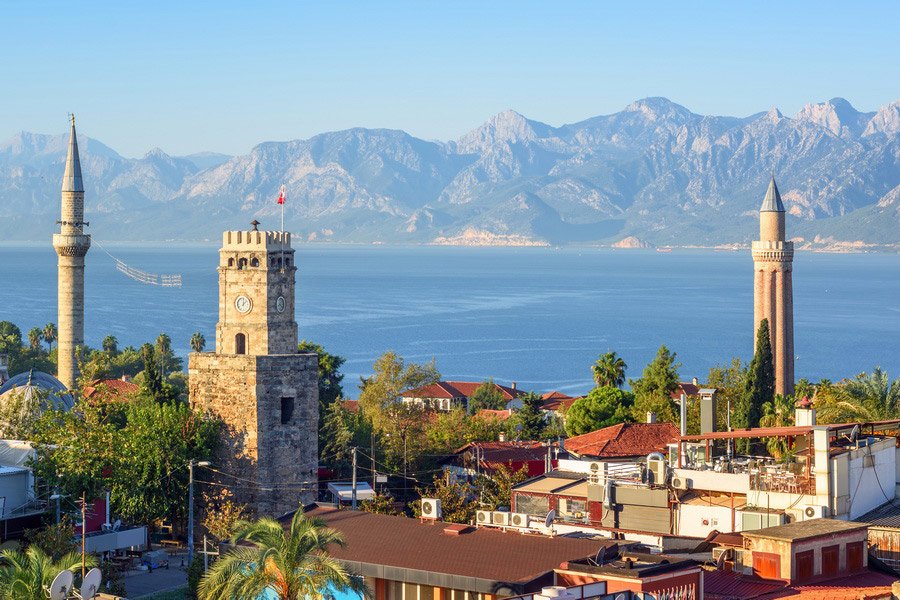
Most people searching for Antalya property for sale have a single image in mind: a balcony, the Mediterranean, the Taurus mountains behind. That image is real, but it describes perhaps a third of what is actually on the market. Antalya is a province of very different districts, and a buyer who searches the whole of it at once ends up comparing a nineteenth-century stone house in the old walled town against an inland villa plot forty minutes from the sea, as though the two were competing for the same decision.
The useful first move is not to look at properties. It is to work out which of the province’s districts matches how you actually intend to use the place. A buyer who wants to walk to a beach and be somewhere that is still alive in February is describing Konyaaltı or central Muratpaşa. A buyer who wants a detached house with a garden and does not mind driving is describing Döşemealtı. A buyer who wants golf, a pool and a scheme that closes down for the winter is describing Belek. These are not price tiers of the same product; they are different products.
The purchase mechanics, by contrast, are identical across every district and are the same standardised national process used everywhere in Turkey. Ownership is recorded centrally by the Land Registry, the deed is issued in your own name as full freehold, and since 1 July 2026 purchase funds must move through a government-mandated secure payment system rather than passing directly from buyer to seller. For the full walk-through of that process see our Turkey property buyer’s guide, and for the mistakes that still catch people out, the seven pitfalls foreign buyers fall into.
Antalya — Buyer Orientation
What applies to a purchase anywhere in the province
Buying in Antalya, in the order it actually happens
The sequence is the same in every district of the province. What changes between them is what you are buying, not how you buy it.
Set the purpose before the search
Whether you are buying for summer use, year-round living, rental income or to support a citizenship or residence permit application changes the district, the building type and the paperwork. It also determines whether an SPK valuation report is compulsory. Decide this first — it is the single input that shapes everything downstream.
Get a tax number and a Turkish bank account
A Turkish tax number is the prerequisite for almost every other step, from opening a bank account to registering utilities. Both are straightforward, and both are far easier to arrange early than in the week before a transfer appointment.
Shortlist by district, then by building
Antalya is a province, not a single town, and the difference between a Konyaaltı sea-view apartment and a Döşemealtı villa plot is larger than the difference between two cities elsewhere. Narrow to two or three districts before you start comparing individual properties.
Run the title deed and annotation checks
Obtain the full title deed record and read the annotations page, not just the front. Mortgages, liens, disputes and formal şerh annotations are registered against the property and are the things that surface after completion if nobody looked for them before it.
Confirm the occupancy permit and the zone status
Ask for the iskan, the occupancy permit confirming the finished building was signed off as matching its approved plans. In parallel, complete the military clearance check confirming the property is not inside a restricted zone. Neither is a formality to be left until later.
Arrange DASK and route the money correctly
DASK cover must be in place before the Land Registry will allow the transfer to complete, and utilities cannot be connected without it. Every payment, deposits included, goes through the secure payment system, where funds are held until ownership is registered.
Complete at the Land Registry and register the utilities
The transfer takes place at the Tapu office, in person or through a properly drafted power of attorney. Once the deed is issued in your name, the funds release to the seller and you can move the utility subscriptions and the building service charge account across.
Six Antalya districts, and who each one suits
Antalya province stretches a long way in both directions along the coast and a long way inland. These are the six areas foreign buyers most often end up choosing between.
Muratpaşa — central Antalya
The city proper, taking in the old walled town of Kaleiçi and the Lara strip running east towards the airport. Dense, walkable and busy in February as well as August, with a mix of older stock and infill development. The natural choice for a buyer who wants a Turkish city rather than a resort.
Konyaaltı — the western beach
West of the centre, spread along a long pebble beach with the Beydağları rising directly behind it. The apartment stock skews newer and taller than Muratpaşa's, and sea-and-mountain views are the district's defining commodity. Popular with foreign buyers who want a beach they can walk to.
Lara — the eastern coast road
Administratively part of Muratpaşa, but a market in its own right: a coastal corridor of newer apartment schemes running out towards Kundu and the large hotel strip. Sea access, wide roads and proximity to the airport define it.
Serik and Belek — golf and resort villas
East of the airport, Belek is Turkey's golf capital and the stock reflects it: villas, branded resort schemes and holiday-use property rather than year-round housing. Quiet out of season, which suits some buyers and unsettles others.
Döşemealtı — inland villas and plots
North of the city and noticeably higher, cooler and greener than the coast. This is where detached villas, garden plots and low-density schemes concentrate. You trade walkable beach access for space, air and a calmer setting.
Kepez — the domestic-buyer interior
Inland and largely residential, Kepez has absorbed a good share of Antalya's newer mass-market construction and urban regeneration. Predominantly a Turkish-buyer district, which is precisely why some foreign buyers looking for everyday value pay attention to it.
How the districts compare on the things that decide it
Beach access and whether a place functions in winter are the two variables that most often flip a buyer’s shortlist. Everything else tends to follow from them.
| Район | Character | Beach on foot | Beach access | Year-round community | Typical stock |
|---|---|---|---|---|---|
| Muratpaşa (incl. Kaleiçi) | Urban, historic, year-round | Да | Walk or short drive | Да | Mixed older stock and infill |
| Konyaaltı | Beachfront, modern, residential | Да | Walk | Да | Newer apartments, sea views |
| Lara | Coastal corridor, newer schemes | Да | Walk or short drive | Да | Newer apartment developments |
| Serik / Belek | Resort and golf, seasonal | Нет | Drive | Нет | Villas and branded resort schemes |
| Döşemealtı | Inland, green, low density | Нет | Drive | Да | Detached villas and plots |
| Kepez | Inland, urban, domestic market | Нет | Drive | Да | Mass-market apartments |
New-build, resale and the old town are three different purchases
Beyond the choice of district, Antalya presents three quite distinct kinds of transaction, and each carries its own checks.
New-build and off-plan. Much of the newer supply in Konyaaltı, Lara and Kepez is developer stock, sold either finished or off-plan. The advantage is obvious: modern construction, current earthquake-code design, and in resort schemes a set of facilities that would be impossible to add later. The exposure is timing. With off-plan you are buying a promise of delivery, so the developer’s track record matters more than the show apartment, and the occupancy permit — the iskan — is the document that proves the finished building was signed off as matching its approved plans. A scheme that is complete but has no iskan is not finished in the sense that matters.
Resale. Resale property is the whole of Antalya rather than the newest fringe of it, and it is where central Muratpaşa mostly trades. The building exists, so you can see exactly what you are getting, meet the neighbours and ask the management company for the real service charge figures rather than projected ones. The trade is that older buildings predate current construction standards, and the annotations page of the title deed becomes the critical document: mortgages, liens and formal şerh annotations all sit there rather than on the front of the deed.
Kaleiçi, the old town. Antalya’s walled old town is a genuinely unusual sub-market — historic stone houses inside a protected conservation area, many of them operating as boutique hotels. It is charming and it is also the most specialised purchase in the province, because conservation status constrains what may be altered, restored or rebuilt, and those constraints are attached to the property rather than to the owner. Buy here only with advice that is specific to protected buildings, not generic purchase advice.
If your interest is in letting the property when you are not using it, note that short-term tourism rental in Turkey has been a licensed activity since Law No. 7464 took effect on 1 January 2024, and that the permit process involves the consent of the other owners in the building. Our Antalya short-let investment guide covers what that means in practice, and property management and rentals covers running a Turkish property from abroad.
What an Antalya property costs to own
Purchase price is the number buyers research and the running costs are the ones that surprise them. There are four categories, and they behave differently from one another.
Annual property tax is collected by the district municipality in which the property sits, so the collecting authority for a Konyaaltı apartment is not the one for a Serik villa. DASK, the compulsory natural disaster insurance, is not optional and not deferrable: without valid cover the Land Registry will not complete a transfer and utility subscriptions cannot be opened. It covers structural earthquake damage to the building, not your contents, so treat it as the legal floor rather than as insurance.
Building service charges — the aidat — are the item most often underestimated, and the gap between a plain city block and a resort scheme with pools, gardens, security and a gym is very large. This is a recurring cost attached to the lifestyle you are buying, and it does not fall when you are not there. Utilities are the fourth, and they cannot be connected until DASK is in place.
Rates, thresholds and premiums in Turkey change frequently, and a figure that was correct last year may be actively misleading now — which is why we have not put numbers against these categories here. For the current position on what owners pay and how each tax is assessed, see our dedicated guide to property taxes in Turkey, and confirm the specific figures for your property and district with a licensed Turkish adviser or accountant before you commit.
Not sure which Antalya district fits?
Tell us how you intend to use the property and we will narrow it to two.
Antalya property questions, answered
The questions foreign buyers ask most often about buying on the Turkish Mediterranean coast.
Where to go next
Area guides for the Antalya coast, and the rest of our foreign-buyer library.
- Konyaaltı sea-view apartments — the western beach district in detail.
- Lara Beach property guide — the eastern coastal corridor.
- Antalya short-let investment guide — licensed tourism rental, and what it requires.
- Alanya apartments for sale — the same coast, further east, district by district.
- Istanbul vs Antalya — how the two markets differ for foreign investors.
- Property taxes in Turkey — what owners actually pay, and to whom.
- Escrow accounts in Turkey — how the secure payment system protects your funds.
- All Turkey property guides — the full library, by city and by topic.
Have the checks run before you commit
Tell us the Antalya property you are considering and we will run the title deed record, annotations, occupancy permit and zone checks before anything is signed. We work with licensed Turkish conveyancers and appraisers, and every transaction settles through the secure payment system.


Присоединиться к обсуждению