

Selling Property in Turkey: A Foreign Owner’s Guide to the Process
Selling is not simply buying in reverse. The obligations sit differently, the paperwork you need is largely paperwork you were given years ago, and since 1 July 2026 the money moves through a system you do not control. Here is the sequence, and what to have ready before you list.
The sale is decided by documents you already have — or do not
Foreign owners preparing to sell a Turkish property usually expect the difficulty to be commercial: finding a buyer, agreeing a price. In practice the commercial part is rarely what delays a sale. What delays it is a folder. Somewhere in the transaction there is a document that was never obtained, an annotation on the title deed that nobody removed, an inherited share that was never formally registered, or a set of utility accounts still in a previous owner’s name.
None of those are fatal. All of them take weeks to resolve, and all of them are far easier to resolve before a buyer is waiting than during a live transaction with a deposit already committed. The single most useful thing a seller can do is to run the checks on their own property that a careful buyer would run on it — and to do that months before listing, not after an offer arrives.
There is also a change that many owners who bought some years ago have not registered. Since 1 July 2026, payments for the sale and purchase of residential property, land plots and other real estate in Turkey must move through the country’s mandatory secure payment system rather than passing directly between the parties. As a seller, this means the purchase money is held and released to you only after the transfer of ownership has been registered — a meaningful shift in sequencing if you were expecting funds on signature. It applies to partial payments and deposits as well as to the balance.
This guide sets out what to prepare, the order the process runs in, how the tax position is structured, and who is actually buying in the Turkish market this year. For the buyer’s side of the same transaction, see our guide to the pitfalls foreign buyers still fall into, and for how purchase funds are held, our explainer on escrow and secure payment in Turkey.
Seller’s Fact Sheet
The fixed points in a Turkish property sale
What to have ready before you list
Assemble these first. Every one of them is something a serious buyer or their lawyer will ask for, and every one of them takes longer to obtain than you expect if it is missing.
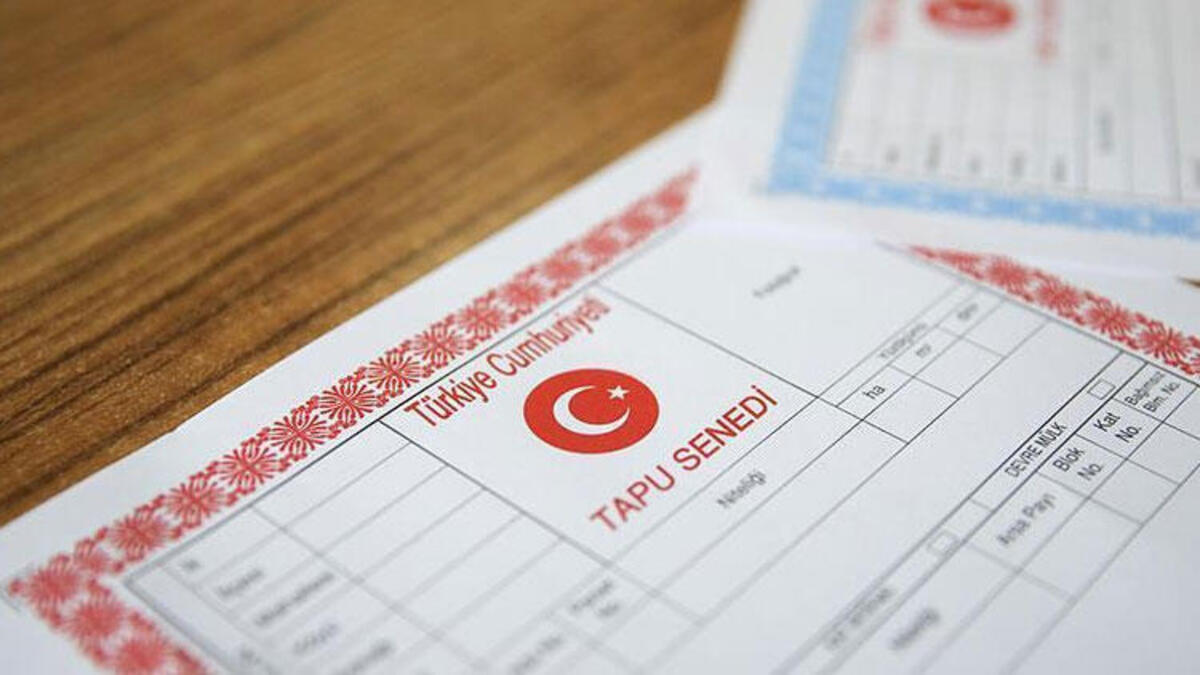
The title deed and its annotations
Not only the front of the tapu but the record of what is registered against it: mortgages, liens, disputes and formal annotations. Anything sitting there must be cleared or disclosed before completion, and clearing it is your job, not the buyer’s.
The occupancy permit (iskan)
The document confirming the building was completed in line with its licence. If your block never obtained one, you need to know that before a buyer’s lawyer discovers it, because it will affect both the price and the pool of buyers able to finance a purchase.
Current DASK policy
Compulsory natural disaster insurance must be in place for the Land Registry to register a transfer. A lapsed policy is a common and entirely avoidable reason for a completion date to slip.
Proof of what you paid
Your original purchase documentation establishes your acquisition cost, which is what the gain on a disposal is measured against. Owners who accepted a low declared value at purchase discover the consequence here.
Settled charges and utilities
Outstanding building management charges (aidat), municipal property tax and utility accounts should be paid up and evidenced. Arrears do not stop a sale but they do stall one, and they are usually deducted from your proceeds.
A power of attorney, if selling remotely
Most foreign owners do not attend the Land Registry in person. A properly drawn, notarised and — if executed abroad — apostilled power of attorney is what makes a remote completion possible. Draft it narrowly and early.
Selling a Turkish property, step by step
The order below is deliberate. Steps one to four are things you can do before a buyer exists, and doing them then is the difference between a six-week sale and a six-month one.
Run the checks on your own property
Obtain a current extract of your title deed record and read the annotations page. Confirm the occupancy permit exists, the DASK policy is live, and that ownership is registered exactly as you believe — particularly where a property was inherited, held jointly, or bought before a change of name or marital status.
Clear what needs clearing
Discharge any mortgage, settle arrears of management charges and municipal tax, and apply to remove annotations that have lapsed but never been struck off. This is the step that takes real calendar time, which is precisely why it belongs before listing rather than after an offer.
Establish your tax position before you agree a price
How a disposal is treated depends on how long you have owned the property, what you can evidence as your acquisition cost, and your own residence position. Get this assessed by a licensed Turkish adviser before you negotiate, not afterwards — it can materially change what a given offer is actually worth to you.
Put the power of attorney in place if you will not attend
If you intend to complete remotely, arrange a notarised power of attorney well in advance. Executed outside Turkey it will generally need to be apostilled and translated, and the Land Registry is particular about scope — a document drafted for a different purpose will not be accepted.
Market it, and price it against evidence
Price against recent comparable transactions for your specific building and district rather than against asking prices, which in a cooling market can sit well above what is actually being achieved. Be clear with your agent about what is included: fitted kitchens, white goods and furniture are frequently assumed by one side and not the other.
Agree terms in writing, and check the buyer’s eligibility
If your buyer is a foreign national, their eligibility is part of your timetable. Nationality-based restrictions apply, a foreign individual may hold no more than 30 hectares nationally and no more than 10 per cent of any one district, and property in military or special security zones is restricted or prohibited. A buyer who cannot lawfully complete is not a buyer.
Settle through the secure payment system
From 1 July 2026 the purchase funds must move through Turkey’s mandatory secure payment system. The money is held and paid out to you after the transfer of ownership is registered, and a commission is deducted from the amount passed on. Plan your own onward payments around that timing rather than around the completion date.
Complete at the Land Registry, then close everything down
Ownership transfers on registration. Afterwards, close or transfer the utility subscriptions, notify the building management, cancel standing payments, and keep the complete transaction file — deed, valuation, proof of the declared price and evidence of the funds received. You may need it years later to evidence the disposal.
Thinking of selling a Turkish property?
We will run the title, annotation and permit checks on your own property before it goes to market.
What changes if your buyer is a foreign national
Most of the sale runs identically either way. These are the points where a foreign buyer adds steps to your timetable — worth knowing before you accept an offer on the basis of speed.
| Requirement | Turkish buyer | Foreign buyer | Effect on your timetable |
|---|---|---|---|
| Secure payment system | Applies | Applies | Funds reach you after registration, either way |
| Military / security zone clearance | Not required | Требуется | Adds a check before completion can be booked |
| 30 ha national ownership cap | Does not apply | Applies | Affects buyer eligibility, rarely a practical limit |
| 10% district ownership cap | Does not apply | Applies | Can block a sale in high-demand districts |
| Nationality eligibility | Not applicable | Checked | Confirm early; some nationalities are restricted |
| Turkish tax number for the buyer | Already held | Must obtain | Straightforward but must be done before completion |
| Sworn translator at the Land Registry | Not needed | Usually needed | Must be arranged for the appointment itself |
| DASK in place before transfer | Требуется | Требуется | Your responsibility as current owner |
The row that most often surprises sellers is the 10 per cent district cap. Because it is measured against the surface area of a district rather than against a number of properties, it is invisible until it is not, and in the coastal districts with the heaviest foreign ownership it is a genuine constraint rather than a theoretical one. If your property sits in such an area and your buyer is foreign, establish the position early — it is not something either of you can negotiate around.
The second is the sworn translator. It sounds trivial, and it is, until the Land Registry appointment arrives and there is nobody present who can lawfully interpret for a buyer who does not speak Turkish. Appointments are not easily rebooked at short notice.
How the tax position is structured — and why we have not printed the rates
Two costs sit around a Turkish property sale. There is a title deed transfer fee, calculated as a percentage of the declared sale value and, in ordinary practice, shared between the parties by agreement. And there is the tax treatment of any gain on the disposal.
The structure of the gain rule is worth understanding even though the rates are not printed here. Turkish income tax law applies a five-year holding period to property disposals by individuals: a gain realised on a property sold within five years of acquisition falls within the charge, while a disposal after more than five years of ownership is generally outside it. The gain itself is measured as the difference between the sale price and an indexed acquisition cost, not as the full sale proceeds — which is why the price recorded on your original deed matters so much, and why accepting an under-declared purchase price years ago becomes an expensive decision at the point of sale.
The same caution applies to the valuation report. A report prepared by an appraiser licensed by the Capital Markets Board is compulsory where a transaction supports a citizenship by investment or residence permit application. Beyond that case the position has moved in recent years, and guidance in circulation is not consistent, so establish whether your specific transaction requires one rather than assuming either way. It is a document that is straightforward to commission at the right moment and awkward to produce retrospectively.
One further point of timing. Legislation passed in 2026 — Law No. 7579, published in Official Gazette No. 33261 on 22 May 2026, and Law No. 7584, published in Official Gazette No. 33286 on 20 June 2026 — tightened requirements around forest-boundary title defects, developer compliance certificates, fire-safety inspections, and enforcement against under-declared purchase prices. Neither changed the citizenship by investment framework. For a seller, the practical consequence is that the standard of documentation a buyer’s adviser will expect has risen, and title defects that were once tolerated as historic quirks are now more likely to be raised.
Who Is Buying — February 2026
Homes bought by non-residents, by province and by nationality
Selling property in Turkey — frequently asked questions
The questions foreign owners ask most often about process, timing, paperwork and getting the proceeds out.
Related guides
- Buying property in Turkey: seven pitfalls — the buyer’s side of the same transaction.
- Escrow and secure payment in Turkey — how purchase funds are actually held and released.
- Turkey property guides — the full library for international owners and buyers.
- Alanya apartments for sale — a district-by-district buyer’s guide.
- Legal services — title, due diligence and conveyancing support.
- Property management and rentals — running or letting a Turkish property from abroad.
Have your own title checked before you go to market
Tell us about the property you are considering selling and we will pull the title deed record, read the annotations, confirm the occupancy permit and DASK position, and tell you what needs clearing before it is listed. We work with licensed Turkish conveyancers and appraisers, and every transaction settles through the secure payment system.



Присоединиться к обсуждению