

İfraz and Tevhit: Splitting and Merging Land in Turkey
A Turkish parcel is not a shape you can redraw at will. Splitting one plot into several, or merging neighbouring plots into one, is an administrative act with its own law, its own minimum dimensions and its own deadlines. Here is how both work, what blocks them, and why merging two plots almost never gives you more to build.
Two words that decide whether a plot can be built on
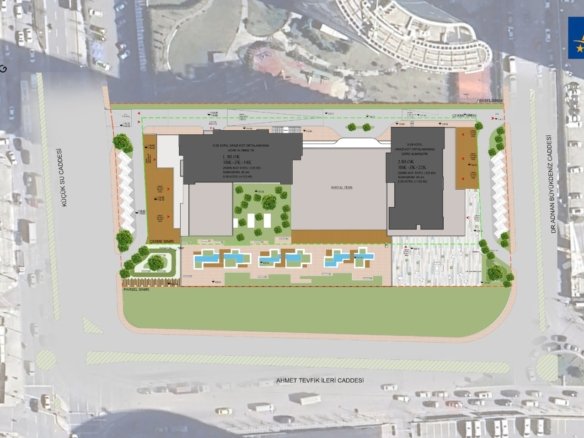
Buyers looking at Turkish land meet these two words early and often misread them. İfraz is subdivision: taking one registered parcel and splitting it into two or more, each with its own parcel number and its own title deed. Tevhit, sometimes called birleştirme, is the reverse: taking two or more adjoining parcels and merging them into a single parcel under one title.
The error is to treat either as a private matter between owner and surveyor. Both are administrative acts under Articles 15 and 16 of Zoning Law No. 3194, and the law has been tightened considerably. Since the amendments made by Law No. 7181 in July 2019, the rule in areas covered by a zoning plan is that a parcelation plan must be prepared first, and subdivision and merger may be carried out only where that parcelation plan has been registered.
That single change explains a great deal of the frustration foreign landowners report. A plot can be perfectly genuine, perfectly owned and perfectly paid for, and still not be capable of being split — because the administrative layer underneath it has not been completed. Establishing that before you buy is far cheaper than discovering it after.
One provision cuts the other way, and surprises owners who assume nothing can happen without their consent. Where a zoning parcel is not suitable for construction as it stands, the administration may act on one owner’s request or on its own initiative, giving the owners three months to agree among themselves. If they do not, it may proceed on its own authority, by merger and by subdivision according to the actual situation on the ground.
İfraz and tevhit at a glance
Subdivision and merger of Turkish land parcels
How small a parcel is allowed to get
A subdivision is only approved if what comes out of it is still a lawful parcel. The Planlı Alanlar İmar Yönetmeliği sets the minimum dimensions that apply where the zoning plan has not laid down different provisions, and the first thing to understand is that they are not a single number. They vary by what the zone is for, by how tall you may build and by the building order — whether the block is detached, in a terrace or at the end of one.
In residential and commercial zones on land suitable for up to and including four storeys, the minimum parcel width is 6.00 metres in terraced building order; at the end of a block it is the side garden distance plus 6.00 metres, and in detached order the sum of the side garden distances plus 6.00 metres. Between five and nine storeys inclusive, an amendment made in May 2023 adds 60 centimetres for each additional storey. At ten storeys or more the base figure rises to 12.00 metres.
Other zones carry their own floors, summarised alongside. Depth is regulated separately: in residential and commercial zones a parcel may not be shallower than 13.00 metres where there is no front garden, or the front garden distance plus 13.00 metres where there is one. In non-residential urban working areas, parcel area itself cannot fall below 2,000 square metres.
One softening is worth knowing: where adjoining owners simply want to tidy the boundary between them, operations carried out to straighten mutual borders are exempt from the minimum subdivision conditions, provided the number of parcels is not changed. Rearranging a shared boundary is treated differently from creating a new plot.
From application to new parcel number
The administrative route is the same for subdivision and merger. The deadlines in steps four and five are set by law, not by local practice.
Establish what the plan permits on that parcel
Start with the imar durumu certificate, which states the parcel’s permitted use and building conditions. It gives you the building order and the storey allowance, and those two facts determine which minimum width and depth apply to anything you propose.
Confirm the parcelation plan is registered
In an area with a zoning plan, subdivision and merger can be carried out only where the parcelation plan has been registered. There are defined exceptions — among them central government public investments, publicly owned areas and areas under a conservation zoning plan — but outside those, an unregistered parcelation plan stops the process before it starts.
Test the proposed result, not the existing plot
Approval looks at what the operation produces. Each parcel coming out of a subdivision must satisfy the minimum width, depth and where relevant area for its zone. A merger has its own prohibitions: parcels with different building orders or use decisions, intermediate parcels fronting different roads, and parcels separated by a subdivision line cannot be combined at all.
The island study and the municipal application
Before a subdivision or merger is carried out, a study must be prepared for the whole zoning island, taking account of lawful existing buildings and drawing the schematic position of buildings to come, to show that the resulting parcel distribution will not spoil the aesthetics of the buildings or the silhouette of the street. The application then goes to the municipality, or to the governorate outside municipal and adjacent boundaries.
The decision, and the statutory clock
Conformity with the Law and the regulation is approved by the municipal executive committee or the provincial administrative board. The law requires the approval process to be concluded within 30 days at the latest from the application reaching the municipality or the governorate, and the result to be notified to the land registry within 15 days for registration or cancellation.
Registration, and only then is it real
The land registry office must conclude the registration within one month. Until that entry is made nothing has legally changed: the old configuration is still what the register shows, and it is the register that governs. New parcel numbers and deeds issue at this point — also when a buyer should re-run the parcel enquiry.
İfraz and tevhit side by side
Same approval route, same deadlines, very different constraints and very different reasons for doing it.
| Point of comparison | İfraz (subdivision) | Tevhit (merger) |
|---|---|---|
| What happens to the parcel | One parcel becomes two or more | Two or more adjoining parcels become one |
| Minimum dimensions must be met by the result | Yes, by every new parcel | Not as a subdivision test |
| Can be blocked by lack of road frontage | Yes | No |
| Blocked where building orders differ | No | Yes |
| Blocked where parcels front different roads | No | Yes, for intermediate parcels |
| Creates additional buildable area | No | No, capped at the pre-merger sum |
| Typical reason an owner does it | Selling part of a holding, dividing between heirs, releasing a building plot | Assembling a development site, curing plots too small to build on |
Where foreign owners actually meet these rules
Six situations in which subdivision or merger stops being a technical term and starts being your problem.
Untangling a shared title
Where several people hold undivided shares in one parcel, subdivision is the usual cure. This is the next step for anyone holding a hisseli tapu, and where minimum parcel sizes decide whether it is possible at all.
Assembling a development site
Developers merge adjoining plots to create a site large enough to lay out properly. The rules on differing building orders and road frontage decide which neighbouring plots can be brought in, and which cannot be combined whatever is offered.
Selling part of a field
Owners of larger holdings often want to release a portion. On agricultural land this is where Law No. 5403 bites, and the answer is often that it cannot be divided below the applicable minimum.
A plot with no way in
Parcels left without frontage onto a road after a plan change cannot be subdivided, and closed roads cannot be treated as separate parcels until land arrangement gives frontage. A plot that looks like a bargain is sometimes priced that way for exactly this reason.
Land-for-flats agreements
Where a landowner contributes land in exchange for finished units, the parcel configuration usually has to be settled first. That makes subdivision and merger a precondition of the construction servitude that follows.
Dividing an inheritance
Heirs who cannot agree may face partition proceedings. Where immovables have been made co-owned under the Zoning Law and owners do not agree within six months of notification, the administration may itself bring a partition action as though it were a shareholder.
Thinking of buying land in Turkey to split or build on?
We check the zoning status, the parcelation plan and the parcel dimensions before you commit to a plot.
The merger myth, and the public share
Two misconceptions cost foreign landowners more money than all the others combined. The first is the belief that merging plots creates development capacity. It does not. Where parcels with the same building order and use decision are merged, the regulation provides that the footprint area and total floor area of the resulting parcel cannot exceed the sum of those calculated separately for each parcel beforehand. Where the plan fixes block dimensions, the pre-merger construction rights likewise cannot be exceeded. Merging is a tool for making a site workable — curing plots individually too narrow, or laying out a scheme sensibly — not for manufacturing square metres. Anyone selling a plot on the basis that combining it with the neighbour unlocks more building is describing something the regulation forbids.
The second misconception concerns land arrangement, the process under Article 18 of the Zoning Law by which authorities reorganise land and plots wholesale. In the course of that redistribution, an area may be deducted from the land being regulated to create the public service areas the population of the regulation area needs, and against the increase in value the regulation itself produces. That deduction is the düzenleme ortaklık payı, the regulation partnership share. The law caps it: it cannot exceed 45 per cent of the areas of the land as they were before the regulation.
Forty-five per cent is a large number, and it has grown: it stood at 35 per cent before December 2003, rose to 40, and was raised again to 45 in July 2019. An owner working from the older figures can be materially out. The deduction may be used only for the public uses the law lists — roads, squares, parks, car parks, playgrounds, green areas, places of worship, education and health facility areas and similar — and for nothing else. As a rule no parcel may have the share deducted twice, though where a plan decision increases building conditions or population, a further deduction may top the original ratio up to 45 per cent.
Minimum parcel widths
Where the zoning plan sets no different provision
Why agricultural land is a different question entirely
Foreign buyers drawn to olive groves, vineyards and smallholdings often assume the zoning rules above are the whole picture. They are not. Agricultural land is governed in addition by Soil Protection and Land Use Law No. 5403, rewritten substantially in April 2014 to stop farmland being broken up.
The mechanism is simple and severe. Agricultural land that has reached the minimum agricultural land size acquires the character of indivisible property. Land below the sizes the Ministry determines cannot be subdivided, cannot be put into shares, and the number of shares and co-owners cannot be increased. The law fixes floors beneath which those minimums may not be set: 2 hectares for absolute agricultural, marginal agricultural and special crop land; 0.5 hectares for planted agricultural land; and 0.3 hectares for land farmed under cover. Smaller parcels may be formed with Ministry approval where non-agricultural use permission has been given, or for crops with particular climate and soil needs such as tea, hazelnut and olive.
On top of that sits a second, separate limit. The law defines a sufficient income agricultural land size for every province and district, set out in a list annexed to the law, and agricultural land cannot be divided below the figure that applies where it sits. The Ministry notifies the land registry so that this characteristic is recorded by annotation — which means a buyer who reads the register carefully can see it before committing.
Taken together, the question for anyone buying Turkish land is less whether a plot can be divided in principle and more which of four filters it has to pass: the zoning plan, the registered parcelation plan, the minimum parcel dimensions, and — if it is farmland — the indivisibility rules. A plot that clears all four is a different asset from one that clears three, and the difference is rarely visible from the listing.
Related land and title guides
The zoning, registry and ownership checks that sit either side of a subdivision or a merger.
- İmar durumu: the Turkish zoning certificate — what the plan permits on a specific parcel.
- Land for sale in Turkey — what foreign buyers should check before buying a plot.
- Buying agricultural land in Turkey — the farmland rules in full.
- Hisseli tapu: shared title deeds — undivided shares, and how they are untangled.
- Parsel sorgu: checking a parcel online — confirming the registry position yourself.
- Tapu: the Turkish title deed — what the register records and how to read it.
- Kat irtifakı and kat mülkiyeti — construction servitude and full ownership.
- All Turkey property guides — the full library for foreign buyers and owners.
İfraz and tevhit — frequently asked questions
What buyers, landowners and developers ask most often about splitting and merging parcels in Turkey.
Have the plot checked before you commit
Tell us the parcel you are considering and we will confirm the zoning status, the parcelation plan, the registered dimensions and any annotations before anything is signed. We work with licensed Turkish conveyancers and surveyors.