
Hisseli Tapu: What a Shared Title Deed in Turkey Actually Gives You
A shared title deed is not a defective one. It is a different kind of ownership — a fraction of the whole property rather than a piece of it — and it carries rights, deadlines and exit routes that catch foreign buyers out. Here is what the Civil Code says, and what changed in December 2025.
A share of the whole, not a part of the land
The commonest misunderstanding about a hisseli tapu is geographic. Buyers see a deed recording a one-quarter interest in a plot and picture a quarter of it marked off as theirs. That is not what the deed says, and not what Turkish law gives them.
Article 688 of the Turkish Civil Code (Law No. 4721) defines ownership in shares — paylı mülkiyet — as a situation in which several people own the whole of a thing that has not been physically divided, in defined shares. Your one quarter is a quarter of every square metre, not a quarter marked on the ground. Unless the register states otherwise, shares are presumed equal.
What Article 688 does give you is real. Each co-owner has an owner's rights and obligations in respect of their own share, and the share may be transferred, pledged and attached by creditors. You can sell it without asking anyone. You can mortgage it. Your creditors can seize it. A share behaves like property because it is property.
The complications begin the moment you want to use the thing rather than own a slice of it. Article 693 allows each co-owner to benefit from and use the shared property only so far as is compatible with the others' rights, and provides that in a dispute the judge determines how it is used — a determination that may divide use by time or by place. Who gets what, and when, is not on the deed. It is a matter for agreement or, failing that, for a court.
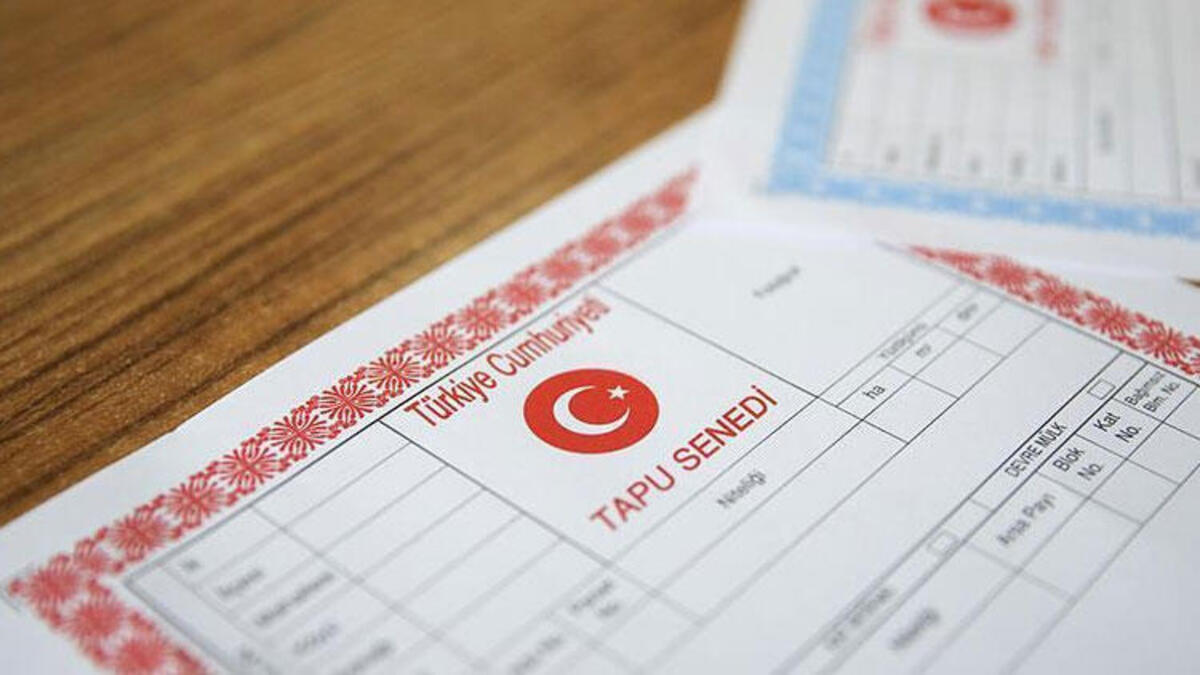
None of this makes a hisseli tapu a bad buy. Shares are how land is held across much of rural Turkey, how inherited property sits before it is distributed, and how development land is assembled. But a share bought in the belief that it is an independent property is a transaction that went wrong before it completed — a failure of due diligence, not of the register, which recorded the position accurately all along. Our guide to the Turkish title deed and how to read it covers what else the record shows.
Hisseli tapu at a glance
Ownership in shares under the Turkish Civil Code
Six checks before you buy a share
A share is not a riskier asset than a whole property. It is a more conditional one, and the conditions are all discoverable before you pay.
Establish which form of co-ownership the register records
Ownership in shares under Article 688 and following, or joint ownership under Articles 701 to 703. In the second case there are no determined shares, Article 702 requires unanimity for management and disposal alike, and no individual share can be sold while the community continues. This distinction decides whether the seller can lawfully sell you anything at all.
Read the size of the share and the identity of every other co-owner
The fraction sets your weight in every decision that turns on a majority, your liability for costs under Article 694, and your position if partition is ordered. The identity of the others decides how workable the arrangement will be — a share held alongside two relatives is a different asset from the same share held alongside thirty strangers.
Ask for any use or management agreement — and check for an annotation
Article 689 lets co-owners agree unanimously on arrangements for benefit, use and management that differ from the statutory default, and agreements about immovables may be annotated on the register where signatures are notarised. Article 695 is why this matters: such decisions bind later co-owners only if annotated. An unannotated side agreement may not bind you, and yours may not bind the next buyer.
Confirm whether partition has been restricted
Article 698 gives every co-owner the right to demand partition, but it can be limited by legal transaction for up to ten years, and for immovables the agreement must be in official form and may be annotated. If one exists, your exit is barred for as long as it runs — establish that, and its expiry date, before you treat partition as your fallback.
Make sure the pre-emption notice is served properly
Article 733 provides that the sale is notified to the other co-owners by buyer or seller through a notary, and that the right lapses three months after that notification and in any event one year after the sale. Until notice is given, the clock that protects you has not started. Serving it promptly is the buyer's interest, not the seller's: it converts an open-ended exposure into a defined one.
Check for a waiver — and get advice on your own route out
Article 733 allows the right to be waived: a general waiver must be in official form and annotated, while giving it up for one specific sale need only be in writing and may be made before or after the sale. A waiver already on the register materially changes what you are buying. Have a Turkish lawyer confirm the actual record rather than the seller's account of it.
What a share lets you do — and what it does not
The Civil Code splits decisions into three tiers by how far they go beyond ordinary use. Knowing which tier a decision sits in tells you whose agreement you need.
Sell, pledge, encumber
Article 688 lets you transfer or pledge your share, and lets creditors attach it, without the other co-owners' consent. This is the strongest right a share carries — subject only to the pre-emption right in Article 732.
Ordinary management alone
Article 690 authorises each co-owner to carry out ordinary management, in particular minor repairs and agricultural work. A majority decision can vary how that authority is allocated.
Important decisions need a double majority
Article 691 requires a majority of both shares and co-owners for important management — changing the method of operation, making or terminating leases, land improvement, and works beyond ordinary maintenance needed to preserve value.
The big moves need everyone
Under Article 692 changing the purpose the property is dedicated to, building beyond what preservation or ordinary use requires, and any act of disposal over the whole property require the consent of every co-owner.
Deadlock goes to a judge
Where shares and co-owners are evenly split, Article 691 lets the judge decide equitably on one co-owner's application, and appoint a trustee from among the co-owners or from outside to get necessary work done.
Costs follow the share
Article 694 allocates management expenses, taxes and other obligations between co-owners in proportion to their shares unless otherwise provided, and gives anyone who pays more than their share a right of recourse against the rest pro rata.
Shared title against independent title
The same building can be held either way. What differs is what the deed entitles you to do on your own.
| Question | Hisseli tapu (paylı mülkiyet) | Independent title (kat mülkiyeti) |
|---|---|---|
| Do you own a defined unit? | No — a fraction of the whole | Yes — a registered independent section |
| Can you sell without consent? | Yes, subject to pre-emption | Yes |
| Do co-owners get a pre-emption right? | Yes — Art. 732 applies | No such right over your unit |
| Is exclusive occupation guaranteed? | No — use is shared under Art. 693 | Yes, over your own section |
| Who decides on major works? | All co-owners — Art. 692 | The condominium regime and its rules |
| How do you exit if relations break down? | Partition, possibly by auction — Arts. 698–699 | Sell your unit on the open market |
| Can a bank lend against it easily? | Often harder in practice | Normal mortgage security |
| Typical setting | Land, inherited property, development plots | Completed buildings with an occupancy permit |
The right-hand column is the destination most buyers of a finished apartment should be aiming for. If you are being offered a share in a building that is complete, ask directly why the units have not been brought under condominium ownership — our explainer on kat irtifakı against kat mülkiyeti sets out the difference between the construction-stage right and the final one, and why the final one matters.
December 2025: pre-emption got faster and dearer
If you buy a share from one co-owner, the others may take it off you. That is the effect of Article 732: where a co-owner sells their share wholly or partly to a third party, the remaining co-owners may exercise a pre-emption right, and under Article 734 they do so by suing the buyer. The sale is not undone in the abstract — you, the purchaser, are on the other side of that action.
Law No. 7571, dated 24 December 2025 and published in the Official Gazette of 25 December 2025 (issue 33118), rewrote parts of this regime. Three changes matter now.
The long-stop deadline halved
Article 733 previously gave co-owners two years from the sale as an outer limit. Law No. 7571 replaced “two years” with “one year”, so the right now lapses three months after the sale is notified to the right-holder and in any event one year after the sale. For a buyer this is welcome: the window in which your title can be taken away is shorter. It also makes early notice worth having, since the three-month clock only starts when the notary notification is made.
Two categories of sale are now excluded outright
A new first paragraph of Article 733 provides that pre-emption cannot be exercised in sales under State Tender Law No. 2886 of 8 September 1983, or in sales by forced auction. Acquire a share through either route and the co-owners' pre-emption right does not touch your purchase. Anyone considering buying property at auction in Turkey should read that alongside the rest of the auction process.
The price is now market value, not the figure on the deed
Article 734 now requires the judge to determine the share's current market value without delay, and the co-owner exercising the right must deposit that value together with the title deed costs falling on the buyer, in cash, within a strict court-set period and at a place where the money earns a return. Miss that deadline and the share cannot be registered in their name; the deposit is paid out with its accrued return once the judgment becomes final. This closes off the long-standing tactic of under-declaring the price on the deed, and makes exercising pre-emption a genuinely expensive step.
These amendments are recent and the case law applying them is still developing. Confirm the deadlines that apply to your own transaction with a licensed Turkish lawyer before relying on any of it.
Been offered a share rather than a whole property?
We will read the register, establish which form of co-ownership it is, and tell you what you would actually be buying.
Hisseli tapu — frequently asked questions
The questions foreign buyers ask most often about shared title deeds, co-owners and getting out again.
Where to go next
The rest of our title deed and due diligence library for foreign buyers.
- The Turkish title deed explained — what the tapu records and how to read every field on it.
- Kat irtifakı against kat mülkiyeti — construction-stage title against full condominium ownership.
- Errors in the land register — how mistakes on the record get corrected, and who pays.
- Inheritance law in Turkey — how estates devolve, and why so many shared deeds start here.
- Buying agricultural land — where shared ownership is most common and most constrained.
- Seven pitfalls foreign buyers fall into — the checks that prevent the most common problems.
- Using a lawyer to buy in Turkey — what independent legal representation actually covers.
- All Turkey property guides — the full library in one place.
Have the register read before you commit
Send us the property and we will establish whether it is held in shares or jointly, who the other co-owners are, what is annotated against it and whether partition has been restricted — before anything is signed. We work with licensed Turkish conveyancers, and every transaction settles through the secure payment system.