

Sit Alanı: Buying Property in a Protected Zone in Turkey
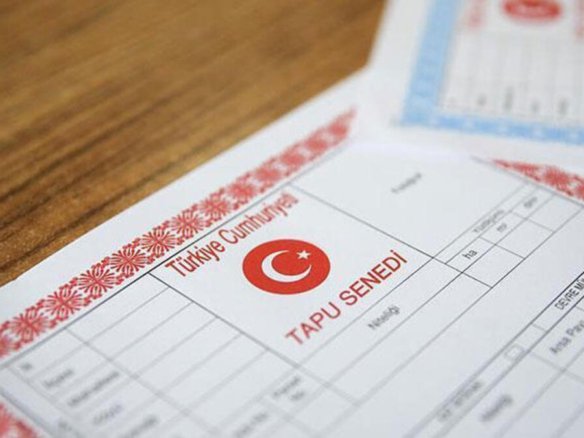
A sit designation can stop a building plot being built on, cancel a permit that has already been issued, and bar the new owner from the remedy the previous owner could have used. It is recorded on the title deed, and it travels with the land.
A designation that outranks the zoning plan
Most foreign buyers in Turkey learn to check the zoning position of a plot. Far fewer know it can be overridden entirely. If the land sits inside a sit alanı — a designated conservation site — the ordinary planning rules are suspended, and what may be done with the land is decided instead by a conservation council applying a separate statute.
That statute is Law 2863 on the Conservation of Cultural and Natural Property, adopted on 21 July 1983 and published in the Official Gazette of 23 July 1983, issue 18113. It has been amended many times since, most significantly in 2004, 2011 and 2013, and it governs a surprising amount of the Turkish coast and almost all of the historic centres that make coastal towns attractive in the first place.
This is not a planning preference to be negotiated with a municipality. Article 9 makes unauthorised intervention a prohibition, and Article 65 makes breaching it a criminal offence carrying a prison sentence. The consequence for a buyer is simple: in a sit area, the question is never what the seller says you can build, nor even what the municipality says. It is what the competent council has decided for that parcel, in writing.
None of this makes a conservation area a bad purchase. Some of the most desirable stock in Turkey — the stone houses of old towns, the restored mansions, the plots overlooking classical sites — is protected precisely because it is worth protecting, and Article 21 grants a real tax exemption to some of it. The problem is only ever an undiscovered designation, or an assumption that a plot can be developed when it cannot.
Start with the encumbrances recorded on the title deed and the municipal zoning status, and read both before any money moves.
Sit alanı at a glance
Based on the text of Law 2863
From identification to annotation on your deed
Law 2863 sets out a defined sequence. Knowing where a parcel sits in that sequence tells you how settled its status is.
Identification, then registration
Under Article 7, identification of immovable cultural and natural property requiring protection, and of natural sites, is carried out under the coordination of the Ministry of Culture and Tourism, taking historical, artistic and regional characteristics into account. Identifications are then registered by a decision of the regional conservation council, and that is the moment the legal status crystallises. For natural property and natural sites, the equivalent decision is taken by a regional natural property protection commission instead.
Annotation, notice and publication
Article 7 requires registration decisions, with the cadastral details of the property, to be notified to the land registry directorate so an annotation is entered in the title register — which is why the status should be visible on a current deed extract. Decisions on single buildings are served on owners under Notification Law 7201; decisions covering sit areas are published in the Official Gazette and announced on the Ministry's website for one month.
All plans stop
Under Article 17, the declaration of an area as a sit by the council halts the application of plans at every scale in that area. Whatever the zoning plan previously permitted ceases to be the operative rule.
Transition rules within three months
Until a conservation oriented development plan is made, the regional conservation council determines transition period conservation principles and conditions of use within three months. These are the rules that actually govern the parcel in the interim, and they are the document to ask for.
Conservation plan within three years
Municipalities, governorships and the relevant institutions must have a conservation oriented development plan prepared within three years and submit it to the council. If that proves impossible for compelling reasons the council may extend the time, and the transition rules continue to apply meanwhile.
Grouping of registered buildings
For an individually registered building, Article 18 requires grouping within three months of the owner's application. It is recorded in the declarations section of the title register, and until it is done the repair and building principles for that property cannot be determined at all.
Two different authorities, depending on what is protected
This catches out advisers as well as buyers. Law 2863 originally gave both cultural and natural property to the same conservation councils. That changed in 2011.
Additional Article 4, inserted by Decree Law 648 of 8 August 2011, provides that for natural property other than movable natural property, for natural sites and for their protection zones, the competent ministry is the Ministry of Environment and Urbanisation. It establishes central and regional natural property protection commissions within that ministry, and provides that decisions the Law assigns to the Conservation High Council and the regional conservation councils are taken, for natural property and natural sites, by those commissions instead.
So a plot in an archaeological or urban sit is a matter for the regional conservation council for cultural property under the Ministry of Culture and Tourism, while a plot in a natural (doğal) sit is a matter for a regional natural property protection commission under the environment ministry. They are different files, different offices and different decisions. Asking the wrong one produces a confident answer about the wrong thing.
The prohibition in Article 9, and what counts as intervention
Article 9 is the operative prohibition. It provides that, contrary to the decisions taken by the regional conservation councils within the framework of the principle decisions of the Conservation High Council, no constructional or physical intervention may be made in immovable cultural and natural property requiring protection, in protection zones or in sit areas, and that these may not be reopened to use or have their use changed.
The article then defines the term deliberately broadly. Substantial repair, construction, installation, drilling, partial or complete demolition, burning, excavation or similar works are all treated as constructional and physical intervention. That sweeps in a great deal of what an owner would regard as ordinary improvement: taking a wall down, digging foundations for a pool, sinking a borehole, or clearing a ruined outbuilding.
Article 8 adds that the authority to determine the protection zones of registered property, and to decide whether construction may be carried out within them, belongs to the councils. A decision can therefore reach beyond the registered building onto neighbouring land — which is why a plot that is not itself registered can still be constrained by the registered building next door. Article 16 separately prohibits unlicensed building in those zones, and Article 18 bars local administrations from altering council decisions or approved projects; they may only check compliance with technical and health requirements.
What a sit designation does to your rights as owner
A sit designation does not expropriate you. Article 11 confirms that owners may exercise all the powers that are the natural consequence of their ownership rights and that are not contrary to the Law. But it attaches conditions and removes some protections.
First, adverse possession is barred. Article 11 provides that immovables containing cultural property registered as first group, and immovables in first and second degree archaeological sites, cannot be acquired through possession. Archaeological sites are graded by degree, and the degree materially changes what may be done on a parcel; what each degree permits is set by principle decisions of the Conservation High Council rather than by the Law, so the governing principle decision for your parcel is worth obtaining.
Second, maintenance is a duty: Article 11 gives owners the Law's rights and exemptions only for so long as they maintain and repair in accordance with Ministry instructions, and the property of owners unable to do so is expropriated. Third, Article 18 provides that parcels may not be divided or merged in a way that affects the nature of the property, so the subdivision strategies that work on ordinary land may be unavailable.
Fourth, restoration work is a regulated profession. Article 18 requires a restorer architect or an architect for the survey, restoration and restitution projects of registered immovable cultural property and their implementation, and for first group property the work must be done by specialists in the relevant crafts.
Absolute construction bans, exchanges and the buyer exclusion
The hardest version of a sit designation is the absolute construction ban (kesin yapılanma yasağı) imposed through an approved conservation oriented development plan. Land under such a ban cannot be developed at all, and its market value should reflect that. Turkish law provides two routes out, and a buyer needs to understand both, because one of them will usually not be available to them.
Article 15(f) allows parcels declared sit areas and placed under an absolute construction ban by an approved 1/1000 scale conservation oriented development plan to be exchanged for other Treasury plots or land, outright or in shares. Where there is a building on the parcel, its current value is determined under Article 11 of Expropriation Law 2942 and paid on the owner's application.
Then comes the sentence that matters most to anyone buying. Article 15(f) provides that the requests of those who subsequently acquire immovables annotated in the title register as declared sit areas will not be evaluated, other than through inheritance and dispositions upon death. The Treasury exchange remedy is, in effect, personal to owners who held the land before the annotation. If you buy such a parcel on the open market, you cannot use it.
Article 17(b) offers a parallel route: immovables privately owned in sit areas under an absolute construction ban may, on the owner's application, be exchanged with immovables belonging to the municipality or the special provincial administration. Article 17(c) deals with transferring the restricted portion of development rights.
Article 13 adds a restriction on the supply side: registered property belonging to the Treasury and other public institutions, and immovables within their protection boundaries, cannot be sold or donated to private persons without the permission of the Ministry of Culture and Tourism.
The tax exemption in Article 21
Conservation status is not only a burden. Article 21, as amended on 10 September 2014, provides that immovable cultural property carrying the record korunması gerekli taşınmaz kültür varlığıdır — it is immovable cultural property requiring protection — in the title register, together with parcels placed under an absolute construction ban because they are archaeological or natural sites, are exempt from every kind of tax, duty and charge.
There are limits. Within a metropolitan municipality, such properties used in commercial activities, other than those taxed on the simplified basis, lose the exemption as to half the property tax and all of the environmental cleaning tax. It does not apply to buildings erected contrary to an absolute construction ban, or to property with unlawful annexes, until those are demolished or remedied. Article 21 further exempts repair and construction carried out in conformity with council decisions from the taxes and charges payable under the Municipal Revenues Law.
These are real savings over a long hold, but they are keyed to a specific record in the title register, not to a general sense that a building is old. Where no exemption applies, see our guide to property taxes in Turkey.
Six designations that behave differently
Law 2863 uses several distinct terms. They are not interchangeable, and a seller using them loosely is a reason to slow down.
Archaeological sit
Holds the remains of past civilisations. Graded by degree, and the degree governs what is permitted. Article 11 bars acquisition by possession in first and second degree sites.
Urban sit (kentsel sit)
Towns and town remains reflecting the social, economic and architectural character of their period. Typically the old quarter of a coastal town, where facades, heights and materials are controlled.
Natural sit (doğal sit)
Article 3: areas requiring protection, above ground, underground or underwater, belonging to geological periods and extraordinary because of their rarity. Administered by the environment ministry.
Protection zone (korunma alanı)
Article 3: the area that must be protected because it matters to preserving immovable cultural and natural property, or protecting them within a historic setting. Article 8 gives councils power over building inside it.
Interaction–transition area
Added in 2011. Areas directly affecting cultural property and sit areas and forming a whole with them, including places later taken out of sit boundaries. Considered when conservation plans are prepared.
Individually registered building
A single structure registered under Article 6 and grouped under Article 18. The grouping goes in the declarations section of the register, and repair and building principles cannot be set before it is done.
An ordinary parcel against a sit parcel
What changes, in practice, once a conservation designation attaches to the land.
| Question | Inside a sit area | Ordinary parcel |
|---|---|---|
| Does the zoning plan govern what you build? | No — application of plans is halted under Article 17 | Yes, subject to normal permits |
| Who authorises construction? | The conservation council or commission | The municipality |
| Can an issued permit be cancelled? | Yes, if subasman level was not reached | Not on this ground |
| Can the land be acquired by possession? | No, in 1st and 2nd degree archaeological sites | Yes, on the general rules |
| Does the Building Inspection Law apply? | No — Law 4708 is disapplied | Yes |
| Is a Treasury land exchange available to a later buyer? | No — excluded by Article 15(f) | Not applicable |
| Are taxes and charges payable? | Exempt in the cases set out in Article 21 | Payable in the normal way |
| Is unauthorised work a criminal offence? | Yes — 2 to 5 years under Article 65 | Administrative penalties apply |
Checking the status of a specific plot?
We will obtain the title register extract, the zoning position and the governing council decision before you commit to anything.
Sit alanı: frequently asked questions
Answers drawn from the consolidated text of Law 2863.
Related guides
The checks that sit alongside a conservation search.
- Takyidat: how to read the encumbrances on a Turkish title deed
- İmar Durumu: how to check what can legally be built on a parcel
- Parsel Sorgu: how to check a Turkish land parcel online
- Kıyı Kanunu: why nobody owns the Turkish beachfront
- Forest annotations on Turkish title deeds
- Buying agricultural land in Turkey
- Yapı Kayıt Belgesi: when a property has no building permit
- All Turkey property guides
Before you buy in a protected zone
A conservation designation is discoverable in advance, in writing, from the register and the competent council. The buyers who get caught are the ones who never asked. We will ask on your behalf.
Property guides · Legal services · Contact