
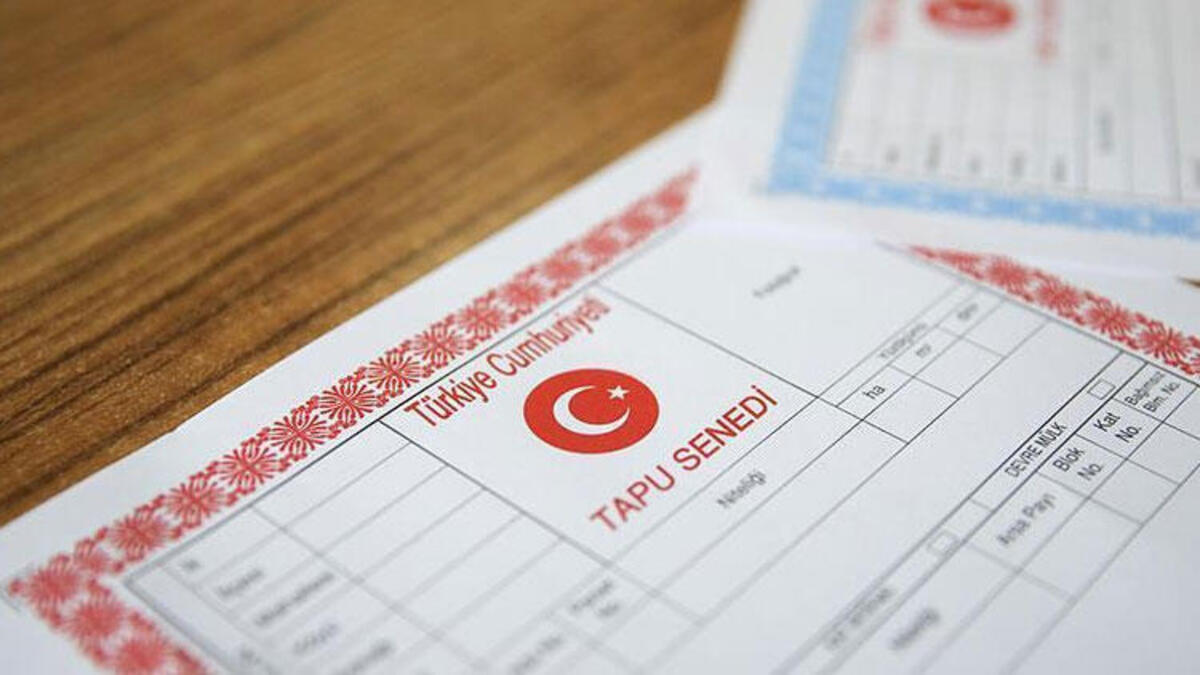
Tapu: How the Turkish Title Deed Actually Works
Every property purchase in Turkey ends at the same place: an entry in the national land register, and a deed that records it. Understanding what that deed says — and what it deliberately does not say — is the difference between owning what you think you bought and finding out later that you did not.
The deed is the receipt. The register is the ownership.
Foreign buyers tend to treat the tapu as the thing itself — a certificate that, once in hand, settles the matter. It is more useful to think of it the other way round. Ownership of property in Turkey exists because it is recorded in a central land register maintained by the General Directorate of Land Registry and Cadastre, known by its Turkish initials as TKGM, which sits under the Ministry of Environment, Urbanisation and Climate Change. The printed deed is the register's receipt for that entry.
That distinction sounds academic until it starts costing money. A photographed deed shows a moment in the past. The register shows the position now, including everything registered against the property since the deed was printed. Almost every unpleasant surprise that reaches us from buyers who went ahead without advice traces back to somebody reading a document instead of checking a record.
This guide covers what a Turkish title deed records, the deed types you will meet and what each one implies about the building's legal status, the annotations that change what you are actually buying, and how to verify all of it against the live register. For the wider purchase sequence, see our Turkey property buyer’s guide; for the mechanics of title and due diligence, our legal services overview; and for the mistakes that recur most often, seven pitfalls foreign buyers still fall into.
The Turkish Title Deed — At A Glance
What it is, who issues it, and where to verify it
How to read a Turkish title deed
None of this requires legal training. It requires reading the fields in a deliberate order and refusing to move on when one of them does not make sense.
Start with the property identity, not the price
A Turkish deed identifies a property administratively rather than by street address: province (il), district (ilce), neighbourhood (mahalle), then the block number (ada) and parcel number (parsel), and for an apartment the independent unit number (bagimsiz bolum no). Write these down and use them for every subsequent check. A street address can describe two different units in the same block; the ada and parsel cannot.
Read the nature of the property (nitelik)
This field tells you what the register thinks the property is: an independent residential unit, a plot of land, a field, a shop. It is the single most informative line on the deed. If the nitelik says arsa (land) and you believe you are buying a finished apartment, stop there and find out why the register disagrees with the sales brochure.
Establish whether the deed is kat mulkiyeti or kat irtifaki
This tells you whether the building has been completed and registered or whether you are buying into a development that is still legally a divided plot. Both are legitimate. Only one of them means the building exists as far as the land register is concerned, and the difference determines what has to happen before your ownership takes its final form.
Check the ownership share (hisse)
A deed may record sole ownership of the whole property or an undivided share held alongside other owners. Shared ownership is common with inherited property and with land, and it is not necessarily a problem, but it changes the transaction: you may need the co-owners' cooperation, and in some cases they hold pre-emption rights. Confirm whether the seller can transfer the entire property or only a fraction of it.
Match the registered owner to the person actually selling
The name on the register must match the person or company signing. Where someone is acting under a power of attorney, the scope of that power should be read rather than assumed, and it should be current. Where the owner is a company, the person signing needs the authority to bind it. This check costs nothing and closes off an entire category of fraud.
Read the annotations and declarations pages
This is the step most often skipped and the one that most often matters. Mortgages, attachments, usufruct rights, family residence annotations, resale restrictions and easements all live here rather than on the front of the deed. Ask specifically for the annotations, in writing, and have someone who reads Turkish law explain what each one does to your intended use of the property.
Verify against the live register, then ask for the iskan separately
Confirm everything above against the current register entry, whether through Web Tapu access granted by the owner or through an enquiry at the Land Registry Directorate. Then ask the municipality or the seller for the occupancy permit as its own document. A deed and a permit are two different questions and a clean answer to one tells you nothing about the other.
Six entries that change what you are buying
These sit alongside the ownership entry rather than on the face of the deed. Each of them is perfectly normal in the right context and expensive in the wrong one.
Ipotek — mortgage
A charge registered against the property to secure a debt. It follows the property rather than the person, so it has to be discharged or formally handled as part of the transaction. Establish who is responsible for clearing it and at what point in the sequence.
Haciz — attachment
An attachment placed by a creditor or a court, freezing the owner's ability to deal freely with the property. Its presence signals a dispute or an unpaid debt somewhere behind the sale, and it needs to be resolved before ownership can pass cleanly.
Aile konutu — family residence
An annotation marking the property as the family home, which restricts the registered owner's ability to sell or mortgage it without the spouse's consent. Entirely legitimate, but it means the signature you need is not only the one on the register.
Intifa hakki — usufruct
A right allowing someone other than the owner to use the property and take its benefit, often for their lifetime. You can buy property encumbered by a usufruct, but you would be buying the ownership without the use of it, which is rarely what a buyer has in mind.
Resale restrictions
Certain acquisition routes carry a registered undertaking not to sell for a defined period. Property acquired under the Turkish citizenship by investment programme carries a three-year restriction of this kind. The restriction lapses when the period ends, but the annotation stays on the record until the owner applies to remove it.
Preliminary sale contract
A notarised promise-to-sell can itself be annotated on the register, reserving the property for a prospective buyer. If one is registered in favour of somebody else, the property you are being offered is already spoken for in a way the register recognises.
The pattern across all six is the same. None of these entries is a scandal in itself; Turkish sellers carry mortgages, families protect the marital home, developments are sold before completion. What matters is that you know which of them apply, who is responsible for clearing the ones that must be cleared, and at what point in the sequence that happens. A mortgage discovered during due diligence is a negotiation. The same mortgage discovered after completion is a liability attached to your property.
It is also worth knowing that an annotation can outlive the restriction it records. A resale restriction expires by its own terms when the period ends, but the entry remains on the record until the owner applies to have it removed. If you are selling a property in Turkey that was acquired through a restricted route, dealing with the stale annotation early prevents an avoidable delay at the point of sale.
The five deed types compared
What each one means, whether a completed building stands behind it, and the specific question to ask before you proceed.
| Deed type | What it means | Completed building registered? | What to check |
|---|---|---|---|
| Kat mulkiyeti | Full condominium ownership of a completed, registered independent unit. | Building complete, occupancy permit issued | The strongest position. Still read the annotations page. |
| Kat irtifaki | Construction servitude over a plot legally divided into future independent units. | Not yet registered as a completed building | Who converts it to kat mulkiyeti, and when. Ask about the occupancy permit. |
| Arsa tapusu | A deed over land, with no independent building units registered on it. | No building registered | Zoning status (imar) governs what may be built and at what density. |
| Hisseli tapu | An undivided share in a property held jointly with other registered owners. | Depends on the underlying property | What share is being sold, whether co-owners must consent, and any pre-emption rights. |
| Mustakil tapu | Sole ownership of the whole property by a single registered owner. | Depends on the underlying property | That the registered sole owner is the person actually signing. |
You will also hear Turkish deeds described by colour — a “red tapu” for buildings and residential units, a “blue tapu” for land and agricultural plots. It is a useful shorthand in conversation and nothing more than that. The colour of the paper has never been the legal test; the nature of the property recorded in the register is. Where the two appear to disagree, the register wins, and the disagreement is worth investigating before you go further.
Deed type also interacts with what you intend to do afterwards. If the purchase is meant to support a Turkish citizenship by investment application, or a residence permit, the requirements attaching to the property are stricter than for a straightforward purchase and a valuation report from an appraiser licensed by the Capital Markets Board is part of the picture. Establish the purpose of the purchase before you choose the property, not after. The same logic applies to buying land in Turkey, where zoning rather than deed type is what determines whether your plans are achievable.
Want the register checked before you commit to a property?
We run the title, annotation, zone and permit checks as standard, working with licensed Turkish conveyancers.
Tapu and Turkish title deeds — frequently asked questions
The questions foreign buyers ask most often about deeds, permits and what the land register actually records.
A note on figures and rules. Turkish property rules, registry fees, tax rates and programme thresholds change regularly, and a figure that was accurate last year may not be accurate today. This guide deliberately explains the mechanics rather than quoting rates. Confirm all current figures, fees and eligibility criteria with a licensed Turkish adviser before you commit to a transaction. For related reading, see our guides to property taxes in Turkey and whether foreigners can buy property in Turkey, or browse the full Turkey property guides library.
Have the title checked before you sign
Tell us the property you are considering and we will obtain the current register entry, read the annotations, confirm the deed type and check the occupancy permit before anything is committed. We work with licensed Turkish conveyancers and appraisers.



Join The Discussion