
Üst Hakkı: The Right to Build on Land You Do Not Own
Turkish law normally gives the building to whoever owns the ground under it. Üst hakkı is the registered exception — and the reason some Turkish property is sold with a clock running on it. Here is what the right actually gives you, and what the Civil Code says happens when it ends.
The building and the ground underneath it are not always owned by the same person.
Turkish property law begins from a rule it inherited, almost unchanged, from Roman law: whatever is permanently attached to a parcel of land belongs to whoever owns that parcel. Put up a house, a workshop, a boundary wall or a hotel on someone else’s land and, as a starting point, you have improved their asset rather than created one of your own. It is a tidy rule, and for the overwhelming majority of Turkish transactions it is the only rule that matters.
Üst hakkı — the right of superficies, also called inşaat hakkı or the construction right — is the registered exception to it. Article 826 of the Turkish Civil Code allows a landowner to create an easement in favour of a third party giving that party the power to build above or below the land, or to keep a structure that is already standing there. Article 726 then supplies the consequence that makes the whole arrangement worth having: a building put up on the strength of an üst irtifakı belongs to the holder of the right, not to the owner of the land.
So the ground stays with one party and the building sits with another, and Turkish law records that division on the land register rather than leaving it to a private contract. For a foreign buyer the practical question is rarely academic. It is this: am I being offered the land, the building, or a time-limited right to the building standing on someone else’s land — and if it is the third, how many years are left?
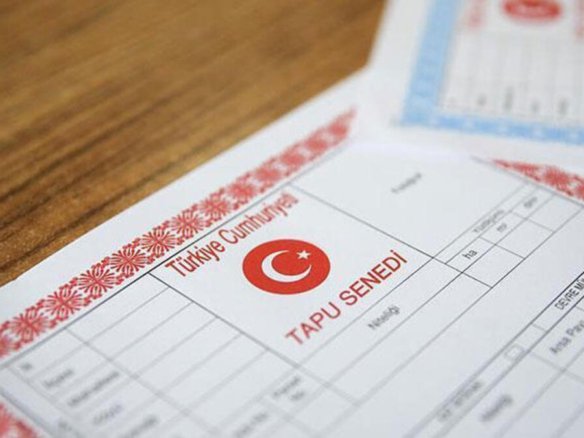
None of this makes üst hakkı a defect. It is an ordinary, long-established instrument that underpins a great deal of legitimate Turkish development, particularly where land is publicly owned and cannot be sold outright but can be built on. The problem arises only when a buyer is not told which of the two things they are purchasing. For the wider picture of what a Turkish deed records, start with our guide to the tapu and what is written on it, and for the record of rights registered against a property, our guide to reading the encumbrances on a Turkish title deed.
Üst Hakkı — The Essentials
What the Turkish Civil Code provides
How an üst hakkı is created, registered and ended
Six stages, each of them governed by a specific article of the Turkish Civil Code. Knowing which stage a property has reached tells you most of what you need to know about it.
The landowner grants the right by official deed
Article 826 lets a landowner create an easement in favour of a third party permitting construction above or below the land, or the retention of a structure already standing on it. Article 827 requires the content and scope to be set out in an official deed, and provides that the terms recorded there — the position, shape, nature, dimensions and intended purpose of the building, and the use of the unbuilt area — are binding on everyone, not merely on the two original parties. A private agreement between a developer and a buyer is not an üst hakkı.
A term is fixed, and it begins to run
Article 836 caps an independent üst hakkı at one hundred years. Article 826 adds that a right granted for at least thirty years is permanent in character. Those two numbers do most of the work in practice: the thirty-year threshold decides whether the right can be registered as an immovable in its own right, and the hundred-year ceiling decides how long it can ever run before it must be renewed or fall away.
It is registered against the land
Üst hakkı is a real right, not a contractual promise, and it takes effect through the land register. Registered against the burdened parcel, it binds whoever owns that parcel afterwards. This is also why it is discoverable: a buyer who reads the register entry and the annotations will find it, and a buyer who relies on a brochure will not.
If independent and permanent, it can become an immovable of its own
Article 826 provides that where the right is independent and permanent in character, it may — at the request of the right holder — be recorded in the land register as an immovable. That is a significant upgrade. A right registered in that form can be dealt with much like land: transferred, mortgaged, and burdened with further rights. Article 834 reflects this by allowing the landowner to require a mortgage over the registered right as security for up to three years of any periodic payment owed in return for it.
The right holder owns what is built
Article 726 gives buildings constructed on the strength of the easement to the right holder for as long as the right lasts. During the term, that ownership is real and tradeable — Article 826 makes the right transferable and inheritable unless the parties agreed otherwise. The limits matter too: Article 726 forbids creating an üst hakkı over the independent sections of a building, and Article 729 excludes trees and forests altogether.
At the end of the term, everything reverts
Article 828 returns the buildings to the landowner and makes them an integral part of the land. Where the right had its own page in the register, that page is closed, and the mortgages and other rights recorded on it end with it. Article 829 makes compensation the exception rather than the rule, and gives a former right holder or their mortgagee a route to register a substitute mortgage, within three months of the right ending, where an agreed payment is not made or secured. Article 836 permits a fresh term of up to a hundred years, but only after three quarters of the current one has elapsed — and an advance promise to renew is expressly not binding.
Where foreign buyers actually run into üst hakkı
It is not an exotic instrument. It sits under a surprising amount of ordinary Turkish development, and it tends to appear in six recognisable situations.
Resort and branded schemes
Hotel-serviced and branded residential projects are sometimes built on land that cannot be sold outright but can be built on under a long construction right. The apartment may be perfectly real while the underlying interest is time-limited. See our guide to branded residences in Turkey.
Marina and tourism zones
Coastal and tourism-designated land frequently stays in public hands while operators build and run facilities on it. If a unit forms part of such a scheme, the term of the underlying right is the single most important number in the file.
Commercial and industrial sites
Warehouses, plants and logistics buildings are often erected under a construction right over land held by a public body or an organised industrial zone. Relevant to anyone looking at commercial property in Turkey.
Energy and infrastructure
Installations with long operating lives are a natural fit for a right measured in decades rather than years, since the asset is the structure and its revenue, not the ground beneath it.
A seller who owns only the building
The scenario that catches people out. The seller genuinely owns what is standing there, and can prove it — but owns it as the holder of a right with an end date, not as the owner of the parcel. Related: who owns the building on Turkish land.
Financing and resale
A right registered as an immovable can be mortgaged, but a lender is pricing a wasting asset, and so is your eventual buyer. The shorter the remaining term, the narrower the market and the harder the exit.
Üst hakkı compared with outright ownership
The practical differences between holding a construction right and holding the freehold of a Turkish property, drawn from the Civil Code provisions above.
| Question | Üst hakkı (construction right) | Outright ownership |
|---|---|---|
| What you hold | An easement over someone else’s land, plus ownership of the building (arts. 726, 826) | The parcel itself, and everything permanently attached to it |
| Does it expire? | Yes — a fixed term, maximum 100 years (art. 836) | نه |
| Can it be sold? | Yes, unless the deed says otherwise (art. 826) | بله |
| Does it pass to heirs? | Yes, unless the deed says otherwise (art. 826) | بله |
| Can it be mortgaged? | Yes, where registered as an immovable (arts. 826, 834) | بله |
| Can it be extended? | Only after three quarters of the term has run; advance promises are not binding (art. 836) | Not applicable |
| Who gets the building at the end? | The landowner; it becomes part of the land (art. 828) | You continue to own it |
| Compensation when it ends? | None unless expressly agreed (art. 829) | Not applicable |
| Can it exist over a single flat? | No — prohibited over independent sections (art. 726) | Yes, as kat mülkiyeti |
| Can it cover trees or forest? | No (art. 729) | Subject to separate forest rules |
| How you verify it | Land register entry plus the official deed that created it (art. 827) | Land register entry and annotations |
Not sure whether you are buying the land or a right over it?
We read the register entry and the deed that created the right, and tell you how many years are actually left.
Where to go next
The neighbouring rights and records that decide what a Turkish property is actually worth.
- The tapu explained — what a Turkish title deed records and what it does not.
- Takyidat: encumbrances on a Turkish deed — where a registered right like this one shows up.
- İntifa hakkı: usufruct — the other major right that separates use from ownership.
- Kat irtifakı vs kat mülkiyeti — the condominium rights that üst hakkı cannot be created over.
- Buying land in Turkey — what foreign buyers need to check before buying a plot.
- Do you need a lawyer to buy in Turkey? — when independent legal review earns its fee.
- All Turkey property guides — the full library for foreign buyers.
Üst hakkı — frequently asked questions
The questions foreign buyers ask most often about construction rights over Turkish land.
Have the right checked before the money moves
Tell us which property you are considering and we will pull the land register entry, identify any construction right or other easement recorded against it, and tell you what term is left to run. We work with licensed Turkish conveyancers, and every transaction settles through the secure payment system.