
Muhdesat: Who Owns the Building or Trees on Turkish Land
A single line in the declarations column of a Turkish title deed can tell you that the house, the wall or the olive grove on the parcel you are buying was built by somebody else — and that they have a claim to its value. It will not stop the sale. It will not show up as a restriction. And after completion you cannot say you did not know.
The land owns what stands on it — until the register says someone else built it
Turkish property law starts from a rule inherited almost unchanged from Roman law: superficies solo cedit, the surface yields to the soil. Whatever stands on a parcel of land — a house, a workshop, a boundary wall, a well, a stand of fruit trees — is treated as an integral part of that land, a bütünleyici parça, and belongs to whoever owns the land. There is no separate ownership of the building. Buy the parcel and you buy everything permanently attached to it.
Applied without exception, that rule produces obvious unfairness. Someone who spends years and real money building a house on land belonging to a relative, a business partner or a co-heir would simply lose it. Turkish law’s answer was not to break the unity of ownership but to create a parallel concept: muhdesat. The register notes that a particular structure or planting was created by someone other than the owner, and that person acquires a claim to its economic value — while ownership of the land, and of everything on it, stays exactly where it was.
This guide explains what counts as muhdesat, where it is recorded and why that column matters more than the words in it, what it does and does not do to a sale, and the narrow circumstances in which the underlying claim can actually be brought. It is written for buyers looking at Turkish land rather than apartments — see our guides to buying land in Turkey و agricultural land for the wider picture.
Muhdesat — The Legal Position
What the register entry actually means
What actually counts as muhdesat
Permanence is the test. A structure or planting qualifies when it is meant to stay, and when removing it would mean destroying or substantially damaging it.
Buildings and structures
Houses, barns, workshops, garages and outbuildings — anything built to remain in place. The classic case, and the one most likely to carry real value.
Trees and permanent plantings
Olive groves, orchards, vineyards. Trees planted in the soil become part of the land, which is precisely why the person who planted them needs the muhdesat record.
Walls, wells and works
Boundary walls, retaining structures, wells, irrigation works and terracing all qualify where they are permanent improvements rather than temporary installations.
What does not qualify
Things that are not permanent. The Court of Cassation has treated poplar — grown to a certain size, then cut and used — as a movable rather than an integral part of the land.
Created before the survey
The cadastral annotation under Article 19/2 addresses what was already standing on the parcel at the time of the cadastral determination.
Built by a co-owner
Article 19/2 covers structures belonging to a non-owner or to one of the co-owners — which is why muhdesat so often turns up on inherited family land.
Declarations, annotations and ownership are three different things
A page of the Turkish land register is divided into columns, and the legal weight of any entry depends far more on which column it sits in than on how alarming its wording sounds. Three of those columns matter here, and conflating them is the source of most confusion about muhdesat.
آن ownership column records who owns the property. The annotations column — the şerhler hanesi — is where personal rights are given effect against third parties; an entry here genuinely binds people who come later and can restrict what the owner may do. The declarations column, the beyanlar hanesi, is different in kind. It records matters of fact about the physical or legal state of the parcel. It informs; it does not restrict.
Muhdesat is recorded in the declarations column. Article 19/2 of the Cadastre Law (Law No. 3402) provides that where a muhdesat on an immovable belongs to someone other than the owner, or to one of the co-owners, its owner, its type, the date it was created and the reason for its acquisition are shown in the declarations column of the record and the register. The entry is a belirtme — a notation of fact. It is not a restriction on the owner’s power to deal with the land, and the Land Registry will process a sale or a mortgage over the parcel without regard to it.
That is the whole mechanism, and it is more elegant than it first appears. The owner keeps full ownership and full freedom to sell. The builder keeps a claim to the value of what they built. And the buyer, because the register is public, is taken to have known about that claim and cannot later complain of it. Nobody’s rights are suspended; they are simply made visible.
The practical lesson for due diligence is straightforward. Checking the ownership column and the encumbrances is not enough on a land purchase. Pull the full register record and read the declarations column too — the same discipline we set out in our guide to reading the encumbrances on a Turkish title deed, and reachable through the Web Tapu online land registry.
Muhdesat compared with the things it is mistaken for
Three arrangements can all result in a building standing on land that is not obviously the builder’s. They are not remotely equivalent, and the difference decides what you are buying.
| Muhdesat | Right of superficies (üst hakkı) | Annotation (şerh) | |
|---|---|---|---|
| What it is | A noted fact: someone else created a structure or planting | An easement permitting a third party to build on or under the land, or keep a building there | A personal right given effect against third parties |
| Legal basis | Cadastre Law art. 19/2; TMK 722, 724, 729 | TMK art. 726 and arts. 826–836 | Turkish Civil Code, land register provisions |
| Recorded in | Declarations column | Registered as a right in its own section | Annotations column |
| A real right? | No — personal claim only | بله | No, but with effect against third parties |
| Who owns the building? | The landowner | The holder of the right | The landowner |
| Restricts the owner’s sale? | نه | Yes, the right persists | Yes, within its terms |
| Can a later buyer claim good faith? | No — the register is public | نه | نه |
| What the holder ultimately gets | Money, on unjust-enrichment principles | Ownership of the building for the term | Enforcement of the right itself |
The contrast with the right of superficies is the instructive one. Üst hakkı is a genuine exception to the integral-part rule: the building really does belong to the holder of the right rather than to the landowner, and the integral-part rule reasserts itself only when the right comes to an end. Muhdesat is not an exception to the rule at all — it leaves the rule intact and compensates the builder in money instead.
When the claim can actually be brought — and what it turns into
Because muhdesat gives no real right, there is no general action to have a court declare that the building “belongs” to the person who put it up. The Court of Cassation has stated the rule directly: as a matter of principle, it cannot be sought that a muhdesat belongs to anyone other than the owner of the land.
What exists instead is a narrower remedy, the action to establish the attribution of a muhdesat — the muhdesatın aidiyetinin tespiti davası. Turkish courts treat a current legal interest as a condition of bringing it, and in practice that confines it to three situations, all of which share a common feature: the parcel’s value is about to be converted into money or redistributed, so the question of who is entitled to part of that value stops being academic.
- Dissolution of co-ownership — ortaklığın giderilmesi, also known as izale-i şuyu, where jointly held land is to be divided or sold.
- Expropriation — where the state takes the land and compensation has to be apportioned. Our guide to kamulaştırma covers that process.
- Urban transformation — where a parcel is redeveloped and entitlements in the new scheme have to be allocated. See our guide to kentsel dönüşüm.
There is an important limit on who can use the first of these. An action to dissolve co-ownership is heard between the co-owners only. A third party who is not a co-owner cannot be awarded a share of the sale price in those proceedings; their route is a separate claim under the general law of obligations, or in the right circumstances an application to have a title action treated as a preliminary question.
How the sum is measured is itself contested. Rather than simply updating what the structure originally cost to build, the better view assesses the proportion of the parcel’s current sale value attributable to the muhdesat. For trees and plantings, valuation is generally approached through an income method based on net yield. These are matters for a court-appointed expert, and they are a good illustration of why a muhdesat entry on a parcel you are considering is a question for a Turkish lawyer rather than something to resolve by reading the deed.
How to check for muhdesat on a parcel
None of this is difficult. All of it is easier before the money moves than after.
Pull the complete register record, not a photograph of the deed
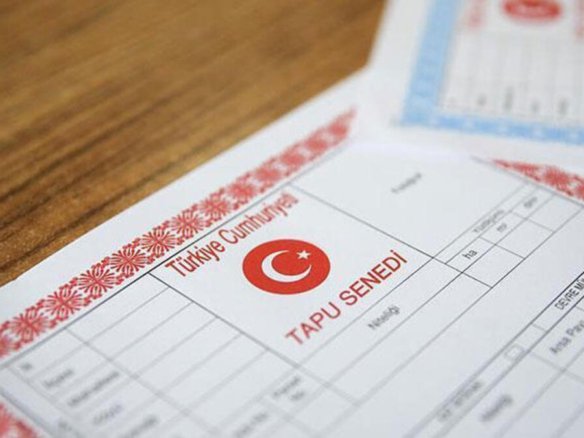
The front of a tapu will not show this. You need the full record for the parcel, including every column. A muhdesat entry lives in the declarations column, which is routinely omitted from the summary a seller or agent will hand over.
Read the declarations column line by line
Article 19/2 requires the entry to identify the muhdesat’s owner, its type, the date it was created and how it was acquired. All four tell you something: who has the claim, what it attaches to, and how long it has been there.
Walk the parcel and reconcile it against the record
Compare what is physically standing on the land with what the register describes. A building, well or mature orchard that nobody mentioned, or that does not match the entry, is worth understanding before you go further. Check the parcel boundaries too, using parsel sorgu.
Establish whether the land is co-owned
Muhdesat is most common on family land held in shares, where one co-owner built and the others did not. If the parcel is co-owned, read our guide to the shared title deed and be aware that a co-owner may also hold a pre-emption right over your purchase.
Ask what the parcel’s likely future is
A muhdesat entry is dormant until the land is divided, expropriated or redeveloped. If any of those is foreseeable — a parcel inside a transformation area, or one several heirs will eventually want to split — the entry is far more than a historical note.
Price it, or have it resolved before completion
Once you understand whose claim it is and what it attaches to, it becomes a commercial question. It can be reflected in the price, or the seller can be asked to resolve it with the muhdesat holder before completion. What it should not be is discovered afterwards.
Looking at Turkish land and unsure what the register is telling you?
We pull the full title record, read every column and work with licensed Turkish conveyancers before anything is signed.
Muhdesat — frequently asked questions
The questions foreign buyers ask when a declarations-column entry turns up on a parcel they are considering.
Where to go next
The rest of our library on Turkish land, title and the checks worth running before you buy.
- Land for sale in Turkey — what foreign buyers need to know before buying a plot.
- Buying agricultural land in Turkey — the rules that apply to farmland specifically.
- Takyidat: reading the encumbrances — how to check what is registered against a property.
- The Turkish title deed (tapu) — how ownership is recorded and what the deed shows.
- Hisseli tapu: the shared title deed — co-ownership, and where muhdesat most often arises.
- İmar durumu: the zoning check — what can legally be built on a Turkish parcel.
- Kentsel dönüşüm — urban transformation, and why it brings muhdesat claims to life.
- Turkey property guides — the full library for international buyers and owners.
Have the full title record read before you buy land
Send us the parcel and we will pull the complete land registry record — ownership, encumbrances and the declarations column — and tell you what is actually registered against it. We work with licensed Turkish conveyancers, and every transaction settles through the secure payment system.