

Takyidat: How to Read the Encumbrances on a Turkish Title Deed
The tapu you are shown is a certificate. The register behind it is where mortgages, attachments, leases, court orders and public-law restrictions actually live — and reading that record is what turns you into a protected buyer under Turkish law.
The certificate is not the register
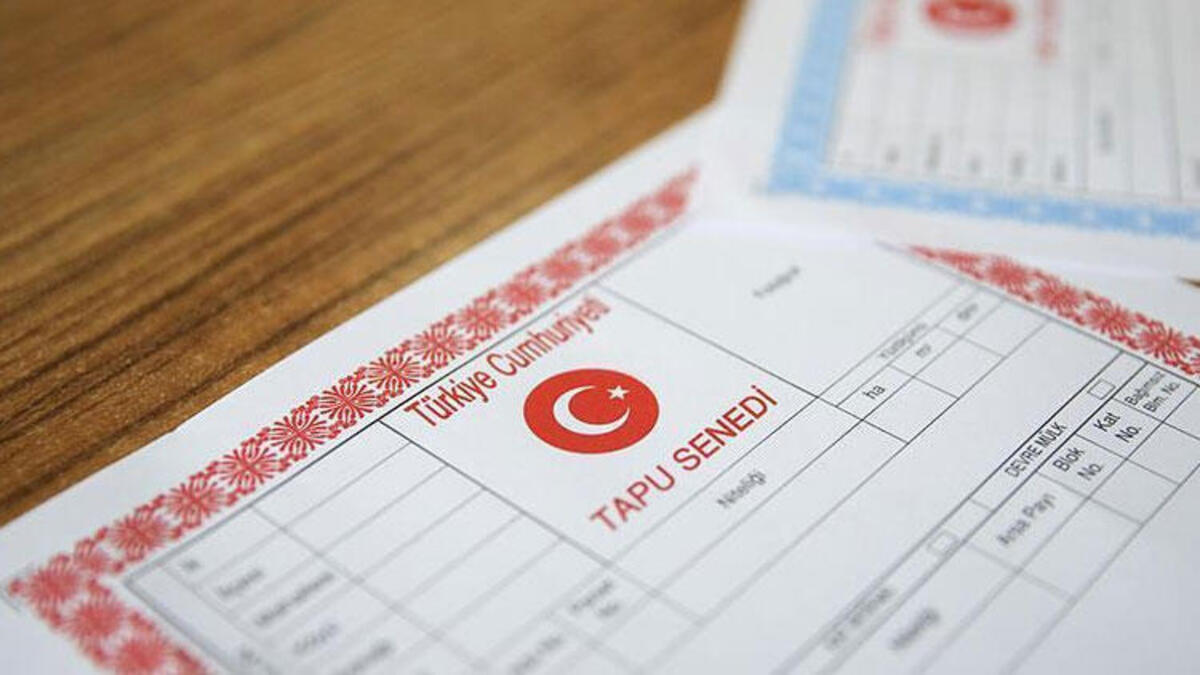
Most foreign buyers meet the Turkish land registry through a single document. The tapu senedi — the bordered title deed certificate with the crescent at the top — is handed across a table, photographed, forwarded over a messaging app, and treated as the end of the enquiry. It is evidence of something real. It is not, however, the register.
The register is the tapu kütüğü, the structured record maintained by the General Directorate of Land Registry and Cadastre. Against each parcel it holds far more than a name. It records the mortgages and other security rights charged on the property, the easements running over it, the personal rights that have been annotated against it, the restrictions that limit what the owner may currently do with it, and the declarations that capture public-law limits on ownership. The collective Turkish word for those entries is takyidat — from the idea of binding, of things that tie the property down.
This guide walks through what the Civil Code puts in each layer of that record, why an annotation made before you bought can be enforced against you afterwards, and why examining the register is legally load-bearing rather than merely prudent. For the certificate itself, see our guide to the Turkish title deed; for the online channel owners use to share and authorise registry transactions, see Web Tapu.
Takyidat — What the Record Can Hold
The entries that travel with a Turkish property
What the register records, and under which article
Turkish land registry entries are not one undifferentiated list. They fall into distinct categories with different legal effects, and the Civil Code is explicit about which is which.
| Layer | What it holds | What it means for a buyer |
|---|---|---|
| Tescil — registration (art. 1008) | Ownership; easements and charges on land; security rights such as a mortgage (ipotek) | These are real rights. They attach to the property, not to the person. A change of owner does not clear them. |
| Şerh — personal rights (art. 1009) | Rights from construction-for-land-share contracts, promises to sell, leases, purchase, pre-emption and repurchase agreements | Once annotated, the article says they may be asserted against holders of rights acquired later. That includes you. |
| Şerh — disposal restrictions (art. 1010) | Court decisions protecting disputed rights; attachment, bankruptcy or composition; statutory cases such as family homestead and remainderman appointment | Stop signs. An entry here means the owner’s freedom to transfer is already limited or contested. |
| Geçici tescil şerhi (art. 1011) | A provisional annotation securing an asserted real right, or covering a defect in the documents of authority | Someone is asserting a right that has not yet been settled. Find out who, and on what basis. |
| Beyanlar — declarations (art. 1012) | Appurtenances entered at the owner’s request; public-law restrictions on immovable ownership | The least-read column, and the one that often carries planning, heritage and similar limits. |
| A clean record | Ownership registered, nothing annotated, no restriction on disposal | The position you are trying to confirm — and the basis on which art. 1023 protects you. |
The rights that attach to the property itself
Article 1008 is short and worth knowing by heart. The rights registered in respect of an immovable are ownership; easements and charges on land; and security rights. That is the complete list of what gets registered, as opposed to annotated or declared, and everything on it is a real right, running with the property rather than its current owner.
The consequence is the one buyers most often misunderstand. A mortgage — ipotek, a security right in the third category — does not evaporate because the property changes hands. Neither does a right of way registered as an easement over the plot, nor a charge on the land. If these are to be removed, removing them is a transaction in its own right that has to be carried out and reflected in the register. A seller’s assurance that a bank charge will be cleared out of the sale proceeds may well be sincere and may well be how the deal is structured, but the assurance is not the discharge. What protects you is seeing the entry gone, or seeing the mechanism that guarantees it will be gone at the moment ownership moves.
Easements deserve more attention than they usually get, because they are easy to live with for a seller who has adapted to them and surprising for a buyer who has not. A registered right of way across a garden, a right to draw water, a right of passage for utilities serving a neighbouring parcel — none of these shows up in photographs, and none is negotiable after completion simply because you did not notice. For land in particular, this layer deserves to be read line by line alongside the parcel query.
The annotations that bind a later buyer
Article 1009 is the provision that turns private contracts into something a stranger to those contracts has to respect. It provides that rights arising from contracts for construction in return for a land share, promises to sell immovable property, leases, and purchase, pre-emption and repurchase agreements — with other rights legislation expressly allows — may be annotated. The second paragraph is operative: once annotated, those rights may be asserted against holders of rights subsequently acquired over that immovable.
Read that again from the position of a buyer. A lease is ordinarily a matter between a landlord and a tenant, and a purchaser of the building is a stranger to it. Annotate the lease, and it becomes a right that survives your purchase and that the tenant can assert against you. The same applies to a promise to sell: if the owner has already given a notarised undertaking to sell to someone else and it has been annotated, you are not stepping into a clean negotiation. You are stepping into a queue.
Pre-emption rights work the same way and matter most where a property is held in shares — a point we expand on in our guide to shared title deeds. Contracts for construction in return for a land share deserve equal care on new-build plots, because they define who is entitled to what once the building exists; see how those contracts work.
Attachments, injunctions and the entries that should stop a sale
Article 1010 deals with restrictions on the power of disposal, and it enumerates the grounds precisely: court decisions concerning the protection of disputed rights; attachment, a bankruptcy decision, or a period granted under a composition with creditors; and transactions for which annotation is prescribed by law, such as the establishment of a family homestead or the appointment of a remainderman. As with article 1009, the closing paragraph provides that once annotated, these restrictions may be asserted against the holders of rights subsequently acquired over the property.
These are different in character from the annotations in the previous layer. A lease annotation tells you something inconvenient but stable about the property. An attachment — haciz — tells you that a creditor is enforcing against this asset. A court decision protecting disputed rights tells you that somebody is litigating about it right now. A bankruptcy decision tells you that the owner’s estate is being administered. None of these is a detail to be resolved in parallel with your purchase; each is a reason to stop and establish exactly what is happening before any money moves.
It is worth being blunt about a pattern we see. Buyers who discover an attachment sometimes accept a reassurance that the debt is small, that it is a formality, that it will be lifted next week. Occasionally that is true. The difficulty is that you are being asked to take a position on somebody else’s litigation using information supplied by a party with an interest in your proceeding. Properties do come to market through enforcement, and buying one can be entirely legitimate — but that is a deliberate route with its own procedure, covered in buying property at auction in Turkey.
Provisional entries and the declarations column
Article 1011 allows a provisional registration annotation in two situations: where an asserted real right needs securing, and where the law permits deficiencies in the documents establishing power of disposal to be completed later. It requires either the consent of all interested parties or a judicial decision, and where the right is subsequently established it may be asserted against third parties from the date of the annotation. The judge may decide after hearing the parties or on the file, fixing the annotation’s duration and content.
For a buyer, a provisional entry is a flag rather than a verdict. It means someone has persuaded either every interested party or a court that a claim deserves to be held in place while it is resolved, and that if it is made good it will rank from the date of the entry. That backdating is the point of the mechanism, and it is why such an annotation is not something to work around.
The declarations column — beyanlar, under article 1012 — is the one most often skipped. Appurtenances are entered there at the owner’s request, and their removal requires the consent of all those shown in the register as entitled. The article's second paragraph provides that public-law restrictions on immovable ownership, and the other matters enterable there, are determined by regulation. This is where limits coming from the state rather than from a contract tend to surface, which is why it should be read alongside the zoning status check rather than instead of it. Specific categories of restriction have their own mechanics — the forest annotation is the example foreign buyers encounter most on coastal and rural land.
Reading the record is what makes you a protected buyer
Turkish law gives a great deal of weight to the land register, and it gives a corresponding reward to people who rely on it properly. Article 1022 establishes that real rights come into existence through registration and take their rank and date from it. Article 1023 then provides that the acquisition of a third party who acquires ownership or another real right by relying in good faith on the registration in the land register is protected. That is a strong rule: it means a buyer who trusted a register entry can keep what they bought even if the entry should not have been there.
Article 1024 is the limit on that rule, and it is why this exercise matters. Where a real right has been registered without legal ground, a third party who knows or should know this cannot rely on the registration. The article defines an unjustified registration as one based on a non-binding legal transaction or lacking legal cause, and allows a person whose real right is impaired by it to assert its invalidity directly against third parties who are not in good faith. Article 1025 allows that person to sue for correction of the register, while preserving the real rights acquired by good-faith third parties and any claim for damages.
Put those together and the conclusion is clarifying. Good faith is not a feeling you report afterwards; it is a position you occupy because you examined the record available to you and acted consistently with what it showed. A buyer who obtained the full extract and read the annotations stands in a very different place from one who looked at a photograph of a certificate. The due diligence is not merely a way of avoiding bad properties — it is the thing that puts you inside article 1023 rather than outside it. Where the register itself has gone wrong, article 1007 makes the State liable for all damage arising from its keeping, with recourse against officials at fault; see land register errors and corrections.
Six entries worth finding before you commit
None of these necessarily kills a purchase. Each of them changes what the purchase is, which is why finding them early rather than late is the whole game.
A mortgage (ipotek)
A security right under art. 1008 that runs with the property. Establish how and when it will be discharged, and confirm it in the register rather than in conversation.
An attachment (haciz)
A restriction on the power of disposal under art. 1010. A creditor is enforcing against this asset. Treat it as a reason to pause, not a detail to resolve alongside completion.
A promise to sell
An annotated undertaking to sell to someone else. Under art. 1009 it binds later acquirers, so you may be negotiating for something already spoken for.
An annotated lease
Normally a private contract. Annotated, it survives your purchase and binds you as owner. Check the term before planning around vacant possession.
Public-law restrictions
Entries in the declarations column under art. 1012. Planning, heritage and similar limits on what the property may be used for or become, which rarely appear in a listing.
A provisional annotation
Art. 1011. Somebody holds a place in the queue for a right not yet settled, and if established it ranks from the date of the annotation.
How to run the check properly
The order matters. Most of the value is in doing this before you are emotionally and financially committed, rather than as a formality once terms are agreed.
Identify the parcel exactly
Province, district, neighbourhood, block (ada), parcel (parsel) and, for an apartment, the independent section number. A street address is not an identifier. The parcel query confirms you are checking the property you think you are.
Establish how you will get authority to see the record
Turkey’s e-Devlet property enquiry service returns only properties registered in your own name. For someone else’s property you need the owner’s cooperation, typically a viewing authorisation granted through Web Tapu, or an application at the land registry directorate supported by a legitimate interest, usually made by a lawyer.
Request the full register extract, not the certificate
Ask specifically for the record showing encumbrances. If what comes back is a photograph of a title deed certificate, you have not received what you asked for.
Read every layer, not just the owner line
Registered rights under art. 1008, annotated personal rights under art. 1009, restrictions on disposal under art. 1010, any provisional entry under art. 1011, and the declarations column under art. 1012. Ask for an explanation of anything you cannot identify.
Reconcile the register against the contract
Every encumbrance either has to be cleared before transfer or knowingly accepted and priced. Write down which applies to each entry, and make clearing anything in the first group a condition rather than an expectation.
Re-check immediately before the transfer
A record obtained weeks earlier describes the property as it was then, and attachments can be entered quickly. Pull it again as close to the registration appointment as you can, and sequence the payment route and the transfer so nothing irreversible happens first.
Want the register read properly before you commit?
We obtain and review the full land registry record as standard, and tell you plainly what each entry means for the purchase in front of you.
Takyidat and title deed checks — frequently asked questions
The questions foreign buyers ask most often about the Turkish land register and what it records.
Where to go next
The rest of our title and due-diligence library, from the deed itself to the checks that sit around it.
- The Turkish title deed (tapu) — what the certificate shows and how ownership is recorded.
- Web Tapu — the online land registry channel and the authorisations it enables.
- Parsel sorgu — confirming what and where a parcel actually is.
- Hisseli tapu — what a shared title deed gives you, and what it does not.
- Tapu errors and corrections — what to do when the register is wrong.
- Buying property in Turkey: the pitfalls — the mistakes foreign buyers still make.
- Do you need a lawyer? — when independent legal representation earns its cost.
- Turkey property guides — the full library for international buyers.
Have the register read before you sign
Tell us the property you are considering and we will obtain the land registry record, read every entry on it, and set out plainly what would still be attached to the property the day after you own it.



پیوستن به گفتگو