

EİDS: Turkey’s Property Listing Verification Rules, Explained
Before a Turkish property portal will publish your advertisement, it now has to establish two things: that you are who you say you are, and that you are entitled to market that particular property. Foreign owners sat outside that system almost by accident. The Ministry of Trade is closing the gap.
Advertising a property became a regulated act
For most of the period in which foreigners have been buying Turkish property, putting a home on the market was an informal business. You told an agent, the agent photographed the apartment, and the listing appeared on a portal that afternoon. Nobody checked whether the agent had been instructed by the owner, whether the owner existed, or whether the apartment was already under contract with two other agencies at three different prices.
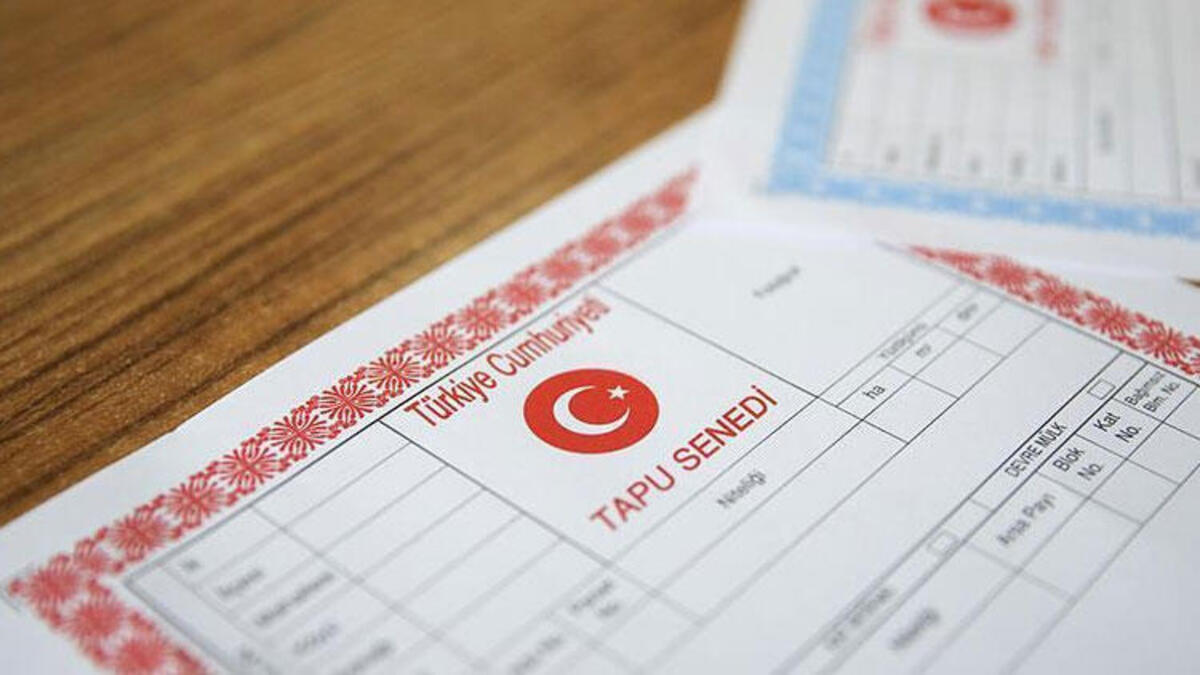
That changed through a system called EİDS — the Elektronik İlan Doğrulama Sistemi, or Electronic Listing Verification System — operated under the Ministry of Trade. Its legal basis is the Taşınmaz Ticareti Hakkında Yönetmelik, the Regulation on Real Estate Trading, which was amended by a regulation published in the Official Gazette on 31 August 2023, issue number 32295. Article 3 of that amendment rewrote Article 12 of the Regulation, placing verification duties on the listing portals themselves; Article 4 rewrote Article 22(4), which sets the administrative fines.
The design is deliberate. Rather than police hundreds of thousands of individual advertisers, the Ministry made the portals responsible. A portal that publishes an unverified listing is the one that pays. That is why compliance arrived quickly and why, if you are an overseas owner, you may have discovered the rules only when an agent told you your apartment could not be advertised.
The rollout was staged rather than sudden. Identity verification went live on 1 November 2023. Authority verification followed on 15 September 2024, with a transition period running to the end of that year during which unverified listings were still permitted but verified ones carried a badge. From 1 January 2025 authority verification became mandatory for rental listings. Sale listings were left for a date the Ministry said it would announce later.
That date, according to reporting by Karar and a number of Turkish real estate industry sources citing a letter from the Ministry of Trade’s Directorate General of Domestic Trade, was 1 February 2026, from which point authority verification applied to all for-sale property listings including homes and land. We were not able to retrieve the Ministry’s own circular text, so treat that specific date as well-reported rather than officially confirmed. If you are selling a Turkish property or letting one out, the practical consequence is the same either way: the listing has to be verified before it can be published.
EİDS at a glance
Sourced from the Official Gazette amendment and Trade Ministry announcements
How a listing actually gets verified
The process is short when the owner has Turkish digital identity, and awkward when they do not. Here is the sequence a compliant agency follows.
The agency confirms it holds a valid Yetki Belgesi
Only a business holding a current taşınmaz ticareti yetki belgesi — the real estate trading authorisation certificate issued by the Provincial Directorate of Trade — can lawfully market property. An agency without one cannot complete the authority step at all, which is the single fastest way to find out whether the person offering to sell your apartment is licensed.
The person posting passes the identity check
The portal verifies the advertiser before publication. For an individual that means name, surname, Turkish identity number or foreign identity number, and telephone number. For a company it means the registered title and a telephone number. Fail this and nothing proceeds.
The owner authorises the agency through e-Devlet
The owner logs in to e-Devlet, Turkey’s government services portal, selects the property from their own land registry record, and authorises the agency in the window provided. Where a property has several co-owners, the authorisation of at least one of them is enough to start the process.
The agency enters the property reference on the portal
The agency takes the property number generated by the authorisation and enters it in the portal’s verification section. The portal checks it against the registry record rather than against anything the agency has typed.
The listing publishes as a verified advertisement
Once matched, the advertisement goes live flagged as a doğrulanmış ilan — a verified listing. That badge is the visible signal to a buyer that somebody has checked the chain between the advertisement and the title deed.
The authorisation runs, and can be extended or withdrawn
An authorisation lasts at least three months and can be extended from the same screen. An owner can revoke it, but revocation does not automatically pull the advertisement down — a detail worth knowing if you change agency mid-sale and find your property still listed by the old one.
Three people can list a property. That is the whole list.
The Regulation is narrow about who may lawfully put a Turkish property in front of the market, and deliberately so. Most listing fraud depended on there being no such list.
The owner
The person recorded on the title deed may advertise their own property. This is the simplest route and the one that causes the most trouble for owners who live abroad and have no Turkish digital identity to log in with.
Close family
Where the owner is an individual, their first- and second-degree blood relatives, or their spouse, may post the listing. The relationship is checked against civil registry data rather than asserted.
An authorised licensed agency
An estate agency holding a valid authorisation certificate, which the owner has authorised through e-Devlet for that specific property. Both halves are required: a licence without an authorisation is not enough, and neither is the reverse.
Social media is not a loophole
The verification duty reaches listings posted on social media, not only on the large property portals. Enforcement announced in December 2024 included access bans on accounts posting listings that breached the identity rules.
Own-portfolio websites are exempt
An agency that posts only its own portfolio on its own website is outside the EİDS verification requirement. That is a narrow carve-out for the agency’s own shop window, not a route around the rules on a third-party portal.
Everyone else is excluded
A friend, an unlicensed introducer, a developer’s unregistered sales agent or an overseas broker acting without the owner’s e-Devlet authorisation cannot lawfully publish the listing. If someone offers to, that tells you something useful about them.
What verification actually buys a buyer
The badge on a listing is not decoration. These are the specific failure modes the two checks are designed to remove from the market.
| What is being checked | Unverified listing | Verified listing |
|---|---|---|
| The advertiser is an identified person | Not established | Checked before publication |
| The advertiser may market this property | Not established | Matched to the registry record |
| The property corresponds to a real title record | Not established | Tied to the land registry entry |
| The agency holds a current licence | Not established | Required to complete the step |
| The same home listed by five agencies at five prices | Common | Traceable to one authorisation |
| Recourse if the listing is false | Limited and slow | Portal and agency both exposed |
| Owner can withdraw the agency’s mandate | No mechanism | Revocable through e-Devlet |
Why foreign owners fell outside the system
Every part of the authority check routes through e-Devlet. The owner logs in, finds the property on their own registry record, and grants permission. That architecture works smoothly for a resident Turkish citizen and awkwardly for a non-resident foreign owner, because e-Devlet access is not automatic.
Getting in requires a foreign identity number — an eleven-digit number beginning 99 — and then a working login credential on top of it: an e-Devlet password, internet banking, a mobile signature or an electronic signature. Sources disagree about exactly what triggers the issue of a foreign identity number, and some state that without a residence permit you will not be able to obtain an e-Devlet password at all. We could not resolve that conflict from an official source this session, so we are not going to assert a rule about who qualifies. What is not in dispute is the practical effect: a meaningful number of foreign owners cannot complete the authorisation step.
The consequence was predictable. A legal briefing published on 27 December 2024 described the authorisation process purely in e-Devlet terms and was silent on what a foreign owner without access should do. Industry commentary suggested that listings for such properties were simply flagged as outside the system. A rule that cannot be complied with becomes, in effect, an exemption — and an exemption attached to exactly the category of owner least able to supervise what is being advertised in their name.
The Ministry is closing the foreign-owner gap
On 24 September 2026, Türkiye Today reported — citing Hürriyet — that the Ministry of Trade is preparing rules that bring foreign buyers, sellers and lessors properly inside the verification regime. Under the reported proposals, foreign property owners would have to complete identity and title deed verification through the system before an apartment can be advertised for sale or rent on an online portal, and listings that fail verification would be barred from publication.
The second limb is arguably the more significant. The same reporting says agents and foreign owners would have to back every listing with a formal written brokerage agreement, in addition to the digital authorisation, because regulators concluded that e-Devlet authorisation on its own still left legal loopholes. Without both a physical contract and a digital registration, an agent could not market the property.
These are proposals. The reporting did not give an effective date and we found no Official Gazette text implementing them, so nothing here should be read as a rule already in force. What it does tell you is the direction of travel, and it is consistent with everything else the Ministry has done in 2026 — including the secure payment system becoming mandatory on 1 December 2026, which pushes purchase funds through a bank-held mechanism released only once the land registry confirms the transfer.
Enforcement is not theoretical either. The same September 2026 report put administrative fines arising from inspections at more than 105 million Turkish lira against 1,800 non-compliant individuals and agencies, and said spot checks would continue. Foreign residents were urged to use only agents holding a Certificate of Authorisation.
Properties the system does not reach
EİDS verifies a listing against a land registry record, which means it can do nothing at all where no such record exists. The 27 December 2024 briefing is explicit that the system does not apply to properties without title deeds, and gives examples: housing projects that have not yet obtained a condominium title, TOKİ and Emlak Konut developments, and gecekondu housing. Listings for these may still appear, but they must be flagged as having no title record and that must be stated in the advertisement.
Read that as a warning rather than a technicality. If you are looking at a listing that carries no verification because the property has no registered title, you are looking at a property where the thing you are buying is a contractual expectation rather than registered ownership. That is not automatically a bad purchase — a great deal of Turkish new-build is sold before the condominium title exists — but it is a different purchase, with different protections and a different failure mode.
Our guides to construction servitude versus full condominium title and to buying off-plan in Turkey set out what you are actually acquiring in each case, and the encumbrance check explains how to read what is registered against a property that does have a deed.
Who pays when a listing is wrong
The fines in the Regulation fall on the portals. Administrative penalties run from 10,000 to 100,000 Turkish lira per violation, levied under Article 12(1)(d) of Law No. 6563. The Ministry announced enforcement on 26 December 2024 consisting of access bans on social media accounts posting listings that breached the identity verification rules, together with fines on the operators of those platforms, and said from 1 January 2025 it would apply the same measures to breaches of the authority rules.
There was also a question about whether agents themselves could lose their authorisation certificates for posting through non-compliant platforms. The Ministry announced that they would. The authors of the December 2024 legal briefing observed that the Regulation as drafted did not provide a basis for that sanction, and noted the Ministry had said legislative work had begun. The Regulation has since been amended again — the consolidated text on the government’s legislation portal carries a 2026 amendment marked 29 April 2026, Gazette issue 33238, which restructured the article governing the authorisation certificate. We have not read the operative text of that amendment, so we are not going to characterise what it did.
For an owner, the practical reading is straightforward. You are unlikely to be fined for a bad listing. You are, however, entirely exposed to the consequences of one: a sale that collapses because the chain of authority cannot be evidenced, a deposit taken by someone who was never entitled to take it, or a property marketed at a price you never agreed. The verification system exists because those things were common enough to legislate against.
What to do if you own a Turkish property from abroad
Start by finding out whether you can actually log in to e-Devlet. If you hold a Turkish residence permit and a foreign identity number, you may already have everything you need, or be one visit to a PTT branch away from it. If you have never held a residence permit, assume you will need help and build the time into your plans rather than discovering the problem the week you want to list.
Second, treat your agency’s authorisation certificate as a document to be checked rather than claimed. An agency that holds one can complete the authority step; an agency that cannot complete the authority step does not hold one, whatever it says. This is a rare case where the regulatory process itself does the due diligence for you, provided you insist on it.
Third, get the instruction in writing regardless of what the current rules require. The Ministry’s reported direction is towards a mandatory written brokerage agreement precisely because digital authorisation alone proved insufficient. A written mandate stating the property, the price, the duration and the commission protects you now and will be required later. Our guide to estate agent fees in Turkey sets out what that agreement should contain.
Finally, remember that revoking an authorisation does not remove a listing. If you change agency, withdraw the authorisation and then separately require the old listing to be taken down, in writing, and check the portals yourself afterwards. Owners who assume the two happen together are the ones who find their apartment advertised by three agencies at once.
Advertising a Turkish property from overseas?
We will tell you whether your listing can be verified, and what is missing if it cannot.
Property listing verification in Turkey — your questions
The questions overseas owners ask most often once an agent tells them a listing cannot be published.
Where to go next
The guides that sit closest to this one, for owners selling, letting or checking who they are dealing with.
- Turkey property guides — the full index
- Selling property in Turkey: the process end to end
- Estate agent fees in Turkey and what the mandate should say
- How to check a Turkish property developer
- The secure payment system from 1 December 2026
- Web Tapu: the online land registry explained
- Renting out a property in Turkey
- Seven pitfalls foreign buyers still fall into
Get your listing verified properly the first time
Tell us about the property you want to advertise and we will tell you whether the authorisation chain can be completed, what is missing if it cannot, and what your agency should be putting in writing. We work with licensed Turkish agencies and conveyancers, and we will say plainly when a listing cannot lawfully be published yet.
Turkey Property Guides · Buyer Pitfalls · تماس


پیوستن به گفتگو