

Yetki Belgesi: How to Check a Turkish Estate Agent Is Licensed
Estate agency in Turkey is a licensed activity. The licence is called a yetki belgesi, it is issued to the business rather than the person, and it can be checked against a Ministry of Trade register in a couple of minutes. Remarkably few foreign buyers ever ask.
The licence exists. Almost nobody asks to see it.
A foreign buyer arriving in Antalya or Istanbul will meet a great many people who describe themselves as estate agents. Some of them are. Some of them are introducers working on a share of somebody else’s commission. Some are a developer’s sales staff, a friend of the owner, or a person who has noticed that there is money in walking foreigners around apartments. The Turkish state draws a sharp line between these categories. Buyers rarely do.
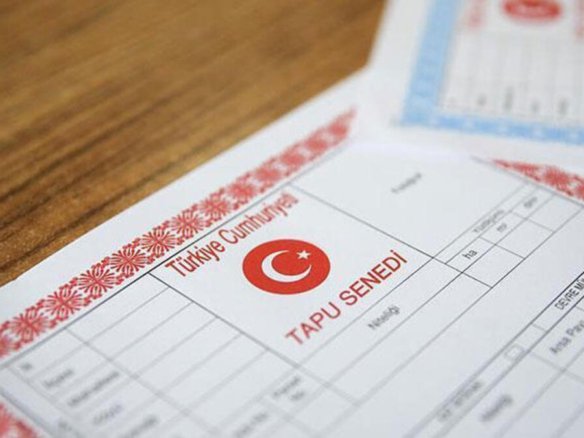
The line is the taşınmaz ticareti yetki belgesi — the real estate trading authorisation certificate. It is issued by the Provincial Directorate of Trade (Ticaret İl Müdürlüğü) in the province where the business operates, under the Taşınmaz Ticareti Hakkında Yönetmelik, the Regulation on Real Estate Trading. A business engaged in real estate trading must hold one. A business without one is not permitted to broker property.
What makes this unusually useful, compared with most due diligence you can do as a foreigner in a country whose language you may not read, is that the licence is checkable. The Ministry of Trade operates an information system for real estate trading, known as TTBS, which includes a certificate query function. You can establish in minutes whether a business holds a current certificate, what its registered name and address are, and when the certificate was issued.
There is an important corollary that catches people out in the other direction. A private individual selling or letting a property registered in their own name is نه required to hold a yetki belgesi, because they are not trading in real estate — they fall outside the Regulation entirely. So the absence of a certificate is damning for an agency and meaningless for an owner selling their own apartment. The question is always who you are actually dealing with.
This matters more in 2026 than it did two years ago, because the licence has stopped being a piece of paper in a drawer and become an operational key. Under Turkey’s property listing verification system, an agency that does not hold a valid certificate cannot complete the authority step that allows a listing to be published at all.
The certificate at a glance
From Provincial Directorate of Trade guidance, retrieved October 2026
Verifying an agency, step by step
None of this requires a lawyer, Turkish fluency or a visit to an office. It requires asking for one number and then actually looking it up.
Ask for the yetki belgesi number in writing
Not a verbal assurance, not a framed certificate on a wall, not a photograph in a messaging app. A number, sent to you in an email or message you keep. The request is ordinary and a licensed agency will treat it as such.
Look the number up in the Ministry’s system
The Ministry of Trade’s real estate trading information system, TTBS, includes a certificate query function. You enter the certificate number and the province and district in which the business operates. Where the number is not known, a search can be run on the registered business title instead.
Read what comes back, not just whether something comes back
A result should show the registered business name, the current address, the date the certificate was issued and whether it remains valid. Compare each of those against the business you are actually dealing with, including the address you have been visiting.
Check the certificate belongs to this company
The licence attaches to the legal entity. A consultant who holds a personal vocational qualification but works for an unlicensed company is not covered by that company’s non-existent certificate, and a certificate belonging to an affiliated or former employer is not the one in front of you.
Confirm it is valid rather than pending
An application in progress is not a certificate. Businesses occasionally present an application reference as though it were a licence. The query result distinguishes between the two, which is precisely why it is worth consulting rather than taking a photograph at face value.
Cross-check the business registration
The Ministry also operates a central registry system for businesses, ESBİS, which shows whether a business is registered and what its registered activity is. Real estate brokerage carries NACE code 68.31.01. A company whose registered activity does not include real estate trading cannot lawfully hold the certificate in the first place.
What an agency had to do to hold one
The conditions fall into two groups: requirements on the business, and requirements on at least one named responsible consultant within it. Both have to be satisfied.
A Level 5 qualification
At least one responsible real estate consultant in the business must hold a Level 5 vocational qualification certificate. This is the single condition that most reliably separates a licensed agency from a confident individual with business cards.
Training and experience
Guidance from Provincial Directorates sets a minimum of 100 hours of professional training, plus professional experience within the last five years: at least six months for associate or bachelor degree holders, at least twelve months for everyone else.
Relevant education can substitute
Graduates of a secondary or higher education field related to real estate trading are exempt from the training and experience conditions. A separate blanket exemption applied to applications made up to 30 June 2025 and has since expired.
Chamber and tax registration
The business must be registered with its professional chamber and be an income or corporation tax payer, with real estate trading appearing among the activity subjects in both records. The tax and chamber addresses must match.
Real premises, not a flat
Certificates are not issued in respect of places used for residential purposes. An agency operating out of somebody’s apartment is not an agency the Regulation will license, which is a useful thing to notice when you are invited to a meeting.
Issued, amended, renewed, cancelled
The certificate is granted and administered by the Provincial Directorate through the ministry’s information system, which means it is a live status rather than a permanent award. It can be, and is, withdrawn.
Licensed agency against unlicensed introducer
This is the comparison that decides how much protection you actually have when something goes wrong, and it is almost never the comparison buyers run.
| What you are relying on | Unlicensed introducer | Licensed agency |
|---|---|---|
| Checkable against a state register | No record to check | Certificate query result |
| Qualification requirement behind the advice | هیچ | Level 5 consultant required |
| Can lawfully publish a verified listing | Cannot complete the step | Can complete the authority step |
| Registered premises and address | Often a phone number only | Registered and queryable |
| Subject to Ministry inspection | Outside the regime | Inspected and fineable |
| Something to lose if they mislead you | Nothing | The certificate itself |
| A written brokerage agreement to enforce | Rarely offered | Standard practice |
What the certificate does not prove
It is worth being precise about what you have established when a certificate checks out, because overstating it is its own kind of risk. You have established that a business is licensed to broker property, that it satisfied a set of registration, training and qualification conditions, and that it is inside a regime that can inspect and penalise it. That is genuinely valuable and it is also the whole of it.
You have not established that the agency is good at its job, that it is acting in your interest rather than the seller’s, or that the specific property it is showing you is sound. A licensed agency can still market an apartment with an unfavourable annotation on the title, an unresolved zoning problem or a developer in difficulty. The licence is a floor, not a guarantee, and the property-level checks remain entirely separate work — the encumbrance check on the title record, the zoning status check, and where relevant an independent valuation report.
Nor does a certificate tell you anything about the individual consultant standing in front of you. The requirement is that at least one responsible consultant in the business holds the Level 5 qualification. The person driving you to viewings may or may not be that consultant. If the advice you are being given is consequential — about structure, about title, about tax — the right response is not to check their licence harder but to take the question to an independent Turkish lawyer who is not paid out of the commission on your purchase.
Why this is being enforced harder right now
Licensing regimes vary enormously in how seriously they are policed, and the honest answer for Turkish estate agency for several years was: not very. That has changed, and the change is part of a broader push through 2026 in which the Ministry of Trade has been tightening several parts of the property market at once.
Türkiye Today reported on 24 September 2026, citing Hürriyet, that inspections had produced administrative fines exceeding 105 million Turkish lira against 1,800 non-compliant individuals and agencies, and that enforcement teams would continue spot checks. The same report said foreign residents were being urged to use only agents holding a Certificate of Authorisation, and described the Ministry’s stated aims as removing fake listings, curbing price manipulation and reining in unlicensed brokers.
That sits alongside two other changes aimed at the same problem from different directions. Listing verification now ties an advertisement to the land registry record and to a licensed, owner-authorised agency. And the secure payment system becoming mandatory on 1 December 2026 routes purchase funds through a mechanism that releases money to the seller only once the land registry confirms the transfer. Taken together, the direction is unmistakable: fewer places for an unlicensed intermediary to stand between a foreign buyer and a Turkish title deed.
The Regulation itself has also been amended again during 2026. The consolidated text on the government’s legislation portal carries an amendment marked 29 April 2026, Gazette issue 33238, which restructured the article governing the authorisation certificate. We have not read the operative text of that amendment and will not characterise what it changed. A notice from one Provincial Directorate also referred to system updates taking effect on 1 January 2026. If you are checking a certificate, check it today rather than relying on a check somebody ran last year.
The brokerage agreement is the one that protects you
A licence tells you who you are dealing with. A written brokerage agreement tells you what was actually agreed, and it is the document that decides most disputes. Turkish regulators have reached the same conclusion: reporting in September 2026 indicated the Ministry is preparing to require a formal written brokerage agreement behind every listing, in addition to digital authorisation, having concluded that the digital step alone left legal loopholes.
Do not wait for that to become compulsory. Before an agency markets your property or introduces you to one, get the terms in writing: the specific property, the price, the duration of the mandate, whether it is exclusive, who pays the commission, how much it is, and at what point it becomes payable. Our guide to estate agent fees in Turkey covers what those terms normally look like and where the arguments usually start.
For sellers there is an additional practical reason. An authorisation granted through the government portal can be revoked, but revoking it does not automatically remove a listing that has already been published. A written mandate with a defined end date and a clear obligation to withdraw listings on termination is what you will rely on if you change agency and find your apartment still advertised by the previous one.
What this looks like on an actual buying trip
Most foreign buyers meet their agency online, weeks before they arrive, and arrive with an itinerary already built. That is the moment to do this, not after you have spent three days being driven around by someone you have come to like. Ask for the certificate number in the same message in which you confirm your dates. It is a reasonable administrative question at that stage and an awkward confrontation later.
When you arrive, notice whether the business exists in the way the register says it does. The registered address should be a commercial premises and it should be the one you are taken to. Certificates are not issued for residential premises, so a meeting arranged in an apartment, a hotel lobby or a car for every appointment is worth asking about rather than accepting as a quirk of local practice.
Be alert to the structure of the introduction rather than the warmth of it. If one person is offering to be your agent, arrange your lawyer, recommend your valuer, handle your currency conversion and hold your deposit, the licensing question has become secondary to a much larger one. Our guide to the pitfalls foreign buyers still fall into and to structuring a viewing trip both come back to the same principle: keep the people who advise you separate from the people who are paid when you buy.
Finally, if a check comes back wrong — no certificate, a certificate in a different company’s name, an address that does not match — the right response is to stop, not to seek reassurance from the person you are checking. There is no shortage of licensed agencies in Turkey, and nothing about any individual property is urgent enough to justify proceeding through someone who is not entitled to broker it.
Not sure who you are actually dealing with?
Send us the agency name and we will tell you what the register says before you travel.
Turkish estate agent licensing — your questions
What buyers and sellers ask once they discover the licence exists and can be checked.
Where to go next
The checks that sit either side of this one, for buyers and for owners putting a property on the market.
- Turkey property guides — the full index
- EİDS: Turkey’s property listing verification rules
- Estate agent fees in Turkey and what the mandate should say
- How to check a Turkish property developer
- Using an independent Turkish property lawyer
- Is it safe to buy property in Turkey?
- Muvazaa: sham and collusive property sales
- Seven pitfalls foreign buyers still fall into
Know who you are dealing with before you travel
Tell us which agency you have been speaking to and which property you are considering, and we will tell you what the register says, what the title record shows, and what we would want checked before anything is signed. We will say plainly when something does not line up.
Turkey Property Guides · Buyer Pitfalls · تماس



پیوستن به گفتگو