
Cins Tashihi: When the Tapu Says Land but There Is a Building On It
Every Turkish title deed carries a field describing what the property actually is — a plot, a field, a dwelling, a shop. When that description has not caught up with what has been built, the fix is called cins tashihi, and until it is done the deed quietly misdescribes your asset.
A deed that describes the wrong thing is still a problem
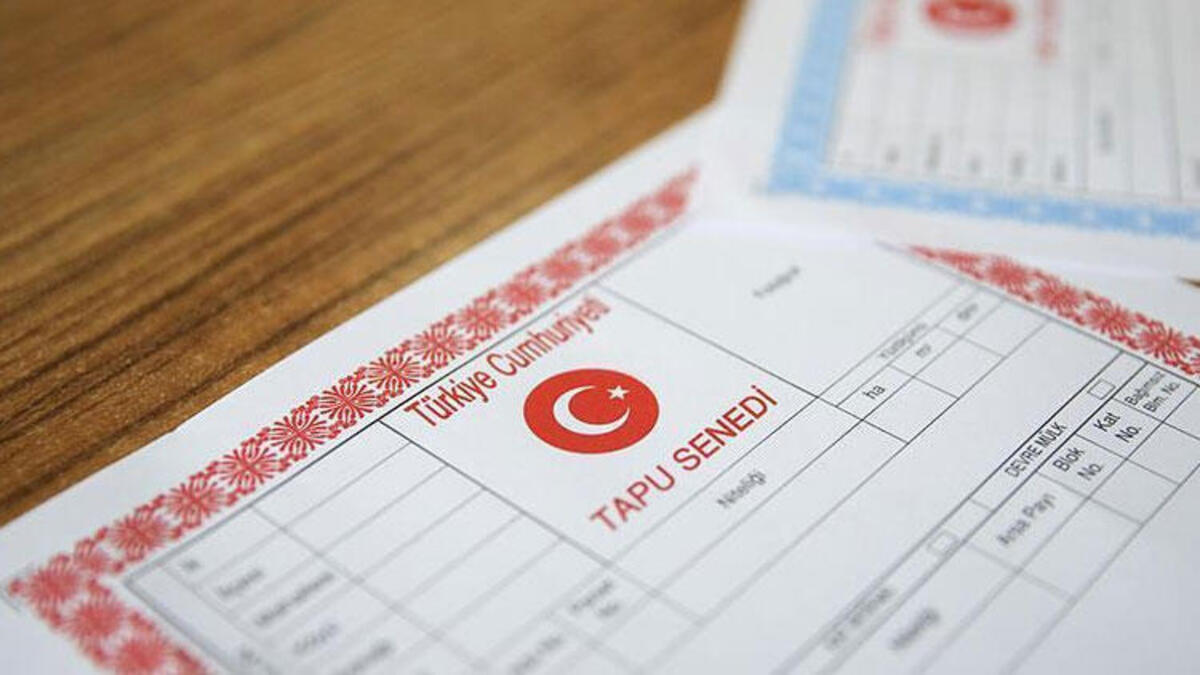
Foreign buyers reading a Turkish title deed for the first time tend to look at two things: the owner’s name and the share. The field that causes more practical trouble than either is Niteliği — the nature, or type, of the registered property. It is where the register records whether the parcel is an arsa (a building plot), a tarla (a field), a bağ or bahçe (vineyard or orchard), or a built unit such as a mesken (dwelling), a dükkân (shop) or an apartman.
That field is not decoration. Under the Land Registry Regulation — brought into force by Council of Ministers decision No. 2013/5150 of 22 July 2013 — the type of the property is the first of the factors on which a valuation for a mortgage bond must be based, ahead of surface area, declared property-tax value and income. A register entry that describes a bare plot cannot support a valuation of a finished apartment.
Cins tashihi — also written cins değişikliği — is the operation that corrects it. Turkey’s Land Registry and Cadastre Directorate defines it, in Article 3 of its Circular No. 2023/5 dated 12 April 2023, as the operation of changing the type of the parcel as recorded in the land register. Typical cases are a parcel moving from unbuilt to built, or the reverse, and a vineyard, orchard or field becoming a building plot.
This guide explains what the field means, why a mismatch matters to a buyer rather than only to a bureaucrat, when the correction happens automatically, what is required when it does not, and the order the procedure runs in. For the deed itself see our guide to the tapu (Turkish title deed), and to read the register online, Web Tapu.
Cins Değişikliği — At A Glance
The correction of a property’s registered type
Why a wrong designation is a buyer’s problem
A mismatch between the register and the ground does not stop you owning the property. It stops a series of other things from working.
Valuation and lending
The registered type is the first input into a valuation for a mortgage bond under the Land Registry Regulation. A deed describing bare land will not value as a completed dwelling, which affects what a lender will advance against it.
Independent ownership of a flat
Full freehold ownership of a flat sits on a register entry describing a building and its independent sections. While the parcel is recorded as a plot, you are dealing with a share of land and a construction servitude rather than completed condominium title.
It reveals a missing permit
Because the correction normally follows the occupancy permit, a deed that has not been corrected is often the first visible trace of a building that never received one — a far more consequential defect than the register entry itself.
Resale friction
A later buyer’s lawyer will raise the same question you should be raising now. An uncorrected designation is a negotiating point against you when you come to sell, and a delay while it is put right.
Agricultural designations carry their own rules
Where the registered type is agricultural, the circular requires the favourable opinion of the provincial or district directorate of agriculture and forestry before the type can be changed — a separate consent, on a separate timetable.
Inherited property must be transferred first
If the owner or the owner of the structure has died, the circular requires a certificate of inheritance from a notary or court, together with a clearance letter for inheritance and transfer tax, before the correction can proceed.
The second card is the one worth dwelling on if you are buying a flat in a new block. Turkish condominium law distinguishes between a construction servitude over a share of the land and completed ownership of an independent section, and the register entry travels with that distinction. Our guide to kat irtifakı versus kat mülkiyeti sets out what each one gives you, and the habitation certificate (iskan) explains the permit that unlocks the move between them.
When the registry does it for you, and when it will not
Circular 2023/5 sets out the situations in which the correction is made resen — of the registry’s own motion — and the situations where a further document or consent is needed first.
| Situation | Corrected ex officio? | What the circular requires |
|---|---|---|
| Occupancy permit obtained, with the building application project available | Yes | Corrected on the basis of those documents, with no site inspection and no further document sought; the ex officio operation is exempt from the revolving-fund charge |
| Construction servitude already established and an occupancy permit in place | Yes | Corrected ex officio on those two conditions |
| Building moving from unbuilt to built | Conditional | An earthquake insurance policy is required, with carve-outs for operations carried out ex officio under the condominium legislation and for certain buildings under Law 6305 |
| Buildings not subject to an occupancy permit | No | The buildings and facilities are measured against ground control points |
| Unpermitted buildings falling under Article 27 of the Development Law | No | A governor’s opinion or a municipal letter is sought |
| Registered type is agricultural | No | Favourable opinion of the provincial or district directorate of agriculture and forestry |
| Owner, or owner of the structure, has died | No | Certificate of inheritance from a notary or court, plus an inheritance and transfer tax clearance letter |
| Registration to be made through a representative | No | A power of attorney or an authorisation document |
Read the first two rows together, because they are the good news. For the ordinary case — a block that has been finished, inspected and given its occupancy permit — the correction is not a project you have to manage. It is made on the strength of the permit and the building application project, without a site visit and without the registry asking for anything else, and that ex officio route is exempt from the revolving-fund charge. If your deed still describes a plot in those circumstances, the likeliest explanation is simply that nobody has started the process.
The rows below are where a correction turns into a piece of work with other institutions in it. An agricultural designation needs a separate agriculture and forestry consent. A death in the ownership chain needs the inheritance dealt with first — see our guides to inheritance law in Turkey and to buying agricultural land in Turkey. And an unpermitted building needs an opinion from the governor’s office or the municipality, which is a very different conversation from a clerical fix.
How the correction actually runs
Simplified from Circular 2023/5, in the order the circular sets out. The value of knowing the order is being able to ask which stage a stalled file is sitting at.
An entitled person applies
The circular accepts a request from the owner of the property, their proxy, their legal representative or their heir. Licensed survey offices and certain persons and institutions covered by an earlier circular also count as interested parties, on condition that they produce their contracts. A holder of a limited real right may apply only within the scope of the right they hold.
The file is opened and the charge paid
The request is made through the cadastre system to a licensed survey office or to the cadastre directorate. Once the revolving-fund charge has been paid — where no exemption applies — a cadastral request document is issued.
The work is carried out, and checked by someone else
Where a licensed survey office does the work, the licensed engineer is responsible for carrying it out and the cadastre directorate is responsible for checking it. The separation is deliberate, and it is the same principle that runs through Turkish construction supervision.
Errors are logged and cleared
Errors and omissions are identified on an office control form. Once they have been remedied, a control report is drawn up and signed in two copies.
A registration notice goes to the land registry
A registration notice is prepared and signed, then scanned by the cadastre directorate and sent to the land registry directorate over a secure electronic channel. Nothing is hand-carried between the two offices.
Registration, then the cadastral record
Charges are collected by the land registry directorate, the registration is made and its journal number reported back to the system. The change is then written into the technical register and file, and brought to “approved” status in MEGSİS, the national cadastral information system. Under Article 72 of the Land Registry Regulation the old entry is ruled through in red ink and the new record written with the date and journal number of the change.
What to do when you see a designation that does not fit
None of this requires you to become an expert in Turkish cadastral practice. It requires you to notice the field and then ask three questions in order.
- Does the designation match what you walked around? Compare the Niteliği field against the physical property. A finished apartment on a deed reading “arsa” is the mismatch to look for. You can check the parcel’s registered particulars yourself — see our guide to checking a Turkish land parcel online.
- Is there an occupancy permit, and what does it cover? This is the hinge. With a permit, the correction is an ex officio formality. Without one, you are not looking at a registration lag; you are looking at a building that has not been signed off, and the designation is a symptom.
- Who is going to do it, and before or after completion? If a correction is needed, decide whether the seller completes it before the transfer or whether it is handled afterwards with a retention. Do not accept a verbal assurance that it “will be sorted out at the tapu office” without establishing which of the situations above applies.
There is a related trap worth knowing about if you are buying land with something already standing on it. Where a building or planting on a parcel belongs to someone other than the landowner, Turkish practice records that separately, and the correction of a type may interact with it. Our guide to muhdesat covers that situation, and where a correction has to be made through a representative because you are abroad, see power of attorney for Turkish property.
Not sure what your title deed is actually describing?
We read the register entry, the occupancy permit and the parcel record together before you commit.
Cins tashihi — frequently asked questions
What foreign buyers ask about the Niteliği field, occupancy permits and correcting a registered type.
Where to go next
The rest of our foreign-buyer library, from the title deed itself to the build quality behind it.
- The tapu — Turkish title deed — every field on the deed and what it means.
- The habitation certificate (iskan) — the permit that unlocks the correction.
- Kat irtifakı vs kat mülkiyeti — construction servitude against full condominium title.
- Parsel sorgu — checking a Turkish land parcel online.
- Web Tapu — reading and transacting on the register online.
- Muhdesat — when a building belongs to someone other than the landowner.
- Takyidat — the encumbrance check on a Turkish deed.
- All Turkey property guides — the full foreign-buyer library.
Have the register entry read before you commit
Tell us the property you are considering and we will read the Niteliği field against the occupancy permit and the parcel record, and tell you whether a correction is a formality or a warning. We work with licensed Turkish conveyancers and survey offices.