

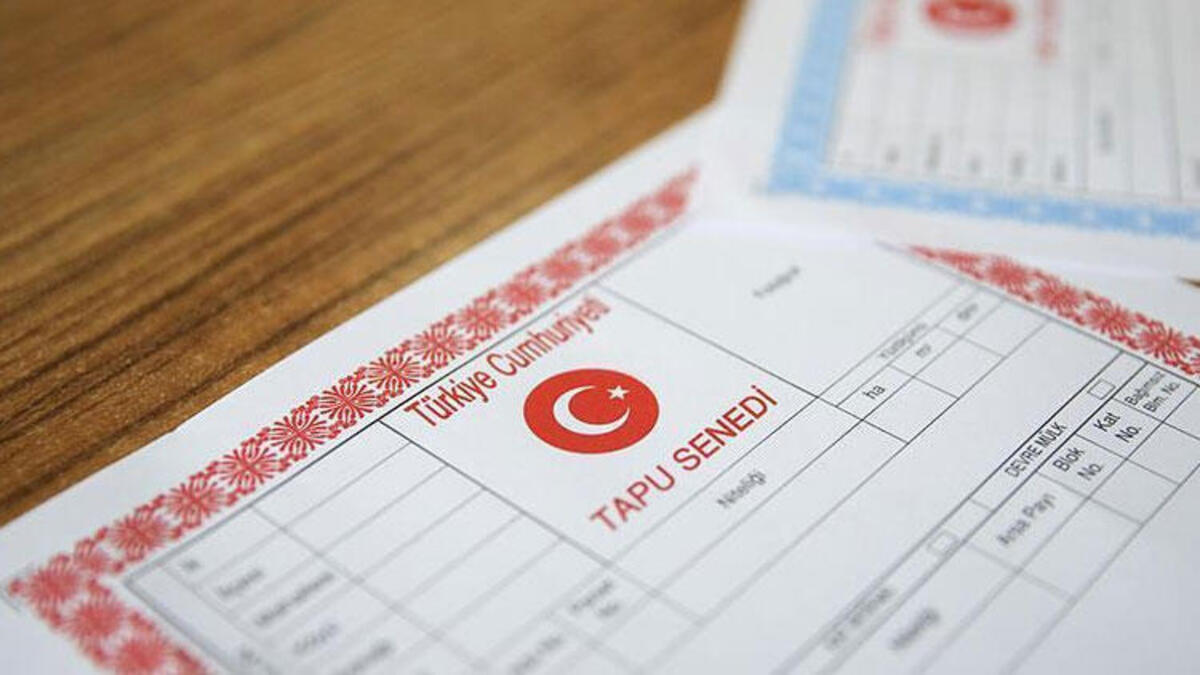
Web Tapu: Turkey’s Online Land Registry Explained
Turkey moved the paperwork of title deed business onto the internet. Owners can read their own register, obtain official documents, authorise a lawyer and book their registry appointment online — but the signature at the end is still made in person. Here is what the system does, what it does not, and what a foreign owner needs before they can log in at all.
The register moved online. The signature did not.
For most of the last century, dealing with a Turkish title deed meant going somewhere and standing in a queue. Obtaining a copy of your own registry record, checking what was registered against your property, or starting a transfer all required physical attendance at the Land Registry Directorate that held the file.
Web Tapu, the online land registry system run by the Tapu ve Kadastro Genel Müdürlüğü (TKGM), changed the administrative half of that. Registered users can view the immovable property held in their name, obtain official documents such as registry records, title certificates and mortgage documents without visiting an office, initiate transactions, grant another person authority in relation to a specific property, and book the appointment at which the matter will be completed.
For a foreign buyer or owner there is a step before any of this. Access is secured through e-Devlet, Turkey’s central government authentication platform. Logging in requires e-Devlet credentials, and a foreign national needs a Turkish foreign identity number before those credentials can exist. That is why the identity and tax number steps belong at the very start of a purchase — see our guide to getting a Turkish tax number as a foreigner. Until they are done, you cannot read your own record online.
It is also worth being precise about what this system is not. It is not the public map. Turkey publishes a separate, open cadastral enquiry that anybody can use without an account, and which shows land but never owners — we cover it in how to check a Turkish land parcel online with Parsel Sorgu. Web Tapu sits on the other side of the authentication line: it is where ownership, encumbrances and transactions actually live, and access to a given record is restricted to the owner and to those the owner has authorised.
Web Tapu — At a Glance
What the system is and how access works
From no access to a completed appointment
The order matters more than any individual step. Most delays foreign owners report come from attempting step four before steps one and two exist.
Obtain a foreign identity number and a tax number
Everything downstream depends on being identifiable to the Turkish state. A foreign national needs a foreign identity number before e-Devlet credentials can be issued, and a tax number is required for property and banking business generally. Treat these as the first administrative task of a purchase rather than something to sort out near completion.
Set up e-Devlet access
e-Devlet is the single sign-on used across Turkish government services, and it is what secures the land registry system. Once you hold credentials, the same login reaches a wide range of public services, not only the registry. Without it, you are dependent on your lawyer and on in-person enquiries for everything that follows.
Log in and locate your immovables
Signed in, you can see the property registered in your name and open the records attached to it. This is the moment to read rather than skim: what is recorded against a property matters as much as who owns it. Our guide to how the Turkish title deed works explains the fields and the annotations in detail.
Obtain the official documents you need
Registry records, title certificates and mortgage documents can be requested through the system rather than collected in person. These are the documents banks, notaries, valuers and counterparties routinely ask for, and being able to produce a current one without travelling is the single biggest practical gain for an owner living abroad.
Authorise your lawyer, if someone must act for you
An owner can grant authority over a specified property by entering the identity number of the person authorised. It is property-specific and it can be withdrawn, which makes it considerably narrower than a general mandate. Note the boundary: this permits access and action within the system, but where somebody must sign on your behalf at the registry you need a properly executed power of attorney — see power of attorney for Turkish property.
Book the appointment, then attend it
Select the Land Registry Office holding the record, choose the transaction, pick a date, and turn up with originals. Make sure the statutory prerequisites are genuinely satisfied first: for residential property, compulsory earthquake cover must be in place before a transfer can be registered, as set out in our guide to DASK earthquake insurance. Booking ahead of the conditions being met simply moves the queue.
Six things the system actually gives you
Most owners use one or two of these and never discover the rest.
See Your Immovables
A consolidated view of the property registered in your name, with the detail held against each one. For owners with more than one Turkish asset this alone replaces a folder and several trips.
Official Documents
Registry records, title certificates and mortgage documents obtained without attending an office — the paperwork banks, notaries and buyers ask for, produced on demand from abroad.
Authorisation
Grant a named person authority over a specified property by identity number. Property-specific, visible in the system, and revocable — a much tighter instrument than a broad mandate.
Transactions
Sales, transfers, mortgages, gifts and related registry business can be initiated and progressed online, alongside cadastral and mapping requests, up to the final in-person stage.
Appointments
Choose the office, the transaction and the date inside the system. The scheduled slot is what replaces the old routine of arriving early and hoping.
Historic Records
Access extends to old registration documents, including Ottoman-era records — occasionally decisive for rural land, inherited property and long-running boundary questions.
What still requires attendance
The line between the two is the thing to understand before you plan travel around a completion date.
| Task | Online via Web Tapu | In person at the Directorate |
|---|---|---|
| View property registered in your name | Yes | Yes |
| Obtain a registry record or certificate | Yes | Yes |
| Obtain a mortgage document | Yes | Yes |
| Authorise another person over a property | Yes | Yes |
| Start a sale, transfer or mortgage | Yes | Yes |
| Request cadastral and mapping operations | Yes | Yes |
| Book an appointment | Yes | Not the intended route |
| Sign the deed at completion | No | Yes — required |
| Present original documents | No | Yes — required |
| Pay the applicable charges | No | Yes — at the appointment |
| Use without a Turkish identity number | No | Via a representative |
Read the bottom rows of that table as a planning constraint. If you are buying from abroad, the completion appointment is a fixed point that requires either your physical presence or a representative acting under a properly executed power of attorney. Everything above it can be handled remotely, which is precisely why the preparation should be finished well before the date rather than during the week of travel.
There is also a payments dimension that sits outside the registry system entirely. Registration is the moment ownership changes, but how the purchase money moves is governed separately, and the sequencing of the two is where buyers are most exposed. Our guides to escrow accounts in Turkey and the seven pitfalls foreign buyers still fall into deal with that sequence directly. The principle is unchanged by digitisation: checks first, then payment, then registration.
For sellers, the same architecture works in reverse, and the online record becomes a way of demonstrating a clean title to a cautious buyer rather than asking them to take it on trust. Our guide to selling property in Turkey covers the owner’s side of the process, and if you would rather not manage any of it personally, whether you need a lawyer to buy property in Turkey sets out what a Turkish lawyer actually does here.
Not sure what is registered against a property?
We work with licensed Turkish conveyancers who can obtain and read the registry position through the proper channels.
Web Tapu — frequently asked questions
Access, authorisation, appointments, and what still cannot be done from a laptop.
Where to go next
The registry in context, and the rest of the foreign-buyer library.
- Tapu: how the Turkish title deed works — what the register records and how to read it.
- Parsel Sorgu: checking a land parcel online — the free public map, and its limits.
- Turkish tax number for foreigners — the first administrative step of a purchase.
- Power of attorney for Turkish property — buying without being there.
- DASK earthquake insurance — required before a transfer can register.
- Selling property in Turkey — the owner’s side of the process.
- Do you need a lawyer to buy in Turkey? — what a Turkish lawyer actually does.
- Turkey property guides — the full library for international buyers.
Have the registry position checked properly
Tell us the property you are considering and we will obtain and read the title position, the annotations and the cadastral record through the proper channels before anything is signed. We work with licensed Turkish conveyancers and appraisers.


Join The Discussion