

TAKBİS: The Database Behind Every Turkish Title Deed
Turkish property ownership does not really live on the deed in your hand. It lives in TAKBİS, the national land registry and cadastre information system — and once you understand what sits inside it, the whole purchase process stops looking like paperwork and starts looking like a sequence of database entries you can check.
The deed in your hand is a printout. The record is in TAKBİS.
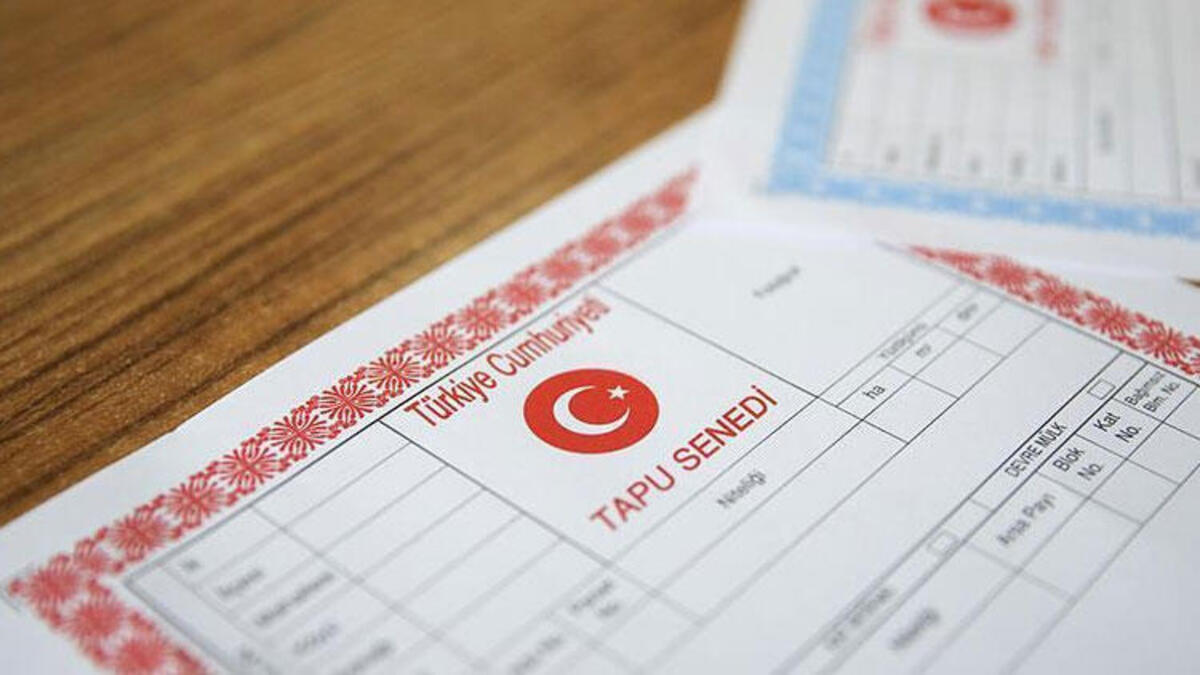
Almost every guide to buying property in Turkey tells you to “check the tapu”. Very few explain what you are actually checking. The tapu senedi — the red-bordered certificate handed over at the land registry directorate — is a document produced from a database. It is excellent evidence of ownership, and it is not the ownership record itself.
That record sits in TAKBİS, short for Tapu ve Kadastro Bilgi Sistemi, the Land Registry and Cadastre Information System operated by Turkey’s General Directorate of Land Registry and Cadastre (Tapu ve Kadastro Genel Müdürlüğü, usually abbreviated to TKGM). TKGM describes TAKBİS as an e-government project that moves property ownership data from across Türkiye into electronic form and allows land registry and cadastre transactions to be carried out electronically.
The distinction matters more than it sounds. A photograph of a deed shows a moment in the past, shows only the face of the document, and is trivially easy to produce for a property the sender does not own. The database entry is current, national, and carries the encumbrances the face of a deed does not show.
This guide explains what TAKBİS is, what it holds, how buyers reach it through Web Tapu and Parsel Sorgu, what people really mean by a “TAKBİS belgesi”, and the things the system deliberately does not tell you.
TAKBİS — At a Glance
As published by TKGM, retrieved November 2026
From provincial ledgers to one national register
For most of the twentieth century, Turkish land registration was a local, paper-based business. Ownership of a parcel in Muğla was recorded in a bound ledger in Muğla, and if you wanted to know what was registered against it, you went there. Records were authoritative but slow to reach.
TAKBİS was the project that ended that arrangement. According to TKGM’s own account, it began as a pilot in 2002, and in 2012 all land registry directorates across the country were brought into the system. TKGM lists the system as serving 973 land registry directorates, together with a single overseas representative office in Berlin — a reflection of the size of the Turkish community in Germany and the volume of property business conducted from there. Figures quoted on different TKGM pages have varied slightly, so treat the directorate count as an order of magnitude rather than a live tally.
TKGM sets out five objectives for the system: to digitise land registry and cadastre records and manage them centrally; to run and track transactions electronically; to reduce bureaucracy through data sharing with other public institutions; to improve the citizen experience through faster, more secure and location-independent services; and to provide an integrated system supporting secure, efficient work by staff. The project won first place in the “Kamudan Vatandaşa e-Hizmetler” (public-to-citizen e-services) category at the 2006 eTR Awards, and TKGM now lists its status as complete but under continuous development.
Why should a foreign buyer care about a twenty-year-old IT project? Because the date of national coverage is the date after which the convenient excuses stop working. If an agent tells you a record cannot be produced quickly because the property is remote, or that the file is “at the archive”, that was plausible in 2005. Since 2012 it has not been. A current record on a registered Turkish parcel is a query, not an expedition.
Six things the register records about a property
TAKBİS brings the ownership side of the register and the survey side of the cadastre into one system. These are the categories that matter when you are deciding whether to buy.
Ownership
Who holds title, and in what form — sole ownership, or shares held jointly. If the deed is shared, the share structure is part of the record.
Parcel identity
Province, district, neighbourhood, block (ada) and parcel number, with surface area and the registered designation of what stands on the land.
Encumbrances
Mortgages, liens, attachments and court-ordered restrictions. This is the section that decides whether a sale is clean, and the one casual buyers skip.
Annotations
Formal notes (şerh) recording rights and limits that bind future owners — family residence annotations, pre-emption rights, resale restrictions and similar.
Building status
Whether the deed is a construction servitude or full condominium ownership, and the land share attached to an individual flat.
Transaction history
The chain of past entries on the parcel. Repeated changes of hands in a short period are not automatically a problem, but they are worth a question.
TAKBİS, Web Tapu and Parsel Sorgu — how they differ
These three names get used almost interchangeably online, which causes a lot of confusion. They are not three registers. They are a database and two windows onto it.
| TAKBİS | Web Tapu | Parsel Sorgu | |
|---|---|---|---|
| What it is | The national land registry and cadastre database | The citizen portal onto your own records | The public map-based parcel query service |
| Who can use it directly | Registry staff and authorised officials | Owners and people they authorise, via e-Devlet | Anyone, with no login |
| Shows the owner’s name | Yes | Yes — your own, or where authorised | No |
| Shows encumbrances | Yes | Yes | No |
| Shows parcel boundaries on a map | Yes | Yes | Yes |
| Search by another person’s name | No | No | No |
| Can start a transaction | Yes — it is where entries are made | Yes — applications and authorisations | No — information only |
| Useful before you make an offer | Via your lawyer or the seller’s authorisation | Yes, if the seller authorises you | Yes — check location and area |
There is no such thing as a “TAKBİS certificate”
Search in Turkish for TAKBİS belgesi and you will find a great deal of advice on how to obtain a document that does not formally exist under that name. It is worth untangling, because what people are reaching for is genuinely important.
When a Turkish buyer, agent or lawyer says “get the TAKBİS belgesi”, they almost always mean a takyidatlı tapu kaydı — a title record printed with its encumbrances section included. The word takyidat covers the restrictions registered against a property: mortgages, liens, attachments, injunctions, and the formal annotations that bind whoever owns the property next. A plain record shows the parcel and the owner. A takyidatlı record shows what is weighing on it.
That distinction is where foreign buyers most often come unstuck — not because the information is hidden, but because they were shown a photograph of the front of a deed and reasonably assumed that was the record. Our guide to takyidat and the encumbrance check goes through what appears in that section and how to read it.
How you obtain it depends on who you are. An owner reaches their own records through Web Tapu using e-Devlet credentials. A buyer cannot pull a stranger’s record, but a seller can authorise you or your lawyer to see the record for the specific property under discussion — and a seller who will not is telling you something useful. A Turkish lawyer acting for you can also obtain it within their professional powers. The mechanics of the portal are covered in our Web Tapu guide.
How a purchase actually enters TAKBİS
Ownership changes at one specific moment: when the entry is made. Everything before it is preparation, and everything after it is consequence.
The parcel is identified
Province, district, block and parcel number pin down exactly which record is in play. A street address is not an identifier; the parcel reference is. Parsel Sorgu is where you confirm that the parcel you have been shown on a map is the one in the paperwork.
The current record is read, encumbrances included
Ownership is confirmed against the register rather than against a document someone has handed you, and the encumbrances section is read in full. This is the step that most rewards doing properly and most punishes skipping.
The buyer is made identifiable to the system
A foreign buyer needs a Turkish tax number, and in practice a foreign identity number where one applies. Without an identifier the system has no one to register the property to.
An application is lodged and an appointment issued
The transfer is applied for and a slot at the relevant land registry directorate is allocated. Our guide to booking a tapu randevu covers how that works and what to bring.
Identity is verified and the parties sign
The parties, or their properly authorised representatives, attend and sign before the registry official. TKGM has been rolling identity verification devices out to land registry offices, which tightens the check on who is actually standing at the counter.
The entry is made — and you own it
The new ownership is written into TAKBİS. From that entry flows everything else: the printed deed, your ability to see the property in your own Web Tapu account, and your standing to deal with it. The entry is the ownership.
Four things TAKBİS will not tell you
A national, electronic, authoritative register is a genuine advantage, and it is worth being precise about where that advantage stops.
It does not tell you the building is legal in planning terms. The register records rights over the property. Whether the structure matches the permit it was built under, and whether it was ever signed off for occupation, are separate questions answered by separate documents — the building permit and the habitation certificate. A property can be perfectly registered and still have a planning problem.
It does not tell you what may be built nearby, or on the plot. Zoning sits with the municipality, not the land registry. If what you are buying depends on a view, an access route, or the expectation that the empty land next door stays empty, the zoning position is a separate enquiry — see our guide to checking imar durumu.
It does not tell you the building is sound. No register anywhere certifies structural condition. In a country with Turkey’s seismic exposure that gap is worth naming rather than assuming.
It is not a public search engine for other people’s assets. You cannot type a name into TAKBİS and see what that person owns, and neither can anyone selling you that service. Access runs through ownership, authorisation, or official and professional powers. If a record on a property you do not own appears without an explanation of how it was lawfully obtained, treat that as a reason for caution about the person supplying it.
What changed in 2026
TKGM lists TAKBİS as a completed project in continuous development, and publishes periodic progress notes against it. The notes carried on its project page as of 20 June 2026 record three developments that are worth a foreign buyer’s attention.
Identity verification devices are being rolled out to land registry offices. Transfers of Turkish property are signed in person, by the parties or by someone holding a proper power of attorney, and the integrity of that moment is what the whole register rests on. Hardware-based identity verification at the counter raises the difficulty of impersonation and of transfers executed on questionable authority. For a buyer who is doing things properly, a stricter check at the counter is an asset.
Preparations have been carried out for a pilot of an electronic signature module. This is at pilot-preparation stage rather than in general use, and it would be wrong to describe Turkish property transfers as signable from abroad on that basis — they are not.
The scope of municipal attachment registration and removal has been expanded within Web Tapu. An attachment — haciz — is a creditor’s claim registered against a property, exactly the kind of entry that appears in the encumbrances section and can derail a sale. Placing and lifting those entries electronically means the register reflects reality faster, which cuts both ways: a record you pulled weeks ago is a weaker basis for a decision than it used to be. Check it close to the transaction, not once at the beginning.
Want the register checked properly before you commit?
We run the title, encumbrance and parcel checks as standard on every purchase we handle.
TAKBİS — frequently asked questions
What foreign buyers most often ask about the system behind the Turkish land register.
Where to go next
The rest of our land registry library, from the deed itself to the checks that sit around it.
- Tapu: how the Turkish title deed actually works — the document TAKBİS produces, and how to read it.
- Web Tapu — the citizen portal, what it gives you, and what still requires attendance.
- Parsel Sorgu — how to check a Turkish land parcel online without a login.
- Takyidat — the encumbrance check, and why it decides whether a sale is clean.
- Tapu randevu — booking the land registry appointment and what to bring.
- When the land register is wrong — tapu errors and cadastral corrections.
- Hisseli tapu — what a shared title deed actually gives you.
- All Turkey property guides — the full library for foreign buyers.
Have the register read before you commit
Tell us the property you are considering and we will confirm the parcel, pull the current record with its encumbrances section, and tell you plainly what is registered against it.


Join The Discussion