

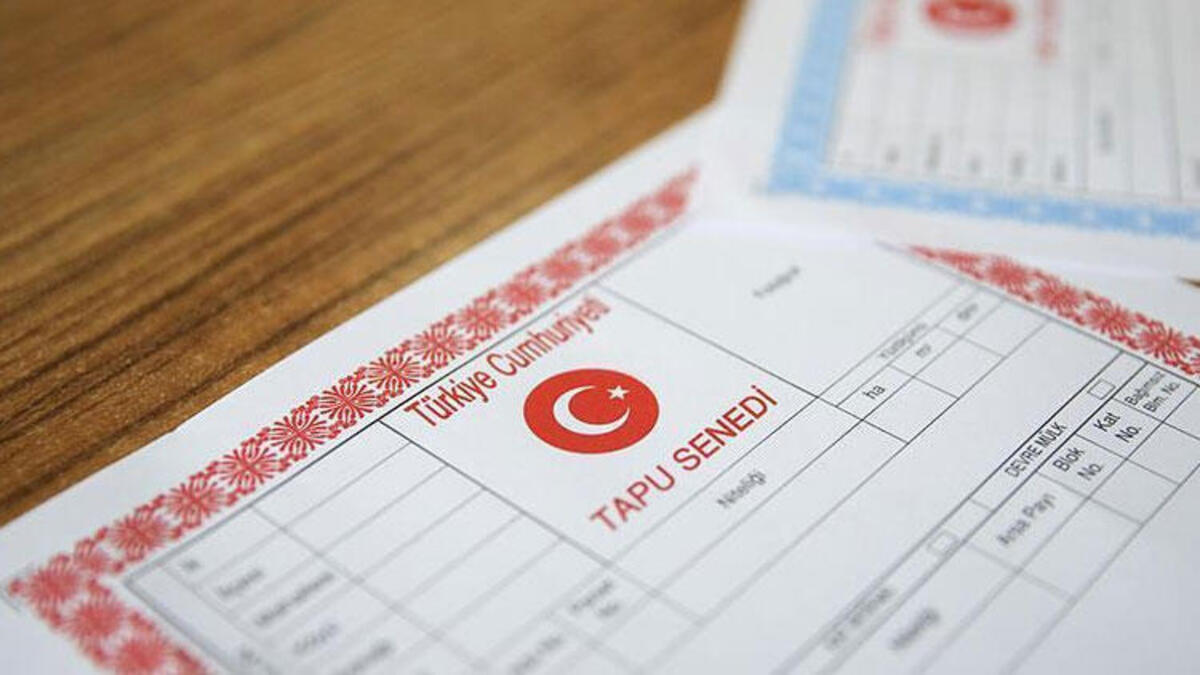
İpotek: How a Mortgage Lien Works on a Turkish Title Deed
An ipotek is a mortgage — a security right the owner granted deliberately, registered against the property and ranked. It does not stop the property being sold, and it does not follow the seller out of the door. Here is how it is created, what it actually secures, how ranking works, and how it comes off.
A consented security right, registered and ranked
Turkish law calls a security right over immovable property taşınmaz rehni. Article 850 of the Civil Code (Law No. 4721) allows it to take only three forms: ipotek, the mortgage debt instrument (ipotekli borç senedi) and the land charge certificate (irat senedi). In practice, almost everything a foreign buyer will ever meet on a Turkish title deed is the first of those.
The defining feature is consent. Unlike a haciz, which a creditor obtains through an enforcement office without asking the owner, an ipotek exists because the owner agreed to grant it. That changes its legal category. Article 1008 of the Civil Code lists what gets registered in the land register — ownership, easements and property charges, and pledge rights. An ipotek is a pledge right, so it is a registered right in its own column, not an annotation sitting in the šerhler column.
Two formalities make it real. Article 856 provides that the pledge is created by registration in the land register, and that the contract establishing it is valid only if made in official form. Article 853 adds that a pledge right can only be established over immovables recorded in the land registry. There is no such thing as an informal, unregistered Turkish mortgage over registered land.
What it can secure is deliberately wide. Article 881 allows any claim to be secured by an ipotek — one that already exists, or one that has not yet arisen but whose arising is certain or probable. The same article makes a point that surprises people: the property given as security does not have to belong to the debtor. A parent can mortgage their flat to secure a company’s borrowing.
For the wider map of what else can appear against a Turkish property, our guide to reading the encumbrances on a title deed walks through the register column by column.
İpotek at a glance
From the Civil Code, Law No. 4721, articles 850–897
From signature to deletion
An ipotek has a clear beginning and a clear end. Most of the trouble foreign buyers have with one comes from assuming the end happens automatically.
The parties agree, in official form
A mortgage contract is drawn up in the official form article 856 requires. The parties fix the amount, and article 852 leaves them free to agree the interest rate, subject to any restrictive provisions elsewhere in the law. Where the amount of the claim is not certain, article 851 requires the parties to state the upper limit the property will secure.
It is registered, at a rank
Registration in the land register is what brings the pledge into existence. Under article 870 the security it provides is limited to the rank stated in the registration, and a pledge can be created at second or lower rank provided the amount ranking ahead of it is stated. The registrar will, on request, issue the creditor a document evidencing the ipotek — article 882 is explicit that this document is not a negotiable instrument.
It sits there while the loan runs
Once registered, article 864 provides that no limitation period runs on the secured claim. The owner stays the owner and can sell, let and live in the property. What they cannot do, under article 869, is validly promise the creditor not to create new limited rights in rem over it — such an undertaking is void — though an earlier pledge does rank ahead of easements granted later without the creditor's consent.
If the debt is not paid
Article 873 entitles the creditor to be paid out of the proceeds of a sale of the pledged property. Enforcement runs through the enforcement office. Under article 150/c of the Enforcement and Bankruptcy Law the enforcement officer must notify the land registry that proceedings to realise the mortgage have begun, and the registry annotates that on the record.
The debt is discharged
Paying the loan off does not, by itself, clear the register. Article 858 provides that the pledge ends with deletion of the registration or total destruction of the property. Article 883 gives the owner the right to require the creditor to have the ipotek deleted once the claim has ended — a right that has to be exercised.
Deletion, and the fixed-term shortcut
A paragraph added to article 883 in 2019 helps where an ipotek was created for a fixed term: if the annotation under article 150/c of the Enforcement and Bankruptcy Law is not placed on the property within thirty days of the term expiring, the land registry directorate deletes the ipotek at the owner's request. Outside that case, deletion needs the creditor to act.
Six features of a Turkish ipotek worth knowing
The amount on the register is the headline. These are the details that decide what it is really worth to the creditor, and what it costs you.
It covers more than the walls
Article 862 charges the property together with its integral parts and its eklenti — appurtenances. Things such as machinery or hotel furnishings, if shown as appurtenances when the pledge was created and written into the declarations column, are presumed to be appurtenances.
Ranks do not move up on their own
Turkish law uses a fixed-rank system. Article 871 provides that the deletion of one pledge does not give a lower-ranked creditor the right to advance into the vacated rank. A new pledge can be created in its place instead. Agreements allowing advancement need official form, and annotation to bind third parties.
What the security actually extends to
Article 875 covers the principal, the costs of enforcement and default interest, and three years of interest matured by the date of bankruptcy or of the request to realise the pledge, plus interest running from the last due date. An agreed rate cannot later be raised to the detriment of subsequent creditors.
You can buy a mortgaged property
Article 888 provides that transferring a mortgaged immovable does not change the debtor's liability or the security unless otherwise agreed. If the new owner assumes the debt, the former debtor is released — unless the creditor notifies them in writing within a year that it reserves its right of recourse.
There are ways to get free of it
An owner who is not personally liable can pay the debt and require the ipotek to be lifted under article 884, with the claim passing to them. Article 885 lets someone who acquires a property mortgaged beyond its value release it by paying the purchase price, on six months' written notice to the creditors.
Some mortgages are not agreed at all
Articles 892 to 897 create statutory mortgage rights. Sellers, co-heirs and other joint owners, and the subcontractors and craftsmen who supplied labour or materials, can register one. Sellers and heirs must register within three months of the transfer of ownership; contractors within three months of completing the work.
Agreed ipotek, statutory ipotek and haciz
Three ways a financial claim ends up attached to a Turkish property, and how differently they behave.
| Agreed ipotek | Statutory ipotek | Haciz | |
|---|---|---|---|
| Arises from | A contract in official form | The Civil Code itself | Enforcement proceedings |
| Owner has to consent | Yes | No | No |
| Needs registration to exist | Yes (art. 856) | Not always (art. 892) | Yes, as an annotation |
| Appears on the deed as | A registered right | A registered right | An annotation |
| Holds a fixed rank | Yes | Yes | No |
| Secures a stated amount | Yes | Yes | No — the amount owed |
| Creditor can force a sale | Yes | Yes | Yes |
| Survives a transfer of ownership | Yes | Yes | Yes |
| Limitation period on the claim | Suspended once registered | Suspended once registered | — |
| Typical source | A bank loan, or a seller’s deferred price | An unpaid builder, seller or co-heir | Unpaid debt, tax or judgment |
Buying a property that already has an ipotek
A registered mortgage is not a reason to walk away. It is extremely common, particularly with new builds financed against the land. It is a reason to insist on a settlement sequence that does not depend on anyone’s goodwill.
Separate the two questions
The first question is whether the property remains security for the debt. The answer is yes: article 888 states that transferring a mortgaged immovable makes no change to the security unless otherwise agreed. The second question is whether you become personally liable for the debt. That is a separate matter, and the answer is no unless you assume it. If the new owner does assume the debt, the former debtor is released — unless the creditor reserves its recourse against them in writing within a year, and under article 890 the land registry notifies the creditor of the assumption, with that one-year period running from the notification.
In practice the clean route is to clear the mortgage out of the purchase price, in the right order: establish the exact redemption figure from the lender; pay it in a way that is conditional and verifiable; see the deletion actually registered; then complete the transfer. Funds moving through the secure payment system rather than directly to the seller make this far easier to arrange. Our guide to the pitfalls foreign buyers still fall into covers how that fits into the rest of the process.
Read the rank, not just the amount
A single figure on the register tells you very little on its own. Because article 870 limits the security to the rank stated in the registration, and article 874 distributes sale proceeds by rank — pro rata within the same rank — the position of a mortgage in the queue determines whether it would be paid at all. A second-rank mortgage behind a large first-rank one is a different proposition from the same amount at first rank.
Add to that what article 875 brings within the security beyond the principal: enforcement costs, default interest, and three years of matured interest plus interest from the last due date. The redemption figure is therefore not the number on the register. Ask the lender for it in writing, and ask for it dated.
Where the mortgage is in a foreign currency, article 851 sets the rules. Turkish lira is the default. Foreign-currency pledges are permitted to secure credits extended in, or measured by, a foreign currency by credit institutions operating in Turkey or abroad — so a foreign-currency ipotek in favour of a private individual is not what the article contemplates. Each rank is expressed in the currency of the claim, more than one currency cannot be used within the same rank, and conversions use the Central Bank of the Republic of Türkiye foreign-exchange buying rate on the day of calculation. Which foreign currencies may be used is determined by the President.
Off-plan, and the contractor’s mortgage
Buyers of off-plan property should pay particular attention to the statutory mortgage rights in articles 893 to 897. Subcontractors and craftsmen who supplied labour or materials for work on a property can require registration of a statutory mortgage, from the moment they undertake the work and up to three months after completing it, provided the owner has accepted the claim or a court has ruled on it. An advance waiver of that right is invalid, and the owner can prevent registration by providing sufficient security.
Article 897 adds that once the commencement of work has been written into the declarations column on the application of one of those parties, no pledge other than an ipotek may be registered until the registration period expires. On a development where the contractor has not been paid, this can produce registrations that appear after you agreed to buy.
The protections you have as a buyer
Turkish law does not allow a lender to simply take the property. Article 873 makes any contractual clause providing that ownership passes to the creditor if the debt is unpaid invalid. Where several properties secure one claim, the request to realise covers all of them but the enforcement office converts only as many as are needed.
Enforcement has its own timetable. Under article 149 of the Enforcement and Bankruptcy Law, where the mortgage deed contains an unconditional admission of a money debt that has fallen due, the enforcement officer issues an enforcement order giving thirty days to pay. Under article 150/e the creditor may request the sale within one year of service of that order, or the proceeding lapses.
Checking, and keeping checking
A current register extract is the only reliable source. The seller’s paper deed shows a position as at the date it was issued, and ranks, amounts and statutory registrations can all change. Turkey’s register is held centrally in TAKBİS and extracts are obtainable through Web Tapu, so the check is quick — run it again immediately before the transfer rather than only at the start.
One last point for landlords. Article 863 brings the rents of a leased property within the scope of the pledge from the start of proceedings to realise it, and under article 132 of the Enforcement and Bankruptcy Law a lease the owner grants and registers without the mortgagee’s consent does not affect the mortgagee’s rights. If you are buying for income, see also our guide to renting out property in Turkey.
Is there an ipotek on the property you are buying?
We will establish the rank, the true redemption figure and whether it can be cleared before completion.
İpotek: frequently asked questions
What foreign buyers ask when a mortgage shows up on a Turkish register extract.
Where to go next
The rest of the title deed library, and the wider purchase process.
- Haciz: seizure annotations on a title deed — the other way a financial claim attaches itself to Turkish property.
- Takyidat: reading the encumbrances on a title deed — every annotation, restriction and charge, and what each one means.
- Mortgages in Turkey for foreigners — borrowing against Turkish property as a non-resident.
- The tapu: Turkey’s title deed explained — how the deed is structured and what each field records.
- Buying off-plan property in Turkey — where developer financing and contractor claims come into play.
- Property valuation reports — the appraisal that sits behind both lending and enforcement.
- Turkey property buyer’s guide — the complete purchase walk-through for foreign buyers.
- Legal services — title deed work, due diligence and power of attorney.
Know what the register really says
Tell us the property you are considering and we will pull a current register extract and read it properly — mortgages, their ranks and amounts, statutory registrations, attachments and annotations — before anything is signed. We work with licensed Turkish conveyancers and appraisers, and every transaction settles through the secure payment system.


Join The Discussion