
Cesme Property for Sale: A Buyer’s Guide to Turkey’s Aegean Peninsula
Çeşme is the most expensive stretch of the Turkish Aegean and the one where the paperwork is most likely to be complicated. Stone houses in a protected conservation area, villas with pools that may or may not be on the approved plans, and a market that runs hard for four months a year. Here is how to read it.
A small district with a large reputation, and unusually specific rules
Çeşme is a municipality and district of Izmir Province, occupying the far western tip of the peninsula that runs out from Izmir into the Aegean. It is about 85 kilometres west of the city, connected by a six-lane motorway, the Otoyol 32. That road is the reason Çeşme behaves the way it does: it is close enough to Izmir to be a weekend destination for a large, wealthy domestic population, which in turn is why prices on this peninsula sit well above the Turkish coastal average and why the buyer you are competing with is more often from Izmir or Istanbul than from abroad.
The district recorded 48,924 residents at the 2022 census and is divided into twenty-five administrative quarters. Those quarters are not interchangeable. Alaçatı is a protected historic settlement with its own architectural rulebook. Ilıca is known for thermal springs and has a longer season than the resort quarters. Dalyan and the area around the marina are boating territory. İldır and Germiyan are rural and comparatively undeveloped. A listing that says only “Çeşme” is telling you very little.
This guide covers where foreign buyers actually buy on the peninsula, the two checks that matter far more here than they do elsewhere in Turkey, and the order in which to run a purchase. For the wider province, including the city districts and the other peninsula towns, see our guide to property for sale in Izmir. For the purchase process itself, start with the Turkey property buyer’s guide.
Çeşme — At A Glance
The facts worth fixing before you look at listings
Six parts of the peninsula, and who each one suits
The Çeşme district contains twenty-five quarters. These are the ones foreign buyers ask about most, and what distinguishes them.
Alaçatı
The protected old town: stone houses, narrow paved streets, the enclosed balcony known as a cumba. Declared a historical site in 2005, which constrains what can be altered. Also the windsurfing bay and the wine country.
Ilıca
Long known for its thermal springs, with a sandy shallow bay and a longer trading season than the pure resort quarters. Denser apartment stock, and the part of the district that feels most like a town rather than a resort.
Dalyan & the Marina
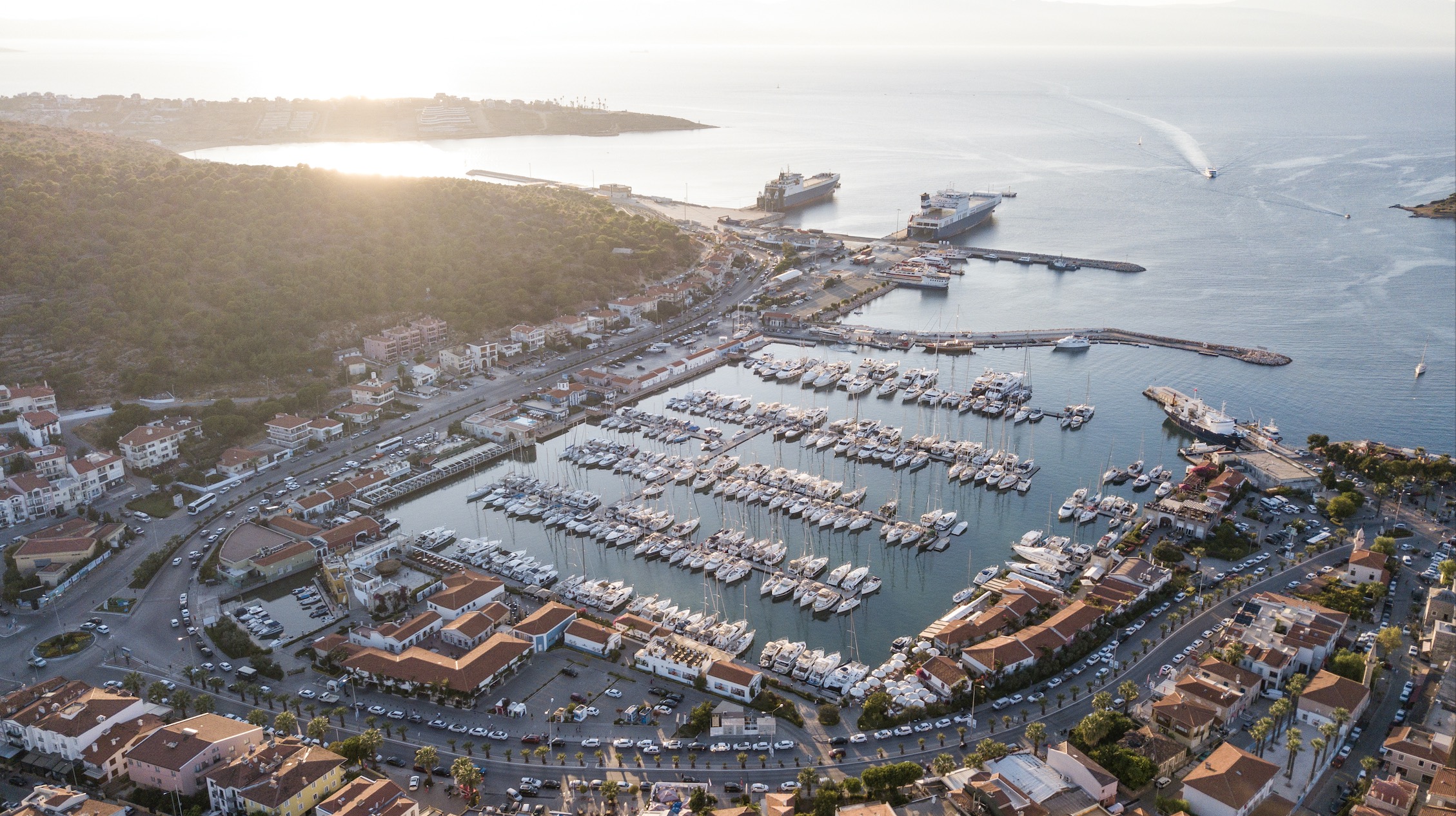
The boating end of the district, around the sheltered inlet and the marina that serves the yacht traffic. Suits buyers who want water access and a berth more than they want a beach club.
Çeşme centre
The working core around the castle, the harbour and the ferry terminal for Chios. Shops and services operate year-round, which makes it the most practical choice for anyone spending time here outside summer.
Şifne & Boyalık
Bay-side quarters with a mix of older second homes and newer gated development. Quieter than Alaçatı, and generally where buyers land when the old town has priced them out.
İldır & Germiyan
Rural, inland and coastal-fringe quarters, much less developed. Land and village property rather than resort stock — and the places where zoning, cadastral and access questions need the most careful work.
Buying inside a protected historic area
Alaçatı was declared a historical site in 2005. For a visitor that is an aesthetic fact — it is why the old centre still looks the way it does, with its stone houses, coloured windows and narrow paved streets. For a buyer it is a legal fact, and it is the single most consequential thing on this page.
Protected status means the fabric of the settlement is regulated. What may be altered, extended, demolished or rebuilt is constrained, and works that would be routine elsewhere can require approval from the relevant conservation authority. Two things follow. The first is that a renovation budget drawn up on the assumption that you can open up a wall, add a storey or reconfigure a roofline may be fiction. The second is timing: consents of this kind run on their own schedule, and a purchase predicated on being able to start work in the spring deserves a great deal of scepticism.
None of this makes Alaçatı a bad purchase. Protection is a large part of why the place has held its character and its values while less regulated stretches of Turkish coast were built out. But it does mean the question “what am I actually allowed to do with this building?” has to be answered by someone qualified, in writing, before you commit — not assumed from what a neighbour appears to have got away with.
The bay is a separate story. Alaçatı is recognised as one of the world’s leading windsurfing bays, with continuous and steady wind through the year and a shallow bay that suits beginners as well as professionals. The Professional Windsurfers Association has run world tour events there, and racers have called it the slalom capital of the world. The centre is also known for viticulture and winemaking, and the Alaçatı Herb Festival takes place every April. That combination — a sports economy, a food and wine economy, and a protected townscape — is what underpins demand here rather than beach tourism alone.
How the peninsula quarters compare
A rough orientation rather than a valuation. Confirm anything that will drive your decision against the specific parcel and the current register.
| Quarter | Typical stock | Season length | Conservation constraints | Suits |
|---|---|---|---|---|
| Alaçatı | Stone houses, boutique conversions, villas on the fringe | Strongly seasonal | Yes — protected site since 2005 | Character buyers prepared for a consent process |
| Ilıca | Apartments and older second homes | Longer than most | Generally not | Buyers wanting amenities and a real town |
| Dalyan & Marina | Waterside villas and apartments | Seasonal | Generally not | Boat owners and berth holders |
| Çeşme centre | Town apartments, some older houses | Year-round services | Parts are protected | Anyone spending time here off-season |
| Şifne & Boyalık | Gated development and second homes | Seasonal | Generally not | Buyers priced out of the old town |
| İldır & Germiyan | Land, village houses, low-density build | Very seasonal | Archaeological and zoning issues possible | Land buyers with professional advice |
What is harder in Çeşme than elsewhere in Turkey
Unpermitted additions are the norm, not the exception. The peninsula is dominated by detached and semi-detached property on its own plot. Pools, terraces, pergolas, staff rooms, converted basements and extra storeys accumulate over decades of private ownership, and a meaningful share of them were never added to the approved project. This is not a reason to avoid the market; it is a reason to insist on the occupancy permit and to compare it against what is physically there. An unpermitted structure is a liability that transfers to you with the deed.
The season is short and the costs are not. Çeşme runs hard for a few months and quietly for the rest. Service charges on a managed site, insurance, maintenance and municipal charges accrue for twelve months regardless. If your plan depends on letting income, understand that short-term tourism letting in Turkey is a licensed activity: see our guide to the short-term rental permit and to renting out property in Turkey before you model anything.
Land is where the real problems live. On the rural fringes of the district — İldır, Germiyan, the inland parcels — the questions stop being about buildings and start being about the parcel itself: its zoning status, its cadastral boundaries, its legal access, and whether anything archaeological, agricultural or forest-related is registered against it. If you are looking at land rather than a finished building, budget for proper professional work before you commit, not after.
How to run a Çeşme purchase, in order
The order matters more than the individual steps. Everything below is cheaper to do before money moves than after.
Pick the quarter before you pick the property
Decide whether you want the protected old town, a thermal-spring town with a longer season, the marina, or rural land. These are different purchases with different rules, different costs and different buyers when you come to sell. Shortlisting across all of them at once is how people end up with the wrong one.
Get a Turkish tax number and open a bank account
A tax number is the entry requirement for nearly everything that follows, and a Turkish bank account is needed to move funds through the proper channels. Doing both early removes a common source of delay later.
Pull the full title record and read the annotations
Confirm who legally owns the parcel and what is registered against it. Mortgages, attachments, usufruct rights, resale restrictions and conservation-related annotations all live on the annotations page rather than the front of the deed. Our guide to the Turkish title deed sets out how to read one.
Establish the planning, permit and conservation position
Obtain the occupancy permit and the approved project, and compare them with the building as it stands. If the property is inside the protected area, establish in writing what may and may not be altered, and who has to approve it. This is the step that most often changes the price or ends the deal.
Run the zone clearance and the ownership caps
Confirm the parcel is not inside a prohibited military zone or military security zone, and that no special security zone permission is required. Check the purchase keeps you within the 30-hectare national limit and the ten per cent district limit that apply to foreign individuals.
Instruct your own lawyer — not the seller’s
An independent Turkish lawyer acting for you, with a sworn translator where needed, is the difference between a due diligence process and a formality. If you cannot attend in person, put a properly drawn power of attorney in place rather than improvising one later.
Arrange DASK, then settle through the secure payment system
Compulsory natural disaster insurance must be valid before the Land Registry will register a transfer — see DASK earthquake insurance. Purchase funds must move through Turkey’s mandatory secure payment system rather than directly to the seller; our explainer on escrow accounts in Turkey covers how that works.
Register, then set up the holding costs
Ownership transfers at the Land Registry. Afterwards, put utilities, the service charge and insurance on a proper footing, and decide how the property will be looked after between visits — a seasonal property left unattended for eight months is a maintenance problem in the making.
Looking at a specific property in Çeşme or Alaçatı?
We will pull the title record, read the annotations and establish the permit and conservation position before you commit.
Çeşme property for sale — frequently asked questions
The questions foreign buyers ask most often about the peninsula, its quarters and its paperwork.
Where to go next
The rest of our Aegean and foreign-buyer library.
- Property for sale in Izmir — the wider province, its city districts and the other peninsula towns.
- Bodrum property for sale — the other premium Aegean market, and how it differs.
- Villas for sale in Turkey — what to check on a detached property with its own plot.
- Buying property in Turkey: seven pitfalls — the mistakes foreign buyers still make.
- Turkey property buyer’s guide — the complete purchase walk-through.
- All Turkey property guides — the full library by region and topic.
- Property management in Turkey — running a seasonal property from abroad.
- Legal services — title deed work, due diligence and power of attorney.
Have the permit and conservation position checked first
Tell us the property you are looking at in Cesme or Alacati and we will pull the full title record, read the annotations, and establish the planning, occupancy and conservation position before anything is signed. We work with licensed Turkish conveyancers and appraisers, and every transaction settles through the secure payment system.