


Kentsel Dönüşüm: What Urban Transformation Means If You Own Property in Turkey
A Turkish building can be declared structurally risky on the application of a single owner, and once that determination is final, demolition follows by operation of law. If you own an older apartment in Istanbul or any Turkish city — or you are about to buy one — this is the process most likely to decide what happens to it.
A demolition power, not a regeneration programme
Foreign owners often first hear the phrase kentsel dönüşüm from a neighbour, a building manager or an agent, and they tend to file it mentally alongside words like regeneration or redevelopment — something a municipality might propose, that owners might welcome or resist, and that might eventually happen. That is a serious misreading of what the process actually is.
Urban transformation in Turkey is governed by Law No. 6306 on the Transformation of Areas Under Disaster Risk. Its central mechanism is a determination: a licensed institution assesses a building against scientific and technical criteria and reports on whether it carries a risk of collapse or has completed its economic life. If the report says it has, and the determination becomes final, the building is demolished. Not negotiated over. Demolished, as a legal consequence, whether or not the owners agree among themselves about what should replace it.
Two features of that mechanism catch foreign owners off guard more than any others. The first is who can start it: the application for a risk assessment can be made by a single owner in the building, without the consent of the others. One apartment out of twenty can put the whole block into the process. The second is the timetable, which is built out of short notification-driven deadlines rather than long consultation periods.
The context behind all of this is not obscure. A very large proportion of Turkey’s urban housing stock predates the current earthquake design standards, and successive earthquakes have made the replacement of that stock a national priority rather than a local one. If you want to understand where a particular building sits in that picture, our guide to building age and Turkish earthquake codes explains how to establish when a block was genuinely constructed and what the answer implies.
Urban Transformation at a Glance
The fixed points of the Law No. 6306 process
How a Turkish building moves from standing to rebuilt
Seven stages. The early ones run on deadlines measured in days, which is where absent owners lose ground.
An owner applies for a risk assessment
Any single owner may apply, without the consent of the others. There is no minimum number of apartments and no requirement to consult the building management first. In blocks where one owner wants redevelopment and the rest are content, this is usually how the process begins.
A licensed institution reports on the structure
The assessment is technical: whether the building carries a risk of collapse or has completed its economic life, judged against scientific and technical data. It is carried out by an institution licensed for the purpose, not by the municipality and not by the applicant’s own surveyor.
The determination is registered and owners are notified
A risky-building determination is annotated against the title. From the moment of notification, the clock is running. This is the stage at which an owner abroad, with post going to an address nobody checks, is most exposed — and it is why an active e-Devlet account matters.
The objection window opens — and closes
Owners have fifteen days from notification to file a written objection with the Provincial Directorate of Environment, Urbanisation and Climate Change. This is a forfeiture period: an objection filed late is rejected rather than heard. An annulment action may follow before the administrative court within thirty days, but filing it does not automatically halt demolition, so a stay application has to be made alongside it.
The determination becomes final and demolition becomes compulsory
Once final, demolition no longer depends on owner agreement. The administration sets a period for the owners to evacuate and demolish the building themselves — not more than ninety days, on the guidance cited above. If they do not, utilities are disconnected and the administration carries out the demolition at the owners’ expense.
The owners decide what gets built, by majority
Redevelopment decisions are taken by owners holding more than fifty per cent of the land shares, a threshold reduced from two-thirds by Law No. 7471 in November 2023. The vote is weighted by registered land share, not by number of owners. Where an owner does not join, their share is valued by a licensed firm and sold at auction — first to participating co-owners, then to third parties, and never below the determined market value.
The contractor agreement, the rebuild and the new titles
The participating owners contract with a developer, typically on terms where the contractor funds construction in exchange for a share of the finished building. This contract is the document that determines what you actually receive, and it deserves independent legal review rather than a signature at a residents’ meeting. New title deeds are issued on completion. Our guide to instructing a lawyer in Turkey covers how to appoint someone genuinely independent.
What the 2026 amendments changed
Amendments published in the Resmî Gazete on 26 April 2026 were the most substantial revision of the regime in over a decade. This summary follows analysis published by Global Law Experts.
Direct contractor liability
Owners, purchasers and third parties can bring structural-defect claims directly against the contractor, rather than having to route them along a chain of contracts. That is a meaningful shift in who carries the risk of a poor rebuild.
Longer guarantee on latent defects
The statutory period during which a contractor remains liable for hidden structural defects discovered after handover has been extended — relevant precisely because the worst defects surface years later.
Stronger title annotations
Annotations placed on titles can restrict transfers and mortgage registrations until compliance or remediation is confirmed. For an owner mid-process, this can freeze a sale outright.
Compressed timelines
Technical sign-off windows have been shortened and demolition procedures accelerated, with tighter objection windows. Less room to let a deadline slide, on every side of the process.
Wider termination rights
Owners gained broader grounds to terminate a construction agreement — including where a contractor fails to meet remedial-compliance obligations within the cure period, or where continuing works pose a material safety risk.
Administrative and criminal exposure
Beyond civil claims, contractors face municipal enforcement, fines and work suspension orders, and individuals within contractor organisations can face criminal liability where defects create an imminent risk to life.
Your position at each stage of the process
What you can still do about it depends entirely on how far the process has already run.
| Stage | Can you still object? | Is demolition compulsory? | Can you sell freely? | Annotation on the title? |
|---|---|---|---|---|
| No determination made | Nothing to object to | No | Yes | No |
| Risk report issued and notified | Yes, 15 days | Not yet final | Disclosable, and buyers will see it | Yes |
| Objection rejected | Court, within 30 days | Not until final | Practically difficult | Yes |
| Determination final | No | Yes | Severely restricted | Yes |
| Majority rebuild decision taken | No | Yes | Share may be auctioned if you do not join | Yes |
| Demolition period running | No | Yes, at owners’ expense if not done | No | Yes |
Read across that table and the practical lesson is blunt: almost everything you can do about urban transformation, you can only do in the first fortnight. After the determination becomes final, the question stops being whether the building comes down and becomes what you get in the one that replaces it. That is still a question worth fighting over — the contractor agreement decides the size, floor and specification of the apartment you end up owning — but it is a different fight.
Not sure where your building stands?
We can check the title record and annotations for a Turkish address before you buy, or before you decide what to do next.
Equal rights on paper, unequal in practice
Law No. 6306 does not distinguish between Turkish and foreign owners. A non-resident has the same right to object, the same vote weighted by land share, and the same entitlement to a share of the rebuilt property. In legal terms there is no foreign-owner disadvantage to argue about.
The disadvantage is logistical, and it is real. This entire process is driven by notification and by deadlines measured in days. An owner living in London, Dubai or Moscow, whose Turkish correspondence goes to an apartment that is empty for ten months of the year, is the owner most likely to learn about a determination after the objection window has closed. At that point the legal equality is intact and completely useless.
Three practical safeguards close most of that gap. Keep an active e-Devlet account, which is where official notifications and title records can actually be checked from abroad. Maintain a Turkish correspondence address that a named person genuinely monitors — a managing agent, a lawyer, a trusted relative — rather than the property itself. And put a properly scoped power of attorney in place before you need it, drawn narrowly enough that it cannot be used for anything beyond the purpose you intended.
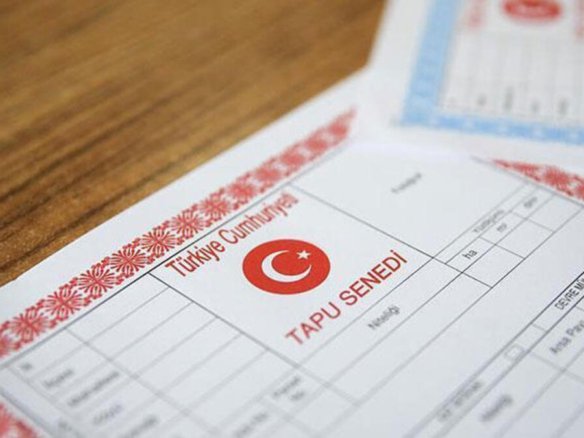
If you are buying rather than already owning, the safeguard is simpler still: read the annotations page. A risky-building determination is registered against the title, so it is visible to anyone who looks. Our guide to the Turkish title deed explains what each section records, and the seven pitfalls foreign buyers still fall into covers the other checks that belong alongside it. If the building is older and centrally located, the comparison between new-build and resale property in Turkey is worth reading before you decide the discount is a bargain.
One financial point that rarely makes it into the conversation early enough: a rebuild means years without the property. You are not collecting rent, you may be paying for accommodation elsewhere, and the finished apartment arrives on a timetable set by a contractor. Whatever the uplift in value at the end — and it can be substantial — the gap in the middle has to be funded. Build that into the arithmetic before you vote, not after.
For the wider context around owning and maintaining Turkish property from overseas, including compulsory earthquake insurance, building service charges and inheritance law, our full Turkey property guides library covers each area in detail.
Urban transformation: frequently asked questions
The six questions foreign owners ask us most often about kentsel dönüşüm.
Check the title before the deadline, not after
Send us the address and we will pull the title deed record and its annotations, so you know whether a building is already in the urban transformation process before you buy it or before you vote on it. We work with licensed Turkish conveyancers and independent legal counsel.


Join The Discussion