


Kat Karşılığı İnşaat Sözleşmesi: What Foreign Buyers Need to Know
Most apartment blocks in Turkish cities are not built by a developer who bought the land. They are built under a flat-for-land contract between a landowner and a contractor — and which of the two owns your apartment decides how safe your purchase is.
What a flat-for-land deal actually is
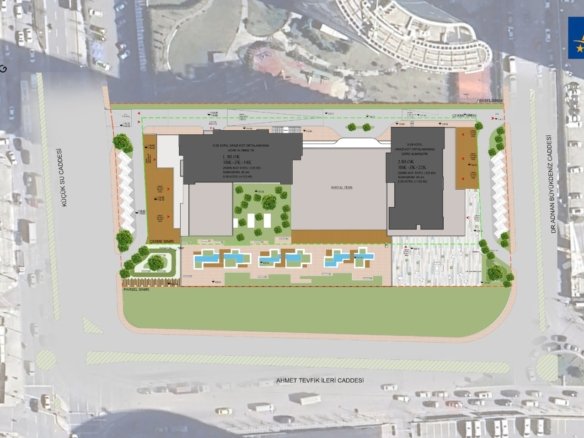
A family owns a plot in a Turkish city. The land is valuable, but building on it is not something they can finance. A construction company has the money, the crews and the permits expertise, but no land. The two sign a kat karşılığı inşaat sözleşmesi — literally a “flat in return for land” construction contract. The contractor builds the block entirely at its own cost and risk. Instead of being paid in cash, it is paid in apartments.
The contract sets out how the finished independent units are divided. The landowner keeps a share, the contractor keeps the rest, and the split is the commercial heart of the negotiation — it moves with how valuable and how liquid the land is, and with how much risk the contractor is taking on. In return for its units, the contractor receives corresponding land shares (arsa payı) transferred into its name at the Land Registry, usually in stages as the build progresses. That is why the arrangement is also called an arsa payı karşılığı inşaat sözleşmesi.
This is not an exotic structure. It is the default way a great deal of Turkish urban housing gets built, and it is the reason for something foreign buyers often find confusing: in a single new block, you may be offered flats by a construction company on one floor and by a private individual on another, at different prices and on different terms. They are not competing agents. They are the two sides of the same contract, each selling their own share.
None of this makes a flat-for-land project a bad buy. Many of the best-built blocks in Istanbul, Izmir and Antalya come out of exactly this structure, and the contractor's units are often the better-finished ones because the contractor controls the specification. What it does mean is that the title deed record deserves more attention here than in a straightforward resale.
Flat-for-land contracts at a glance
The terms, parties and the governing decision
What the 16 May 2025 ruling changed
For years, buying a flat from the contractor in a flat-for-land project carried a structural risk that no amount of care could fully remove. A unification decision of the Court of Cassation has now reversed that position.
| The question | Before 16 May 2025 | After 16 May 2025 |
|---|---|---|
| How was the transfer of land shares to the contractor treated? | As an advance (avans), not a settled transfer of ownership | As a transfer capable of supporting a valid onward sale |
| Could a buyer from the contractor rely on TMK art. 1023? | No — good faith reliance on the register was not available | Yes — a good faith buyer through a valid entry is protected |
| If the contract was rescinded retroactively, what happened to sold units? | They could be recovered from the buyer | The buyer’s ownership stands unless bad faith is proved |
| Who carries the burden of proof? | In practice the buyer, who could not invoke good faith at all | The landowner, who must prove bad faith with concrete evidence |
| Does careful due diligence change the outcome? | Largely not — the structure defeated it | Yes — the checks you run are what establish good faith |
| How can the landowner still protect the land? | Protected by default under the case law | Must actively register a şerh to put buyers on notice |
Why the court moved, and what it did not do
The old position had a certain internal logic. The land shares moved to the contractor before the building existed, as a mechanism to let the contractor finance and sell. Treating them as an advance kept the landowner whole if the contractor walked away mid-build. The problem was who paid for that protection: not the contractor, who had already taken the money, but the individual buyer who had paid for a flat, was registered as its owner, and had done nothing wrong.
The Yargıtay İçtihadı Birleştirme Büyük Genel Kurulu decision of 16 May 2025 (E. 2024/1, K. 2025/2), published in the Official Gazette on 18 July 2025, abandoned that approach. A third party who acquired through a valid land registry entry, acting in good faith and without knowledge that the contract had been terminated, retains their ownership right. The landowner who wants the unit back must now prove the buyer was kötüniyetli — in bad faith — with concrete evidence.
Two things this decision does not do. It does not make flat-for-land purchases risk-free, and it does not reward a buyer who ignored what was in front of them. Good faith is a factual question. A buyer who bought a unit in a stalled block from a contractor already in visible difficulty, at a price that only made sense because something was wrong, is not in the same position as a buyer who read the register, saw nothing adverse, and paid a normal price.
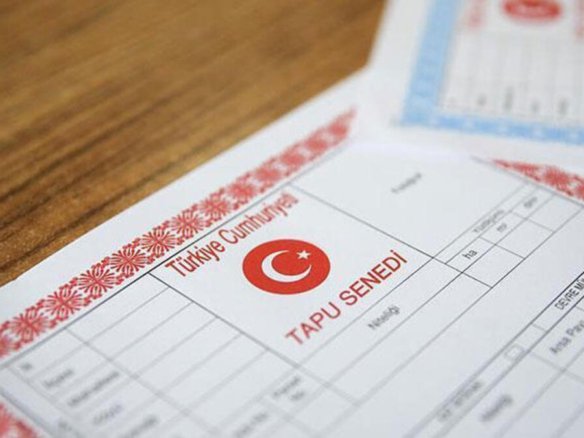
It also hands landowners a clear instruction. If you are the landowner in one of these contracts and you want to preserve your claim against future buyers, register a şerh against the land. Once the contract or the claim is annotated on the register, a later buyer cannot say they did not know. That is exactly why the annotations page matters so much — and why what is written in the register, not what is printed on a deed you were handed, is the document that decides your position.
Checking a flat-for-land project before you buy
The sequence below is what establishes good faith, which is now the thing that protects you. Run it in order, and run it before money moves.
Establish who owns the share your flat sits on
Not who is marketing it — who is registered. Pull the land register entry and identify whether the share is in the landowner’s name or the contractor’s. This single fact determines which set of risks applies to you, and it is the first thing your lawyer should confirm independently of the seller.
Read the annotations page
Annotations and declarations sit alongside the ownership entry and are where a construction contract, a landowner’s claim, a mortgage or a creditor’s attachment will appear. A şerh recording the flat-for-land contract is not necessarily fatal, but it changes the conversation entirely and must be explained before you proceed.
Ask to see the construction contract
You are not a party to it, but you are buying an asset created by it. Ask for the contract and every amendment. A seller who will not show it, in a structure where it governs everything, is telling you something. Your lawyer is looking for the completion obligations, the unit allocation schedule and the termination provisions.
Check the zoning position and the building permit
Confirm what the plot is permitted to carry and that the block as built matches it. A project that has exceeded its permitted density, or been built outside its permit, creates problems that no contract between landowner and contractor can fix. Our guide to checking the imar durumu sets out how.
Establish the title stage and the occupancy permit
Is the title still kat irtifakı or has it become kat mülkiyeti? Has the occupancy permit been issued? In flat-for-land projects the conversion often stalls because the two sides are in dispute, and a block full of occupied flats can still be sitting on pre-completion titles.
Check the contractor, then instruct your own lawyer
The contractor’s solvency is your risk even after the 2025 decision, because a collapse still means delay, litigation and a half-finished building. Check the company properly, and instruct an independent Turkish lawyer who was not introduced to you by the seller.
Who and what is behind the building
Six things that exist in every flat-for-land project, whether or not anyone mentions them to you.
The landowner
The arsa sahibi contributed the plot and is paid in finished apartments. Often a family, sometimes several co-owners who must all agree — which is itself a source of delay when a project needs a decision.
The contractor
The yüklenici finances and builds, and is paid in units rather than cash. Its ability to finish depends on selling its share, which is why contractor units often come to market before the block is complete.
The contract
It governs the unit split, the build specification, the deadlines and what happens on default. You will not be a party to it, but it sits underneath your title and you are entitled to ask to see it.
The land share
Each independent unit carries a proportion of the underlying plot. These shares are what moves to the contractor, and what a buyer actually acquires before the building is legally divided into flats.
The annotation
A şerh recording the contract or a claim against the land. Its presence puts every later buyer on notice; its absence is what allows a buyer to say they relied on the register in good faith.
The occupancy permit
The iskan confirms the building was completed in accordance with its permit. Without it, conversion to full ownership titles cannot complete and utility subscriptions are obstructed.
If the contractor fails to finish
Contractor default is the failure mode these contracts are built around. The landowner’s remedy is to terminate, and where the failure is serious enough, to seek termination with retroactive effect — unwinding the transfers of land shares as though they had never happened. That is the mechanism that used to reach through to innocent buyers, and the reason the 2025 decision was needed.
What has changed is the outcome for a registered buyer who acted in good faith. What has not changed is everything that happens in the meantime. A stalled block is still a stalled block. The dispute between landowner and contractor can run for years, during which the building may be unfinished, the occupancy permit unobtainable, the conversion to full ownership titles frozen, and the value of your flat effectively untradeable even though your ownership is secure. Legal security and practical liquidity are not the same thing.
This is the argument for paying attention to the contractor’s financial standing even though the law now protects you better than it did. It is also an argument for preferring projects where the building is finished and the occupancy permit already issued — at which point most of the structural risk described on this page has already resolved itself. If you are weighing that trade-off, our comparison of new build against resale and our guide to buying off plan cover the same ground from the other direction.
Have the register checked before you commit
We will confirm who owns the share, read the annotations and review the project’s permit position.
Flat-for-land contracts: common questions
The questions foreign buyers ask once they realise the seller is a construction company.
Where to go next
The rest of our foreign-buyer library, from the title deed record to the full purchase walk-through.
- The Turkish title deed (tapu) — what the register records and how to read it.
- Kat irtifakı vs kat mülkiyeti — pre-completion and full ownership titles compared.
- Buying off plan in Turkey — contracts, stage payments and completion risk.
- Checking a Turkish developer — company records, track record and warning signs.
- Using a lawyer to buy in Turkey — what independent representation should cover.
- Pitfalls foreign buyers still hit — the avoidable mistakes, in order.
- All Turkey property guides — the full index.
Buying in a flat-for-land project?
Tell us the block and the unit you are considering. We will confirm who owns the land share, read the annotations on the register, check the permit and occupancy position, and tell you plainly whether the structure behind the building is sound before anything is signed.


Join The Discussion