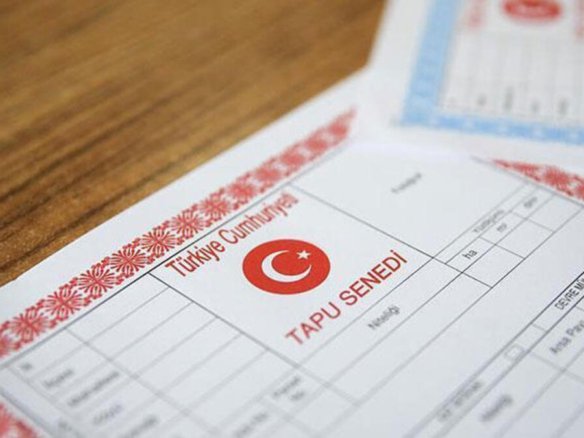

Taşınmaz Satış Vaadi Sözleşmesi: Turkey’s Promise-to-Sell Contract
The contract foreign buyers sign when the title deed cannot transfer today — what makes it legally valid, how it is annotated on the tapu, and why that annotation disappears after five years.
A promise to sell is not a sale
There is a moment in almost every Turkish purchase when the buyer is committed and the seller is committed, but the title deed cannot move yet. The building has no occupancy permit. A mortgage still has to be discharged. The buyer is paying in instalments. The seller is an estate in the middle of an inheritance. Someone needs to be out of the country on the day the registry can take the appointment.
The instrument Turkish law provides for that gap is the taşınmaz satış vaadi sözleşmesi — a promise-to-sell contract. It does not transfer ownership. What it creates is a binding personal obligation: the seller undertakes to transfer the property to you, and you undertake to buy it, on agreed terms. If the seller later refuses, you can go to court and have the transfer ordered.
It is also where a great many foreign buyers get into difficulty, because the document they were handed and told to sign was not a satış vaadi at all. It was an ordinary written agreement on company letterhead, or a “reservation form”, or a printed contract signed in an agent’s office. For Turkish real estate, that distinction is not a technicality. It is the difference between an enforceable claim and a piece of paper.
Article 29 of the same Code explains why: contracts to conclude a contract in the future are valid, but the validity of a pre-contract depends on the form required for the contract that will eventually be concluded. Because a Turkish property sale needs official form, so does the promise to make one.
In practice that means a notary. A satış vaadi drawn up by a Turkish notary is the real thing. Almost nothing else is.
Satış Vaadi at a Glance
The provisions that decide whether yours works
How a satış vaadi is actually put in place
Six steps, in the order they happen. Steps four and five are the ones buyers most often skip, and they are the two that give the contract its force against anyone other than the seller.
Run the title checks first
Pull the land registry record and read the encumbrances page before you commit to anything. A promise to sell does not clean a property. If there is a mortgage, a lien, a court annotation or a dispute, you are promising to buy all of it. How to read the encumbrances on a Turkish deed sets out what to look for.
Agree the terms that will bind you
Price, currency, payment schedule, the exact property including parcel and independent section numbers, the date or condition that triggers transfer, who pays which costs, and what happens if either side fails. A promise-to-sell contract is enforced on its own wording, so vagueness here is not neutral — it favours whoever is less willing to complete.
Go to a notary — not an office
The contract must be drawn up by a Turkish notary in official form. Under Article 60 of the Notary Law (No. 1512), making taşınmaz satış vaadi sözleşmesi is expressly among a notary’s duties. A contract merely signed in front of witnesses, or certified in some lighter way, will not carry you through a court case.
Ask for the land registry annotation
This is the step that changes your position. Article 26 of the Land Registry Law provides that promise-to-sell contracts drawn up by notaries are annotated (şerh) on the property register if either party requests it. It is not automatic. One party asking is enough — you do not need the seller’s cooperation at this stage.
Check the annotation actually appears
Since the Notary Law was amended in 2022, a notary can place the annotation directly through the land registry IT system where a party requests it and pays the fees and costs. Confirm it is on the record rather than assuming. Turkey’s online land registry lets an owner or authorised party view the entries.
Diarise the five-year date
The annotation is not permanent. If the sale is not completed within five years of the annotation, the land registry strikes it off on its own initiative. Nobody writes to warn you. Put the date in a calendar on the day the annotation goes on.
What the annotation does, and what it does not do
The contract itself binds the seller to you. The annotation binds the property.
Without an annotation, a satış vaadi gives you a personal claim against one person. If that person sells the property to somebody else in the meantime, the new owner generally takes it free of your contract, and you are left suing the seller for damages — assuming they still have assets worth suing for. That is a materially worse position than the one most buyers think they are in.
This is why the annotation matters disproportionately for buyers who are not in Turkey. You cannot drop in on the land registry to check nothing has happened. The annotation does the watching for you.
The five-year clock, in the law’s own words
Article 26 of Law No. 2644 is unusually blunt about what happens at the end. Its wording is that if the sale is not made, or the easement not established and registered, within five years from the annotation, the annotation is struck off ex officio by the land registry director or land registry officials.
Three things follow from that, and they are worth separating.
- The five years run from the annotation, not from the date you signed the contract. If there is a delay between signing at the notary and registering the annotation, that delay is not added back.
- Removal is automatic. No court order, no application, no notice to you.
- Losing the annotation does not destroy the contract. Your personal claim against the seller survives it. What you lose is the protection against third parties — which, in practice, is the part that was doing the work.
Where foreign buyers actually meet this contract
A satış vaadi is not an exotic instrument. In some parts of the market it is the normal way a deal is held together, and in others its appearance should make you ask why.
Buying before the building is finished
Off-plan purchases are the most common setting. Ownership of an individual flat cannot be registered in the ordinary way until the building reaches the right stage, so the gap between paying and owning is measured in years rather than weeks. Buying off-plan in Turkey covers the wider risk picture; the point here is narrower. If you are paying instalments against a building that does not yet exist, the question of what is on the register in your favour is the whole question.
Land being developed under a construction-in-return-for-land-share deal
Turkey’s standard development structure — a landowner gives a share of the land, a contractor builds and keeps a share of the flats — produces a web of contractual rights long before any flat has its own deed. Article 26 was amended in 2009 to bring these construction contracts into the same annotation regime as promises to sell. If you are buying a unit from the contractor’s side of such a deal, read what a kat karşılığı inşaat sözleşmesi means for buyers before you sign anything.
Something on the property has to be fixed first
A mortgage to discharge, an occupancy permit to obtain, a boundary correction, a missing heir, an annotation to lift. A promise to sell lets both sides commit while the problem is solved. That is a legitimate and sensible use — provided the contract says precisely what must be fixed, by whom, by when, and what happens if it is not.
Where it should make you pause
If the title deed could transfer today and the seller nonetheless wants a promise to sell rather than a sale, ask why. Sometimes the answer is ordinary. Sometimes it is that the seller is not in a position to transfer at all — because they do not yet own it, because the property is subject to a restriction, or because the sale would not survive scrutiny at the registry. A notary will not complete a sale where there is a legal impediment, and a promise to sell can be a way of papering over one.
Satış vaadi, or buy at a notary?
One development has quietly changed the background to all of this. Historically, a Turkish property sale could only be executed at the land registry office. Since a 2022 amendment to the Notary Law, that is no longer the only route: Article 61/A now provides that property sale contracts may also be made by notaries, with the detailed rules set out in a regulation published in the Official Gazette on 11 January 2023.
The structure of the notary route is worth understanding even if you do not use it, because it tells you what a notary is checking. The land registry shares the record and supporting documents with notaries through the land registry IT system. The notary identifies the rightholder and establishes that there is no legal impediment to the sale. Only then is the contract made. The moment it is signed, the notary takes a journal number from the system and records the contract, and registration follows at the land registry. If the rightholder cannot be identified, or an impediment exists, the notary does not carry out the sale.
So the practical question is no longer only “land registry or notary?” but “is there any reason this cannot simply be sold to me today?” Where the honest answer is no reason at all, a promise to sell is an unnecessary extra step and an unnecessary extra risk.
If you cannot be in Turkey
Distance is one of the weaker reasons to fall back on a promise to sell. Article 26 of the Land Registry Law was amended in 2019 to allow contracts aiming to transfer immovable ownership to be completed where the parties are at different land registry offices or at Turkey’s overseas missions, with officials taking each party’s declaration separately. A properly drafted power of attorney is the other standard answer — see granting a power of attorney for Turkish property for how these are prepared and what they should and should not authorise.
What a satış vaadi should spell out
A promise-to-sell contract is enforced on its own terms. These are the clauses that decide what happens when something goes wrong — which is the only time anybody reads the contract.
The property, precisely
Province, district, neighbourhood, parcel and, where the building is divided, the independent section number. Not “Flat 7, Block B” as the sales brochure names it. Marketing names change; registry identifiers do not.
Price, currency and schedule
The total, the currency it is payable in, each instalment with its date, and how the payments are to be routed. Currency matters more in Turkey than buyers from stable-currency markets expect.
The trigger for transfer
Either a fixed date or a defined condition — occupancy permit issued, mortgage discharged, final instalment cleared. A condition nobody can objectively test is a dispute waiting to be had.
What counts as default
Which failures by which party, after what grace period, with what consequence. Silence here means arguing later about whether a two-week delay was a breach at all.
Who bears which cost
Notary fees, registry charges, taxes, utility debts and service-charge arrears up to the transfer date. Unpaid arrears attach to the property and become the new owner’s problem.
The annotation itself
A clause recording that the contract will be annotated on the land register, who applies and who pays. Either party can request it under Article 26, but writing it in removes the argument.
Three documents people call “the contract”
Foreign buyers are routinely shown one of these and told it is another. The differences are not stylistic.
| Agent’s written agreement | Notarised satış vaadi | Registered sale | |
|---|---|---|---|
| Valid for Turkish real estate | No — fails the form rule | بله | بله |
| Transfers ownership to you | نه | نه | بله |
| Can be annotated on the tapu | نه | Yes, if either party asks | Not applicable — you are the registered owner |
| Protects you against a later buyer | نه | Yes, while annotated | بله |
| Court can order the transfer | Not on the contract itself | بله | Not applicable |
| Has an expiry built in | No, but little force either | Annotation struck off after 5 years | نه |
| Checked against the registry record | نه | Yes, by the notary | بله |
Read across the middle column and the trade-off is clear enough. A notarised promise to sell is a real and useful instrument, and far better than the first column. It is still a staging post, not a destination — and it has a date on which part of its protection quietly stops.
Been handed a contract to sign in Turkey?
We read the land registry record and the contract together, before any money moves, and tell you plainly which of the three documents above you are actually holding.
سوالات متداول
Six questions foreign buyers ask about promise-to-sell contracts in Turkey.
Have the contract and the register read together
A promise-to-sell contract is only as good as the property behind it. We pull the land registry record, read the encumbrances and annotations, and review the contract wording against them — before anything is signed and before any money moves. We work with licensed Turkish lawyers and notaries.