


Yapı Ruhsatı: Turkey’s Building Permit, and Why Its Dates Matter
Every lawful building in Turkey starts with a permit and ends with an occupancy certificate. Between those two documents sits a clock most foreign buyers never think to read — and a permit that runs out does not simply expire quietly.
Permission to build, not permission to live
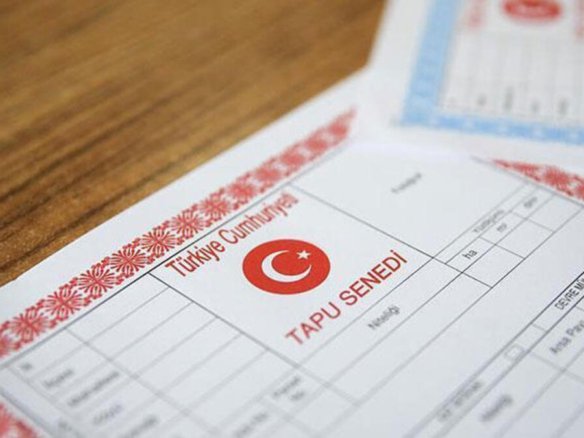
Turkish construction law runs on two separate authorisations, and most of the trouble foreign buyers get into comes from treating them as one. The yapı ruhsatı is the building permit: it authorises construction before anything is built. The yapı kullanma izin belgesi, usually called iskan, certifies at the end that what was built matches what was permitted and may lawfully be occupied. A project can hold a flawless permit and still be years away from the second document.
Article 21 of Zoning Law No. 3194, dated 3 May 1985, states the obligation plainly: for all buildings within the law’s scope, apart from the exception set out in Article 26, a building permit must be obtained from the municipality or the governorship. The same article requires a fresh permit where a building that already holds one is altered. It carves out only modest exceptions — repairs that do not touch the load-bearing system, such as pointing, plastering, painting, joinery, installations and roof repairs — and provides that work which neither increases the gross area nor changes the character of the building is not subject to fee or tax.
That framing matters because the permit attaches to the building, not to the person who applied for it. When you buy, you inherit the permit position exactly as it stands. If the permit lapsed three years before you ever heard of the project, you are buying into that problem, and the fact that you had nothing to do with the delay changes nothing about your exposure.
The permit is also meant to be physically present. Article 29 requires the permit and its annexes to be kept at the construction site. A developer who cannot produce it on request, or who offers a summary document instead of the permit itself, is telling you something worth hearing.
Read the dates first. Buyers tend to check that a permit exists and stop there. The more useful question is when it was issued, whether work started inside the two-year window, and whether it has been renewed since. A permit with a valid-looking stamp and a 2019 date on a site that is still a hole in the ground is not reassurance — it is the warning.
Fine amounts are deliberately not quoted on this page. The administrative penalties in Article 42 of Law No. 3194 are revised every year in line with the revaluation rate, which means any figure published online is stale within months and misleading thereafter. Where a penalty is in prospect, the only reliable number is the one the administration applies on the day. Confirm current amounts, deadlines and your own position with a licensed Turkish lawyer before acting on anything here.
From application to occupancy, and the clock running underneath
The statutory path a Turkish building follows, and the point at which each deadline starts counting. The articles cited are from Zoning Law No. 3194.
Establish what the plot allows
Before any permit application, the plot’s development status has to be settled: what may be built, to what density, at what height and within what setbacks. This is the imar durumu, and it governs everything downstream. A project that outruns it will not be permitted, however advanced the marketing material. On many plots a soil and foundation survey is required as part of the design work.
Apply, with the full file
Article 22 provides that the application is made by petition, accompanied by the title deed together with the architectural, structural and installation projects and a site sketch. The completeness of that file determines what happens next, so a developer who tells you the permit is “in process” without saying whether the file was accepted as complete has not told you much.
The administration answers on a clock
Where there is nothing missing from the file, the building permit is issued within thirty days of the application at the latest. Where something is missing or wrong, the applicant must be notified in writing of all deficiencies and errors within fifteen days of the application; once those are remedied, the permit is issued within fifteen days of the new application. These are duties on the administration, not aspirations.
The two-year start window opens
Article 29 begins counting from the date of the permit. Work must commence within two years. This is the deadline most often missed on land banked for later development or on projects that paused for financing, and missing it is not a technicality — it puts the permit on the path to being void.
Build under supervision, inside five years
The outer limit is five years from the permit date, inclusive of the commencement period — not five years from the day work started. Through that period the works fall under statutory building inspection, and the technical supervisor has reporting duties to the administration where the works depart from the permit and its annexes.
Close it out with the occupancy permit
Article 30 requires permission to be obtained from the unit that issued the construction permit — for the whole building once complete, or for the parts capable of separate use. The date the occupancy permit is given is the official completion date of the construction. The administration is required to conclude the owner’s application within thirty days, and occupancy cannot be permitted before the main facilities, such as sewerage, are finished. Our guide to the habitation certificate covers what that document does for you.
Six things to read off a permit before you commit
A yapı ruhsatı is a short document carrying a lot of information. These are the fields that decide whether a project is where the brochure says it is.
The issue date
Everything in Article 29 counts from it. Place the project against the two-year and five-year limits and you immediately know whether you are looking at a live permit, a renewed one, or a problem.
Any renewal history
Renewal is legitimate and costs nothing in fees under Article 29, but a permit renewed more than once tells you about the developer’s delivery record. Ask for the renewal, not just the original.
Units, areas and class
The permit describes a specific building: independent units, floor areas, construction class. If it does not match the plans you were shown, something has changed — and under Article 21 a change needs a new permit.
Island and parcel
The ada and parsel on the permit must be the ada and parsel on the title deed you are being sold. Cross-check them rather than assuming, particularly on a multi-plot development.
The inspection firm
Identify the yapı denetim company on the file and confirm it is still appointed. A supervisor who has resigned from a project part way through is a question worth asking about.
Occupancy permit status
For a finished or nearly finished building, ask whether the Article 30 application has been made and what stage it has reached. Until it is granted, the construction is not officially complete.
Yapı ruhsatı vs yapı kullanma izni
They sit at opposite ends of the same project. Knowing which one a seller is actually showing you is the whole point.
| Yapı ruhsatı (building permit) | Yapı kullanma izni (iskan) | |
|---|---|---|
| Obtained before construction begins | بله | نه |
| Obtained after construction is finished | نه | بله |
| Governing article of Law No. 3194 | Articles 21, 22 and 29 | Article 30 |
| Issued by the municipality or governorship | بله | Yes — the same unit |
| Subject to a statutory expiry period | Yes — 2 and 5 years | نه |
| Can be renewed without a further fee | بله | Not applicable |
| Fixes the official completion date | نه | بله |
| Can be granted for parts of a building | نه | Yes — separately usable parts |
| Required before main facilities are complete | Yes — it precedes them | No — cannot be granted |
| Must be kept at the construction site | بله | Not applicable |
The distinction has a direct consequence for what you end up owning. Until the occupancy permit is issued, a building bought off-plan is typically held on a construction servitude rather than full floor ownership — the difference we set out in our guide to kat irtifakı and kat mülkiyeti. Utility subscriptions are obstructed in the meantime, and a building that never obtains iskan is a building that never fully converts.
Buying off-plan and unsure the paperwork stacks up?
We check the permit, its dates, the inspection appointment and the title position before anything is signed — and tell you plainly what is missing.
What “deemed void” actually means on the ground
Article 29 does not soften the consequence. If work is not begun within the commencement period, or if it is begun and — in the statute’s own words — for whatever reason is not finished within five years including that period, the permit given is deemed void, and a new permit must be obtained. There is no force-majeure exception written into the provision, which is precisely why a long-stalled development cannot rely on its original permit simply because the stall was not its fault. The statute does preserve acquired rights in constructions already begun, and it makes renewal painless: no separate fee is charged on a permit renewal or a plan amendment, and where an increase in area or character does attract a fee, the fee previously paid is deducted. If the recalculated fee is lower, nothing is refunded.
The regulatory layer sharpens this further. Under the Planlı Alanlar İmar Yönetmeliği, buildings not started within two years, or not completed within the five-year permit period, and not renewed in time, are treated as unpermitted buildings. The administration carries out a determination of the construction’s stage at the site once the period has expired, which fixes on the record exactly how far the work had progressed.
Once a building sits in unpermitted status, two enforcement routes open. Article 32 allows the work to be sealed and stopped, with a stop record drawn up and posted at the building; the owner has a period from that posting — up to one month — to bring the work into conformity or into permit and ask for the seal to be lifted. Where that does not happen, demolition is on the table. Running alongside it, Article 42 provides for administrative fines, and reaches beyond the owner: it covers buildings put up under the Article 27 village exemption without meeting that article’s conditions, and it bites on a technical supervisor who fails to report a departure from the permit and its annexes to the administration within six working days.
The amnesty that is not a permit
Many older Turkish buildings hold a yapı kayıt belgesi — a building registration certificate issued under the zoning amnesty — in place of a permit and occupancy certificate. It is worth being clear-eyed about what that document is. It records and regularises an existing building for certain purposes; it is not a yapı ruhsatı, it does not mean the structure was built to the permitted design, and it does not carry the inspection history that a permitted building carries. If a property you are considering rests on a registration certificate rather than a permit, that is not automatically a reason to walk away, but it changes what you are buying and it should change the price conversation.
Where this leaves a foreign buyer
The practical advice is narrow and it is boring, which is usually a good sign. Ask for the permit itself and read its date. Establish whether the project started inside two years and where it stands against five. Ask whether it has been renewed, and how often. Check the ada and parsel against the title deed, and the unit count and areas against the plans. Find out who is inspecting, and whether the occupancy application has been lodged. None of this requires Turkish, and all of it can be verified against municipal records by a lawyer acting for you rather than for the seller.
If you are buying into a development that is not yet finished, read this alongside our guides to buying off-plan property in Turkey, buying under-construction property و how to check a Turkish property developer. If the building is already standing, the encumbrance check on the title deed belongs in the same file.
Confirm current figures and procedures with a licensed adviser. The provisions summarised here are drawn from Zoning Law No. 3194 and the Planlı Alanlar İmar Yönetmeliği as reported by Turkish legal sources current when this page was written. Zoning rules, penalty amounts and municipal practice change, and they vary between administrations. Nothing on this page is advice on a specific building. Before you rely on any of it, have a licensed Turkish lawyer check the permit file for the actual property at the actual municipality.
Yapı ruhsatı — frequently asked questions
What foreign buyers ask once they realise the permit and the occupancy certificate are two different documents.
Where to go next
The rest of our library on Turkish construction paperwork and buying before completion.
- Iskan: the habitation certificate — the document that closes out a permitted building.
- Yapı denetimi — who actually inspects a new build in Turkey.
- Yapı kayıt belgesi — what it means when a property has no building permit.
- İmar durumu — how to check what can legally be built on a plot.
- Zemin etüdü — the soil and foundation report explained.
- Kat irtifakı vs kat mülkiyeti — what your deed gives you before and after iskan.
- Buying off-plan property in Turkey — the risks worth pricing in.
- How to check a Turkish developer — before you pay a deposit.
- Rayiç bedel — the official value behind your Turkish property tax.
- All Turkey property guides — the complete index.
Have the checks run before you commit
Tell us the development you are considering and we will pull the building permit, check its dates and renewals, confirm the inspection appointment and verify the title position before anything is signed.

پیوستن به گفتگو