

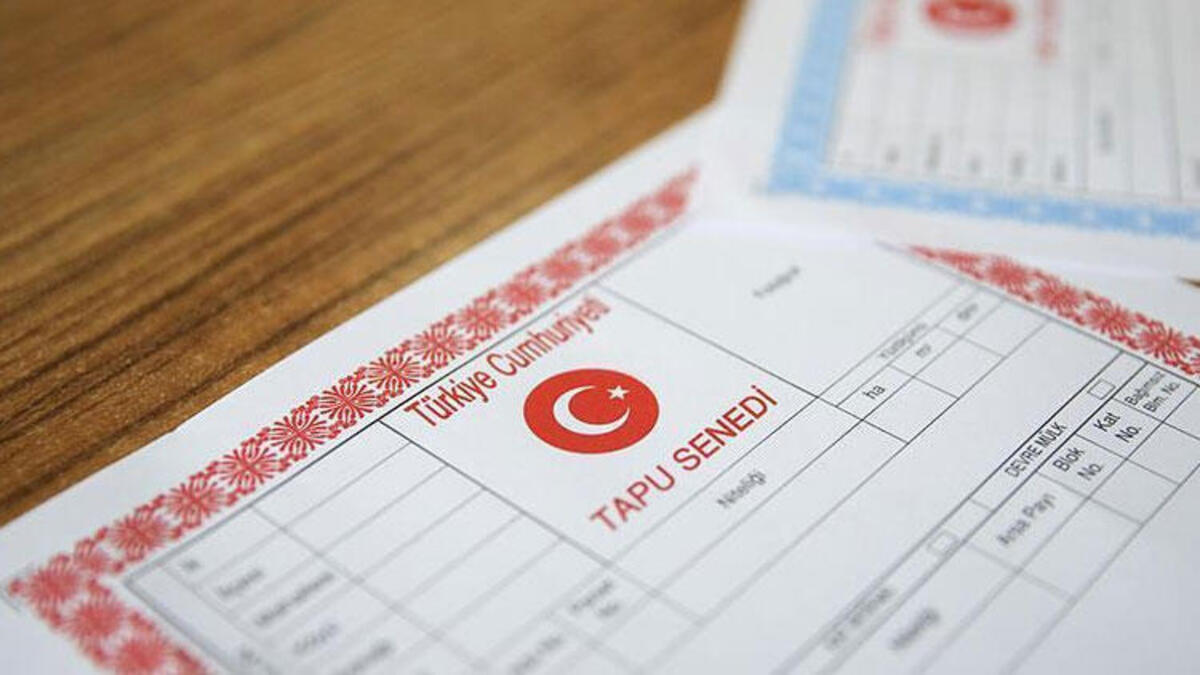
Haciz: What a Seizure Annotation on a Turkish Title Deed Means
A haciz is a creditor’s attachment, recorded against the property itself rather than against the person who owes the money. It does not stop the owner selling — which is exactly why it catches foreign buyers. Here is how it gets onto the register, what it does once it is there, and how to read it before you sign.
An attachment, not a debt you can ignore
Most of the entries a foreign buyer meets on a Turkish title deed record something the owner agreed to: a mortgage they signed, a right of way they granted, a usufruct they reserved. A haciz is the opposite. It is placed on the property because a creditor went to an enforcement office and asked for it, and the owner’s consent is not part of the process.
The mechanism is set out in the Enforcement and Bankruptcy Law (Îcra ve Îflas Kanunu, Law No. 2004). Under article 91 of that law, when an immovable is attached the owner’s power of disposal is restricted, and the enforcement office (icra dairesi) notifies the land registry of the attachment, the amount it was made for, and the creditor’s name and service address. The registry then writes it into the register.
Where it is written matters. Article 1008 of the Turkish Civil Code (Law No. 4721) lists the rights that are registered — ownership, easements and property charges, and pledge rights. A haciz is not one of them. It goes in instead as a šerh, an annotation, under article 1010, which covers restrictions on the power of disposal arising from court decisions protecting disputed rights, from attachment, a bankruptcy decision or a moratorium granted under a composition, and from a handful of other situations the law specifically provides for.
That same article contains the sentence that should concentrate a buyer’s mind. Restrictions on the power of disposal, once annotated, can be asserted against the holders of rights acquired over the property afterwards. You are the holder of a right acquired afterwards. For the wider picture of what else can be sitting in that column, see our guide to reading the encumbrances on a Turkish title deed.
This is also why the annotation is not something to negotiate around informally. Sellers will sometimes explain a haciz as “a small tax matter” or “an old dispute, already settled”. It may well be. But “settled” and “removed from the register” are two different states, and only the second one protects you.
Haciz at a glance
Statutory basis, from the Civil Code and Law No. 2004
How a haciz reaches the title deed
Six stages, each with its own paper trail. Knowing which stage a property is at tells you how much time there is, and how much leverage.
The creditor opens enforcement proceedings
A creditor with an unpaid money claim applies to an enforcement office. This can be a bank, a contractor, a supplier, a former spouse, a tax office or a management company chasing unpaid building charges. Nothing appears on the title deed at this point, which is why a clean-looking register is a snapshot rather than a guarantee.
A payment order is served and the file becomes final
The debtor is served with a payment order and has a window in which to pay or object. If they do neither — which is common when the debtor has moved, or is abroad — the proceedings become final and the creditor can move to the next stage without a court hearing.
The creditor asks for the property to be attached
Attachment is requested against specific assets. Immovable property is an attractive target precisely because it cannot be hidden or moved, and because the land registry gives the creditor a reliable public record of the claim.
The enforcement office notifies the land registry
Under article 91 of Law No. 2004, the enforcement office informs the land registry of the attachment, the amount it secures, and the creditor’s name and an address for service. If further creditors join the attachment, or if the attachment is lifted, those changes are reported to the registry as well.
The annotation appears, and the clock starts
The haciz is written into the annotations column, where anyone running a proper title check can see it. Under article 106, the creditor or the debtor may request a sale within one year of the attachment, and the valuation and sale costs must be paid up front at the moment the request is made.
Sale, or expiry
If a sale is requested, article 123 requires the enforcement office to sell the immovable by public auction within three months. If no sale is requested within the statutory period, article 110 provides that the attachment on that asset lapses — and for assets on an official register, the annotation is then deleted and the enforcement office informed.
Six things a haciz does that buyers underestimate
The annotation is one line of text. Its consequences are considerably longer than one line.
It is an annotation, not a registered right
It sits in the šerhler column under Civil Code article 1010, alongside court decisions protecting disputed rights and bankruptcy decisions. That is a different legal category from a mortgage, and it behaves differently.
It travels with the property
Article 1010 of the Civil Code makes a disposal restriction assertable against anyone who acquires a right in the property after it was annotated. Law No. 2004 also deals expressly with an attached immovable changing hands.
It reaches the rent as well
Under article 92, attaching an immovable extends to its revenues and benefits. The enforcement office informs tenants, and can order them to pay the rent to the enforcement office instead of to the owner.
Mortgage holders keep their priority
Article 92 is explicit that the attachment does not prejudice the rights of creditors to whom the property has been mortgaged. A haciz does not jump the queue ahead of a registered ıpotek; it joins behind it.
It can expire — but do not count on it
Article 110 lifts the attachment if the sale is not requested in time, and the creditor who let it lapse bears the costs. Creditors who are paying attention simply request the sale, so treat expiry as a possibility rather than a plan.
A provisional attachment is a different animal
An ihtiyati haciz is a precautionary attachment ordered by a court under article 257, available for an unsecured money claim. A creditor holding only a provisional attachment cannot request a sale.
Haciz, ihtiyati haciz and ipotek compared
Three entries that all signal ‘someone else has a financial claim here’, and that behave very differently once you are the owner.
| Haciz | Îhtiyati haciz | Îpotek | |
|---|---|---|---|
| How it arises | Enforcement proceedings | Court order | Agreement between the parties |
| Owner has to consent | No | No | Yes |
| A court decision is required | No — the enforcement office acts | Yes | No |
| Appears on the title deed | Yes, as an annotation | Yes, as an annotation | Yes, as a registered right |
| Secures a fixed, agreed sum | No — the amount owed | No | Yes, at a stated rank |
| Creditor can force a sale | Yes | No (art. 108) | Yes |
| Lapses if sale not requested in time | Yes (art. 110) | — | No |
| Survives a transfer of ownership | Yes | Yes | Yes |
| Typical source | Unpaid bank debt, tax, building charges, judgments | A claim a creditor fears will go unpaid | A bank loan or a seller’s deferred payment |
Buying a property that has a haciz on it
There is nothing inherently reckless about buying a property with an attachment on it. Turkish practice does it routinely: the purchase price, or part of it, is used to clear the underlying debt, the creditor withdraws, the annotation comes off, and the transfer completes. What makes it dangerous is doing it in the wrong order, or on trust.
Get the sequence right
The sequence that protects a buyer is: establish exactly which creditors are behind the annotation and what each is owed; have the funds that will clear those debts paid in a way that is verifiable and conditional; obtain the enforcement office’s confirmation that the file is closed; see the annotation actually deleted from the register; and only then transfer the title. A promise to deal with the haciz “immediately after” the transfer is not a sequence, it is a hope.
Turkey’s purchase process now gives you a structural ally here. Purchase funds moving through the secure payment system rather than directly to a seller make conditional settlement far easier to arrange, because the money is not released on the seller’s say-so. Our guide to the pitfalls foreign buyers still fall into covers how that process fits around the rest of the transaction.
One haciz is rarely the whole picture
Attachments attract company. Article 100 and the surrounding provisions of Law No. 2004 allow other creditors to join an existing attachment, and article 91 requires the registry to be told when they do. A property that has been in enforcement for a while may carry several, from different creditors, in different amounts, at different stages. Clearing the one you were told about is not the same as clearing the file.
The same applies to the interaction with mortgages. Because article 92 preserves the priority of mortgage creditors, a property can perfectly well carry both a mortgage and an attachment, with the mortgage ranking first. Work out the total of everything secured against the property, not the headline figure on the annotation you happened to be shown.
If it goes to auction
Enforcement auctions in Turkey are run on an electronic sale portal. Under article 115 of Law No. 2004, bidding opens at fifty per cent of the appraised value, and for the property to be knocked down the winning bid must exceed whichever is higher — that fifty per cent figure, or the total of the claims secured on the asset that rank ahead of the creditor requesting the sale — plus the costs of liquidation and distribution. The enforcement officer draws up a result record on the first working day after bidding closes and publishes it on the portal.
Two consequences matter to anyone tempted by an auction property. First, under article 125 the terms of sale state that the immovable is sold together with the easements, property charges, mortgages and mortgage debt instruments on it — buying at auction does not automatically wipe the register clean. Second, under article 130 the successful bidder must pay the price in cash within seven days of the result record being published, even if an application to set the auction aside has been made. Our note on buying property at auction in Turkey goes further into that route.
Article 134 provides that the buyer to whom the enforcement office awards the immovable acquires ownership of it, and that an application to set the auction aside must be made to the enforcement court within seven days of the auction date. The law restricts who may make that application — broadly the creditor who requested the sale, the debtor, those recorded in the official register, holders of limited rights in rem, and those who took part in the bidding — and a 2025 amendment to article 134 provides that where someone outside those categories applies, the court rejects the application on the file and finally.
Checking before you commit
Annotations are only visible to someone who actually looks. Turkey’s land registry is maintained centrally, and the Web Tapu platform and the TAKBİS system behind it mean an authoritative extract can be obtained quickly. The practical problem is not availability, it is timing: a check run three weeks before signing tells you about the register three weeks ago. Run it again, immediately before the transfer.
And read the rest of the register while you are there. An attachment often sits alongside a mortgage, and because article 92 preserves the mortgagee’s priority the two interact; our companion guide to how an ipotek works on a Turkish title deed covers ranking and redemption in detail.
Finally, do not rely on the seller’s copy of the deed. A paper title deed shows a position at the moment it was issued; the register is the thing that is legally current. If you are buying through a representative, make sure the power of attorney you grant does not allow a transfer to complete without the annotation position being verified first.
Found a haciz on a property you are buying?
We will establish what it secures, who is behind it and whether it can be cleared before completion.
Haciz: frequently asked questions
The questions foreign buyers ask once they see the word on a title deed extract.
Where to go next
The rest of the title deed library, and the wider purchase process.
- İpotek: mortgage liens on a title deed — the consented counterpart to an attachment, and how ranking works.
- Takyidat: reading the encumbrances on a title deed — every annotation, restriction and charge, and what each one means.
- The tapu: Turkey’s title deed explained — how the deed is structured and what each field records.
- Web Tapu — obtaining an authoritative register extract online.
- Mortgages in Turkey for foreigners — how borrowing against Turkish property works in practice.
- Buying a resale property in Turkey — the checks that matter when the seller is a private owner.
- Using a lawyer to buy property in Turkey — what independent legal representation should cover.
- Turkey property buyer’s guide — the complete purchase walk-through for foreign buyers.
- Legal services — title deed work, due diligence and power of attorney.
Have the register checked before you commit
Tell us the property you are considering and we will pull a current register extract and read the annotations column properly — attachments, mortgages, family residence notes and the rest — before anything is signed. We work with licensed Turkish conveyancers, and every transaction settles through the secure payment system.


Join The Discussion