

Commercial Property in Turkey: What Foreign Buyers Must Check
Buying a shop, office or unit to let is not the residential process with a different price tag. You are buying the right to carry on a particular activity in a particular place — and that right is assembled from several separate permissions, each of which can be missing on its own.
You are not buying a space. You are buying a permission to use it.
That is the sentence worth carrying through this entire page. When you buy an apartment in Turkey, the intended use is obvious and rarely contested: somebody is going to live in it. When you buy a shop, an office, a workshop or a ground-floor unit in a mixed development, the use is a live legal question — and the answer is assembled out of several separate permissions that are granted by different bodies, recorded in different places, and capable of going missing one at a time.
A commercial unit can have an impeccable title deed and still be unusable for the business you had in mind. It can be physically fitted out as a restaurant, have been trading as a restaurant for a decade, and still not be lawfully licensable as one for you. None of that shows up in a photograph or a rent roll. It shows up when you ask the municipality a direct question, which is why the order of enquiry matters more on commercial purchases than on almost anything else we handle.
This guide walks through the layers in the order we check them: what the title deed actually designates, what the zoning permits, whether the building has its occupancy permit, whether the activity needs an operating licence, what the condominium regime allows, and what happens to a tenant who is already there. It is written for buyers acquiring commercial space in Turkey from abroad. For the underlying ownership framework, start with our guides to how the Turkish title deed works and what foreigners may buy.
Commercial Purchase — What Has To Line Up
Each of these is checked separately, and each can fail separately
Six documents, and what each one actually tells you
A seller who can produce all six quickly is telling you something. So is a seller who cannot produce any of them.
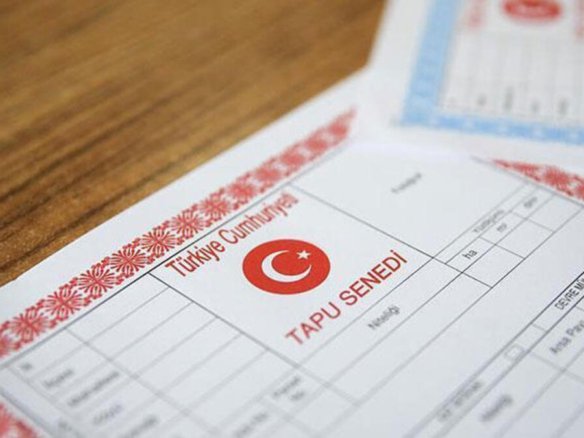
The title deed and its niteliği
The registered nature of the unit — dwelling, shop, office or another category. This is the designation every other authority keys off, and it is not changed by how the space has been fitted out or used.
İmar durumu belgesi
The municipality’s statement of the zoning position for the parcel — what the plan designates, and the constraints that come with it. Obtained from the municipality, not from the seller’s file.
Yapı kullanma izni
The occupancy permit certifying the finished building matches its approved plans and passed final inspection. Its absence is not a formality on a commercial unit — it obstructs licensing downstream.
İşyeri açma ve çalışma ruhsatı
The municipal licence authorising a specific activity at a specific address. It attaches to the operation rather than the ownership, so the real question is whether your intended use could be licensed here.
The yönetim planı
The building’s management plan, registered at the Land Registry. It functions as the building’s constitution and can restrict uses well beyond anything the zoning or the title designation would suggest.
The encumbrances page
Not the front of the tapu — the page recording mortgages, liens, court orders and şerh annotations. Commercial units carry security interests far more often than apartments do.
The order to run the checks in
Each step generates the information the next one needs. Running them out of order is how buyers end up committed to premises that cannot do the job.
Define the intended use precisely, in writing
Not “retail” but the actual activity: food preparation with extraction, a pharmacy, a clinic, a bar with a late licence, a quiet professional office. Turkish licensing distinguishes sharply between these, and so does Condominium Law No. 634. A vague answer here makes every subsequent check meaningless.
Pull the full title record and read the designation and the annotations
Confirm the registered owner, read the niteliği field to see what the unit actually is, and read the encumbrances page. Establish whether the building is at full condominium ownership or still at construction servitude stage, because that affects both lending and, where relevant, citizenship applications.
Take the zoning position from the municipality directly
Request the İmar durumu belgesi for the parcel rather than relying on a copy supplied by the seller or agent. This is also the point to ask whether the parcel sits within any urban transformation designation, which can change the calculation entirely — see our guide to kentsel dönüşüm.
Verify the occupancy permit exists for the building
Ask to see the yapı kullanma izni. On a commercial acquisition this is not a box to tick at the end: a building without its occupancy permit creates obstacles to licensing, to utility connections and to financing, and the cost of regularising it is rarely the seller’s problem once you have completed. Our guide to the iskan explains what it certifies.
Establish what the building itself permits
Read the yönetim planı and check the position under Article 24 of Law No. 634. If the unit is registered as a dwelling and your intended use falls within the categories that article covers, you need the unanimous decision of the condominium owners’ board — a requirement that is frequently discovered far too late. Service charge obligations are worth reading at the same time; see our guide to aidat.
Deal with any existing tenant before you exchange
A commercial lease in place is not a detail to be tidied up after completion. Under the Turkish Code of Obligations the tenant of a roofed workplace has real security of tenure, and buying the building does not reset it. Establish the term, the notice history and the rent review position, and price the unit on what you can actually do with it.
Where a commercial purchase diverges from a residential one
The transfer mechanics are similar. Almost everything around them is not.
| Dimension | Residential unit (mesken) | Commercial unit (işyeri) |
|---|---|---|
| Intended use | Obvious and rarely contested | A legal question with several separate gatekeepers |
| Operating licence | Not required to live there | Municipal licence required for the specific activity |
| Condominium consent | Not normally engaged | Unanimity may be required under Law No. 634, Article 24 |
| Tenant security | Protected, with defined grounds to recover possession | Strong protection for roofed workplaces under the TCO |
| Effect of missing iskan | Serious, chiefly for utilities and resale | Serious, and additionally obstructs licensing |
| Foreign acquisition limits | Land registry limits apply | Land registry limits apply in the same way |
| Tax treatment | Residential regime | Differs — take advice before modelling |
Buying a commercial unit that already has a tenant
This is where we see the most expensive misunderstandings, and it is almost always the same one. A buyer views a let unit, likes the rent, and assumes that owning the building means controlling it — that a tenant can be moved on at the end of the current term, or shortly after completion, so the space can be re-let at market rent or occupied by the buyer’s own business. In Turkey that assumption is usually wrong.
Leases of roofed workplaces (çatılı işyeri) fall under the Turkish Code of Obligations No. 6098, which affords commercial tenants a level of protection that surprises buyers from jurisdictions where commercial tenancies are largely a matter of contract. Where a fixed term comes to an end and the tenant does not give notice within the period the statute prescribes, the agreement extends automatically on the same terms, and the landlord is not permitted to terminate simply because the term has expired.
The landlord’s unconditional right to bring the arrangement to an end arrives only after a ten-year extension period, and even then it must be exercised on notice given before the end of each subsequent extension year. Terminating earlier means fitting within one of the statutory grounds — which exist, but are narrower and slower than most buyers expect, and are decided by a court rather than by correspondence.
There is a further layer worth knowing about. A number of provisions of the Code of Obligations concerning workplace leases were postponed after the Code came into force, principally at the request of shopping centre operators and real estate investment companies, where the tenant qualifies as a merchant or is a private or public legal entity. According to a September 2020 briefing published by the Istanbul law firm Paksoy, that postponement period expired and those provisions came fully into force on 1 July 2020. Among them is the rule on assignment: a tenant needs the landlord’s consent to assign the lease, and the landlord may not withhold that consent without just cause.
If you are buying as an investment rather than to occupy, none of this is necessarily bad news — security of tenure cuts both ways, and a good tenant who cannot easily leave is an asset. The error is failing to price it. For the ongoing obligations of letting in Turkey, see our guide to renting out property, and for the agency side, estate agent fees.
Roofed Workplace Leases — Key Points
Turkish Code of Obligations No. 6098
Personally or through a company?
Commercial buyers ask this far more often than residential ones, and sensibly so. Buying in your own name is simpler, cheaper to set up and easier to unwind. Buying through a Turkish company introduces administration and cost, but can make sense where there are several investors, where the property is genuinely a trading asset, where you intend to operate a business from the premises, or where the holding is large enough that the limits on acquisition by foreign individuals become a live constraint.
We have written about the trade-offs at length in our guide to buying property in Turkey through a company, and the short version is that the answer is driven by tax and by your own circumstances rather than by any general rule. It is one of the few decisions in a property purchase that is genuinely difficult to reverse afterwards, so it deserves proper advice before exchange rather than a view formed from a forum thread.
Two further practicalities. You will need a Turkish tax number before almost anything else can proceed, whichever route you take. And a valuation carried out by an appraiser licensed by the Capital Markets Board is worth commissioning on a commercial purchase even where it is not compulsory — commercial values are far less transparent than residential ones, comparable evidence is thinner, and the report gives you something defensible to negotiate against. Our guide to property valuation reports explains how they work.
Looking at a commercial unit and unsure what it can lawfully be used for?
We will pull the title record, take the zoning position from the municipality and read any lease in place before you commit.
Commercial property in Turkey — frequently asked questions
The questions foreign buyers ask most often about designation, licensing and tenants in situ.
Tell us what you want to do with the space
Send us the unit you are considering and the activity you intend to run there. We will come back on whether the title designation, the zoning and the building itself will support it, and what would have to change if they do not.


Join The Discussion