

Devremülk in Turkey: What a Timeshare Deed Actually Gives You
A devremülk share is a real, registered property right — and also one of the easiest things in the Turkish market to misunderstand. Here is what the law actually grants, what the 2022 reform outlawed, and the checks to run before you sign anything.
A share of a building, and a slice of the calendar
Devremülk is the Turkish form of timeshare, and unlike most timeshare products sold around the Mediterranean it is a genuine property right rather than a club membership. Articles 57 to 65 of the Condominium Law (Kat Mülkiyeti Kanunu No. 634) create it. Article 57 defines the right as one attached to a co-ownership share and operating as a servitude — an irtifak hakkı — that entitles each co-owner to use the dwelling during certain periods of the year.
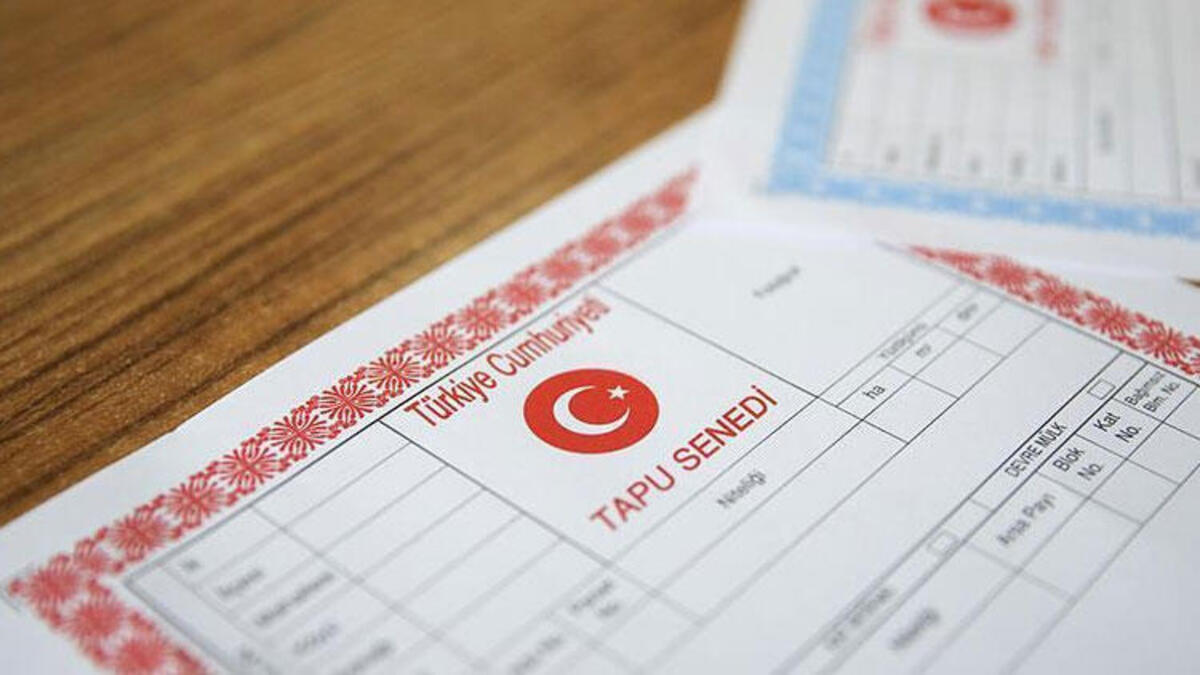
That legal shape has two consequences, and foreign buyers tend to grasp the first while missing the second. The first is reassuring: your interest is registered. Article 60 requires an annotation to be entered in the land register of the main property and of the independent units, and the fact of the devremülk right is shown on the deed itself. You are not holding a certificate issued by a company that may cease to exist.
The second is the part that surprises people. What you own is a share, and what you may use is a period. Article 58 provides that, unless the official deed says otherwise, the size of each share is worked out equally by reference to the number and duration of the periods. You cannot occupy the property outside your weeks, you cannot unilaterally let it for the rest of the year, and you cannot force a sale of the whole building because you would prefer cash. Article 58 also limits where the right can be created at all: on dwellings already brought under condominium ownership (kat mülkiyeti) or construction servitude (kat irtifakı), or on independent buildings.
Article 58 also confirms that the right is transferable and passes to heirs along with the co-ownership share it is attached to. Article 59 requires the year to be divided into defined periods, and Article 61 leaves the practical governance — period length, handover and delivery, rules of use, how a manager is chosen and what they may do, the schedule for major repairs, and how maintenance costs are shared — to be fixed in the devremülk deed. If you want to know how a particular complex will actually run, that deed is the document to read, not the brochure.
For the underlying deed concepts this all sits on, see our guides to how the Turkish title deed works and the difference between kat irtifakı and kat mülkiyeti.
Devremülk — The Legal Shape
What the statute actually provides
What Law 7392 changed, and why it exists
Turkish timeshare acquired a poor reputation over two decades, largely through prepaid sales of holiday periods in buildings that were never finished, and through high-pressure selling by outfits that held no property right at all over what they were selling. Law No. 7392, published in the Official Gazette on 1 April 2022 under number 31796, amended both the Consumer Protection Law No. 6502 and the Condominium Law No. 634 in response.
Four changes matter most to anyone considering a purchase today.
Prepaid timeshare was prohibited. The law provides that prepaid devre tatil contracts may not be concluded with consumers, subject to a carve-out for arrangements conferring a genuine real right under Law 634. A transitional provision permitted projects that already held a building permit when the law was published to continue prepaid sales for five years from that date — a window that is now near its end. In practice, a seller offering you periods in an unbuilt complex is either relying on that narrowing transitional route or operating outside the law, and you need to know which.
Selling without a real right became a criminal offence. A seller or provider who holds no real right (aynî hak) over the property may not sell timeshare over it. The penalty attached is three to six years' imprisonment. The practical test for a buyer is simple and worth applying every time: ask who holds the registered right over this building, and check the answer at the Land Registry rather than accepting a document handed across a table.
Structures designed to dodge the rules were closed off. Contracts conferring an ownership-share-linked real right outside the Condominium Law route were barred, as were arrangements routed through cooperatives, commercial partnerships, associations or foundations. If a proposal involves joining a co-operative or becoming a member of a foundation in order to get holiday weeks, that is the pattern the reform was written to stop.
Duration was capped and unused periods addressed. Devre tatil contracts that do not confer a real right are limited to a maximum of ten years. Separately, consumers gained the right to notify the provider at least ninety days in advance in order not to be charged for a period they will not use. The same law also amended Article 59 of the Condominium Law, reducing the minimum devremülk usage period from fifteen days to seven.
Read alongside the general purchase protections — see our guides to buying off-plan in Turkey و checking a Turkish developer — the direction of travel is clear. Turkish law has moved steadily towards requiring that the thing being sold actually exists and is actually owned by the seller.
Six checks to run on any devremülk offer
Each of these costs time rather than money, and each is far easier to run before a payment than to unwind afterwards.
Establish which product it actually is
Ask directly whether you are acquiring a registered devremülk right under Law 634, or a contractual devre tatil right under Law 6502. Get the answer in writing. Remember that Article 50 of Law 6502 treats any contract longer than one year providing accommodation for multiple periods as a holiday service contract regardless of the name used, so a brochure saying “devre mülk” does not by itself mean a deed exists.
Check the land register entry yourself
Article 60 requires the devremülk right to be annotated in the register for the main property and the independent units, and shown on the deed. If the right is real, there is a register entry to inspect. Confirm who holds the registered right over the building, and confirm the property is already under kat mülkiyeti or kat irtifakı, or is an independent building, as Article 58 requires.
Demand the pre-contractual information form
It must reach you at least one day before signing, in writing or on a durable medium, in clear language and in type no smaller than twelve point. This is not a formality: if the seller fails to provide it, your right of withdrawal is extended by a further year. A seller who cannot produce it on request has told you something useful about how they operate.
Refuse to pay anything during the withdrawal window
Under Law 6502 the seller may not demand any payment from you before the fourteen-day withdrawal period has expired. A request for a deposit “to hold the week” on the day you view is not a negotiating position — it is a request that the law does not permit. Treat it as a reason to leave the room.
Read the devremülk deed on governance and costs
Article 61 puts period length, handover and delivery, rules of use, appointment and powers of the manager, the schedule for major repairs and the sharing of maintenance costs into the deed. These are the terms that determine what owning a period feels like in year five. Our guide to aidat and service charges in Turkey explains how communal costs work more generally.
Have a Turkish lawyer review it independently
Not the seller's lawyer, and not a lawyer introduced by the seller. The review should cover the register entry, the deed, the contract and the seller's own right to sell. See our note on whether you need a lawyer to buy property in Turkey; for a timeshare purchase the answer is less equivocal than for an ordinary apartment.
Where devremülk purchases go wrong
The recurring patterns, most of which the 2022 reform was written to address.
The seller holds no real right
Periods sold over a building the seller does not own. Law 7392 made this a criminal offence carrying three to six years' imprisonment. Verify ownership at the Land Registry, not from a folder.
The complex is never finished
The classic prepaid failure. Prepaid devre tatil contracts with consumers are now prohibited, with a narrow real-right carve-out and a transitional window for permitted projects that is close to expiry.
Pressure to pay on the day
Deposits taken during the fourteen-day withdrawal window, which Law 6502 does not permit. Urgency is the selling technique, not a feature of the market.
No information form
The pre-contractual form must arrive at least a day before signing, in twelve-point type or larger. Its absence extends your withdrawal right by a year — and signals a seller working outside the rules.
Charges that outlive the holidays
Maintenance obligations continue whether or not the period is used. Law 7392 added a right to give at least ninety days' notice to avoid being charged for an unused period — but the underlying costs do not disappear.
No exit
A fixed week in a fixed complex has a far smaller buyer pool than an ordinary apartment. Assume resale will be slow and price-sensitive, and do not buy on the assumption of a quick exit.
Devremülk, devre tatil and outright ownership
Three different things that are often described with the same vocabulary.
| Devremülk | Devre tatil | Outright ownership | |
|---|---|---|---|
| Governing law | Law 634, Arts 57–65 | Law 6502, Art. 50 | Civil Code & Law 634 |
| Registered property right | بله | نه | بله |
| Your name on a deed | Yes — as a share | نه | Yes — in full |
| Use of the property | Set periods only | Set periods only | Unrestricted |
| Maximum duration | Not capped (real right) | 10 years | Perpetual |
| 14-day withdrawal right | بله | بله | نه |
| Payment during withdrawal window | Not permitted | Not permitted | N/A |
| Prepaid / off-plan sale | Real-right carve-out | Prohibited | Permitted, regulated |
| Passes to heirs | Yes, with the share | Per contract | بله |
| Free to let out year-round | نه | نه | بله |
| Typical resale liquidity | Low | Low | Market-dependent |
If what you want is a few weeks a year in Turkey
Most people who look seriously at devremülk are trying to solve a straightforward problem: they want somewhere of their own on the Turkish coast for a few weeks each year, without the cost and responsibility of a whole property. Timeshare is one answer to that. It is worth being clear about the others before deciding.
Outright ownership of a modest apartment carries a higher entry price but leaves you with an asset you control, can let when you are not there, and can sell into the ordinary market. Turkey's short-term letting rules changed significantly and now require a permit, which our guide to the short-term rental permit covers; that regime affects how a holiday apartment can be used commercially and should be factored in rather than discovered later. Our guide to holiday homes in Turkey works through what a second home actually involves in running costs and time.
At the lower end of the market, a small resale apartment in an established coastal town can compete directly with the total lifetime cost of a timeshare period once maintenance charges are counted across a decade. Our guide to what a low budget actually buys in Turkey sets out what is realistic. And if the intention is to hold the property for a few years and then exit, the resale process itself deserves attention up front — see selling property in Turkey.
None of this makes devremülk a bad product in itself. It makes it a product with a specific and fairly narrow fit: a buyer who wants the same complex at roughly the same time each year, who values the low entry price over flexibility, who has read the deed, and who is not relying on resale to get their money back. If that describes you, the checks above are the ones that matter. If it does not, ordinary ownership is usually the better instrument.
Been offered a devremülk period and want it checked?
We will confirm what is actually registered, who holds the right to sell, and whether the contract does what the brochure says.
Devremülk in Turkey — frequently asked questions
The questions foreign buyers ask most often about Turkish timeshare, its legal basis and its risks.
Where to go next
The rest of our foreign-buyer library, from deeds and service charges to the full purchase walk-through.
- Turkey property guides — the full index of our buyer guides.
- Tapu: how the Turkish title deed works — what is recorded, and where to read it.
- Kat irtifakı vs kat mülkiyeti — the two deed states devremülk can be built on.
- Holiday homes in Turkey — what a second home actually involves.
- Buying property in Turkey: seven pitfalls — the avoidable mistakes foreign buyers still make.
- Turkey property buyer’s guide — the complete purchase walk-through.
Have the register checked before you commit
Tell us what you have been offered and we will confirm what is registered against the property, who holds the right to sell it, and whether the contract matches. We work with licensed Turkish conveyancers, and every transaction we handle settles through the secure payment system.


پیوستن به گفتگو