


Turkish Citizenship by Descent: Who Qualifies and How It Works
If one of your parents was a Turkish citizen when you were born, Turkish law already treats you as a citizen — from the moment of birth, wherever that birth took place. The work is not acquiring the status. It is proving it on paper.
You are not applying for citizenship. You are registering one you already hold.
This is the single idea that makes the whole process make sense, and it is the one most people arrive without. Turkish citizenship by descent is not a programme you qualify for, accumulate residence towards, or invest your way into. It is a status that attaches automatically at birth and then sits there, unrecorded, until somebody does the paperwork.
Article 6 of Turkish Citizenship Law No. 5901 puts it plainly: Turkish citizenship by birth is automatically acquired on the basis of descent or place of birth, and citizenship acquired by birth is effective from the moment of birth. Article 5 divides all acquisition into two families — by birth, and after birth. Descent belongs to the first. Naturalisation, marriage and the investment route all belong to the second, and they work on entirely different logic.
The practical consequence cuts both ways. In your favour: there is no residence requirement, no language test, no minimum investment, no waiting period, and no discretionary decision by a Ministry that could go against you. Against you: because nobody applied for anything, nobody generated a record. A person can be a Turkish citizen for forty years under Article 7 and have no Turkish identity number, no entry in the civil register, and no way to prove any of it.
This guide covers who qualifies under Article 7, how the registration process runs, what happens when the descent chain is broken, and how the Blue Card under Article 28 fits in for families who gave up Turkish citizenship at some point in the past. Because we are a property firm, it also covers the question we are actually asked most often: what difference any of this makes when you go to buy a house. For the neighbouring routes, see our guides to Turkish citizenship by marriage و dual citizenship in Turkey.
Citizenship by Descent — At a Glance
What the statute provides, and what it does not
Six situations, and what Law No. 5901 says about each
Article 7 governs descent. Article 8 covers birth in Turkey. The differences between these cases are narrow, but they decide outcomes.
Married parents, one of them Turkish
Article 7 covers a child born to a Turkish mother or through a Turkish father within the unity of marriage, either in Turkey or abroad. The mother and father are treated identically, and the place of birth is irrelevant.
Turkish mother, unmarried
A child born to a Turkish mother and through an alien father out of wedlock is a Turkish citizen. No additional step is needed to establish the link on the mother’s side.
Turkish father, unmarried
Here the statute adds a condition. A child born through a Turkish father and to an alien mother out of wedlock acquires citizenship if the principles and procedures ensuring the establishment of descent are met.
Born in Turkey, otherwise stateless
Article 8 protects against statelessness: a child born in Turkey who acquires no citizenship of any state by birth through an alien mother or father is a Turkish citizen from the moment of birth.
A child found in Turkey
Article 8 also provides that a child found in Turkey is deemed to have been born in Turkey unless the contrary is proven — the same protective logic, applied where parentage is unknown.
Parent lost citizenship before your birth
The descent chain breaks. Article 7 attaches through a parent who is a Turkish citizen at the time of the birth, so if that had already lapsed, descent does not apply — though the Blue Card may.
Turning the status into documents
The order matters, because each step produces the evidence the next one consumes. Most delays come from starting in the middle.
Establish that your Turkish parent was a citizen when you were born
This is the hinge of the whole claim, and it is worth settling before spending money on anything else. What matters is your parent’s status on your date of birth — not now, and not at some point earlier in their life. If they naturalised elsewhere and renounced before you were born, the analysis changes completely.
Locate your parent’s Turkish civil registry record
Turkish population records are organised by family, which is genuinely helpful here: a parent’s registry entry is what your own entry will be attached to. If your parent holds a Turkish identity number, an identity card or a passport, that is the thread to pull. Families who left decades ago sometimes need to have the historic record traced first.
Assemble the civil documents that prove the chain
Expect to need your full birth certificate naming both parents, your parents’ marriage certificate where they were married, and identity or citizenship evidence for the Turkish parent. Foreign documents generally need legalisation or apostille and official translation. Requirements differ between missions, so ask the specific consulate first rather than assembling a set on assumption.
Deal with paternity formally if your parents were not married
Where the Turkish parent is the father and there was no marriage, Article 7 requires the establishment of descent before citizenship attaches. That means formal acknowledgement or a court judgment. It is the one branch of the descent route that can genuinely fail, and it is worth taking legal advice on early rather than discovering the gap at the counter.
Register the birth and obtain a Turkish identity number
File with the Turkish consulate responsible for where you live, or with a Provincial Directorate of Population and Citizenship Affairs in Turkey. Registration creates the civil registry entry and the identity number. This is the moment the status stops being theoretical: almost every Turkish administrative system, including the Land Registry, is keyed to that number.
Apply for the identity card and passport, and note the dual nationality
With the registry entry in place, the identity card and passport are administrative rather than substantive steps. If you hold another nationality, Article 44 provides that an explanatory note recording multiple citizenship is attached to the family registry once the documents are submitted and the identity is confirmed. See our guide to what the Turkish passport opens.
Descent against the other ways into Turkish citizenship
All four appear in Law No. 5901, but they sit in different parts of it and impose very different conditions.
| Route | Where it sits in Law No. 5901 | Residence needed | Discretionary? | Typical obstacle |
|---|---|---|---|---|
| By descent | Article 7 — acquisition by birth | هیچ | No — automatic at birth | Proving the chain with documents |
| By place of birth | Article 8 — acquisition by birth | هیچ | No — automatic at birth | Applies only where the child would otherwise be stateless |
| By marriage | Article 16 — after birth | Marriage of at least three years, still subsisting | Yes — conditions assessed | Living within the unity of marriage must be shown |
| General naturalisation | Article 11 — after birth | Five uninterrupted years before application | Yes — conditions assessed | Language, means and good character conditions all apply |
| Exceptional / investment | Article 12 — after birth | Not required | Yes — by Presidential resolution | Qualifying investment and a compliant appraisal |
| Blue Card status | Article 28 — not citizenship | هیچ | Issued on demand to those in scope | Documenting kinship to the renouncing ancestor |
When the chain is broken: Article 28 and the Mavi Kart
A large number of the people who contact us about descent turn out not to have a descent claim at all. Their family did hold Turkish citizenship, but somebody formally gave it up — usually to naturalise in a country that did not then permit dual nationality — and that renunciation happened before the next generation was born. Article 7 needs a parent who was a citizen at the time of the birth, so the claim fails at the first question.
Turkish law anticipates exactly this. Article 28, as amended in 2012, provides that Turkish citizens by birth who lost their citizenship by obtaining a renunciation permit, as well as their lower lineal kinship up to the third degree, continue to benefit from the same rights accorded to Turkish citizens, subject to the exceptions the article sets out and to provisions concerning national security and public order. A Blue Card is issued to people within that scope on request, evidencing those rights.
The excluded rights are listed and they are narrow: no right to vote and be elected, no right to import exempted vehicles and household goods, and no military service obligation. Separately, people in this category may not be employed in principal and continuous public services based on permanent staffing under a public law regime, although they may be engaged as workers or as temporary or contracted personnel. Article 28 also requires that lower lineal kinship document the kinship with the upper lineal kinship, and allows the President to extend the benefit beyond the third degree.
Re-acquisition is a further option, and which provision applies depends on how the citizenship was lost. Article 13 lets people who lost citizenship by obtaining a renunciation permit re-acquire it by decision of the Ministry irrespective of their period of residence in Turkey, provided there is no obstacle with respect to national security — the same article also covers those who lost citizenship because of their parents and did not exercise the right of choice within the Article 21 time limit. Article 14 is the harder path, requiring three years of residence in Turkey where citizenship was revoked or renounced under Article 34. Article 43 provides a further route for people who lost or had their citizenship annulled under the repealed legislation that preceded Law No. 5901.
Article 28 — What Is and Is Not Excluded
The exceptions listed in the statute, and what falls outside them
What descent changes when you buy a house
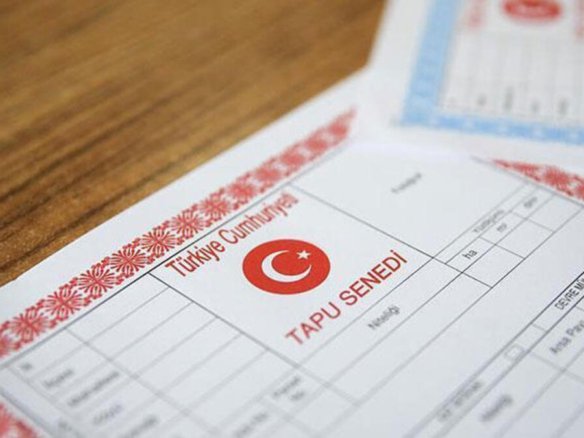
We are a property firm rather than an immigration practice, and the reason this subject comes up so often is that status quietly determines which set of rules your purchase runs under. Turkish land registry legislation imposes a series of constraints specifically on acquisition by foreign individuals: a nationwide ceiling on total area held, a limit on how much of any single district may pass into foreign ownership, and clearance requirements around military and special security zones. We set these out in detail in our guide to whether foreigners can buy property in Turkey.
A Turkish citizen does not buy under that regime. Neither, on the face of Article 28, does a Blue Card holder, since acquisition and transfer of property is not among the rights the article withholds. For a family that has spent years assuming they were confined to the foreign-buyer track, that can be a material difference — particularly for larger land purchases, or where a district is approaching its foreign-ownership ceiling.
There is a second reason to care, and it is the one families tend to raise later rather than first: inheritance. Turkish succession rules govern immovable property located in Turkey regardless of the owner’s nationality, but the practical experience of administering an estate differs enormously depending on whether the heirs are registered, identifiable people within the Turkish system or foreign nationals with no identity number and no registry footprint. Our guide to inheritance law in Turkey covers the mechanics. If there is a dormant descent claim in your family, registering it is often the cheapest estate planning available.
Finally, a note on expectations. Citizenship by descent confers status; it does not confer a property portfolio, a tax position or a residence strategy. Turkish tax residence turns on where you actually live rather than on which passport you hold, and owning a Turkish home does not by itself change that. Our guides to taxes in Turkey و Turkish residence permits deal with those questions separately, and a licensed adviser should confirm current figures and thresholds before you act on any of it.
Buying in Turkey while a descent or Blue Card claim is still unresolved?
We work alongside licensed Turkish lawyers and can sequence the purchase around your status rather than against it.
Turkish citizenship by descent — frequently asked questions
The questions we are asked most often by families tracing a Turkish parent or grandparent.
Have a Turkish parent and a purchase in mind?
Tell us where the family record sits and what you are looking to buy. We will tell you honestly whether your status is likely to change the transaction, and introduce you to a licensed Turkish lawyer where it might.



پیوستن به گفتگو