


Turkey’s Secure Payment System: What Changes on 1 December 2026
The Güvenli Ödeme Sistemi was supposed to become compulsory in July. It did not. A regulation published in the Official Gazette at the start of October moved the mandatory date to 1 December 2026 — the second deferral this year. Here is what the rule does, what is still undecided, and what it means if you are buying in the meantime.
A deadline that has moved twice
If you have been reading about buying property in Turkey at any point this year, you will almost certainly have been told that purchase funds must now pass through a state-supervised payment system, and that this became compulsory on 1 July 2026. That was the published plan. It is not what happened.
The mandatory start of the Güvenli Ödeme Sistemi — the Secure Payment System — has been deferred twice. Türkiye Postası reported on 29 September 2026 that the original date of 1 July 2026 was first moved to 1 October 2026, and then moved again. On 1 October 2026 the Anadolu Agency reported that a regulation amending the Regulation on Real Estate Commerce had been published in the Official Gazette, fixing the mandatory start at 1 December 2026.
That distinction matters more than it might sound. A buyer who believes the system is already compulsory may assume a protection is in place that is not yet in place. A buyer who has been told the deadline passed in July may not realise there is a deadline still ahead of them. Both readings are circulating widely, and both are wrong as of early October 2026.
The rest of this guide sets out what the system actually does, how a transaction settles through it, which parts of the framework have been published and which have expressly been left to a protocol that does not exist publicly yet, and what a sensible buyer does in the window between now and the start date. Every date and attribution below comes from a source we retrieved and have named, with its publication date, so you can check it yourself.
The rule at a glance
As published to 7 October 2026
How a sale settles through the system
The design replaces a sequence built on trust with one built on simultaneity. Payment and registration stop being two separate events and become one linked event.
Price agreed and the transaction entered into the system
Buyer and seller agree terms as they would now. The sale is then entered into the Secure Payment System rather than settled privately between the two parties. The existing due diligence work does not change: the title record, the annotations and the permits still need checking before anything is committed.
The buyer deposits the price into a blocked account
Instead of transferring the purchase price to the seller, the buyer pays it into a blocked account held at a bank. Türkiye Postası described this on 29 September 2026 as the core of the mechanism: the money sits in the system rather than with either party.
The seller sees that the funds exist
The practical benefit runs in both directions. A seller who would previously have wanted money in hand before signing can see that the price is deposited and committed, which removes a common reason for sellers to insist on part-payment up front.
The transfer is signed at the land registry
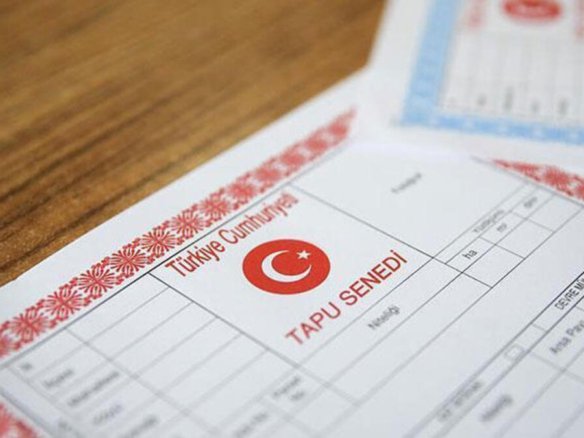
The parties attend the Tapu office and the transfer is signed and registered in the usual way. If you cannot attend in person, this is the step a properly drawn power of attorney covers. Nothing about the registry procedure itself is replaced by the payment system.
Funds release automatically on registration
Once the official signature is completed at the land registry and ownership has passed, the blocked amount is released automatically to the seller’s account. That automatic link is the entire point of the reform: the seller is paid because the buyer became the owner, not before and not on trust.
If the transfer does not complete
Where registration does not happen, the funds do not release to the seller. The detailed handling of a failed transaction is governed by the system rules rather than by whatever the parties agreed privately, which is a meaningful change from the current position where recovering a deposit can mean litigation.
What the system is designed to fix
Ekovitrin, reporting on 20 September 2026, set out the stated objectives: removing the timing risk between payment and transfer, reducing fraud and forgery, and pulling informal transactions into the record. Each maps onto a problem foreign buyers have hit for years.
The timing gap
Today someone has to go first. Either the buyer pays before owning, or the seller signs before being paid. The blocked account removes the gap rather than asking one side to absorb it.
Deposits that vanish
Money paid directly to a seller or an intermediary before registration has always been the hardest kind to recover. Funds inside the system are not in anyone’s pocket while the transfer is pending.
Forgery and impersonation
Routing the price through a supervised channel tied to the registry event makes a fabricated sale considerably harder to monetise, because payment is triggered by registration rather than by a signature on a private contract.
Off-record pricing
Under-declaring a sale price on the deed while settling the difference in cash has been a persistent practice. A traceable payment rail is squarely aimed at it, and the regulation provides for statistical reporting from the system.
Cash handling
Large sums physically changing hands at or near a registry office create obvious safety and verification problems. The scope described in reporting covers payment in cash as well as by transfer or EFT.
The distance problem
A non-resident buyer is usually arranging payment from another country, often in another currency, sometimes without being present. A rule that ties release to registration is worth more to that buyer than to a local one.
What changes on 1 December 2026
A comparison of the position for a standard purchase before and after the mandatory start date, based on the regulation and the reporting cited at the foot of this guide.
| Point of difference | Until 30 November 2026 | From 1 December 2026 |
|---|---|---|
| Use of the system | Voluntary | Mandatory |
| Who holds the price before transfer | Whatever the parties agree — often the seller or an intermediary | A blocked account within the system |
| What triggers payment to the seller | The parties’ private arrangement | Registration of the transfer at the land registry |
| Recovering funds if the sale fails | Depends on the contract; may require a claim | Governed by the system rules |
| Payment in physical cash | Possible, with the practical risks that carries | Brought within the system’s scope |
| Transparency of the real price | Settlement can sit outside the record | Settlement runs on a traceable rail |
| Due diligence on title and permits | Essential | Still essential — unchanged |
| Cost of using the system | Not applicable | Fee not yet published |
| Sales excluded from the system | Not applicable | To be set in a protocol |
What has not been published yet
It would be easy to read “mandatory from 1 December” as meaning the framework is finished. It is not, and the regulation itself is candid about that. The Anadolu Agency report of 1 October 2026 describes an authorised integrator — an operator designated by the Ministry of Trade — charged with establishing the Secure Payment System, running and developing it, and producing statistical data and reports from it.
How the system actually operates is then to be governed by a protocol signed between the Ministry of Trade, the Ministry of Environment, Urbanisation and Climate Change, and that integrator. Several things that a buyer would reasonably want to know before December are expressly reserved to that protocol:
- Which property sales are excluded from the system altogether.
- The pilot application — its requirements and its scope.
- The system usage fee, and how that fee is shared.
- The composition and working of the commission overseeing it, with its rights and obligations.
Until that protocol is published, there is no authoritative public answer to what the system costs, which transactions sit outside it, or how the pilot phase will run. We have deliberately not given you a number for the fee, because there is not one to give. If a figure is quoted to you before the protocol appears, it is an estimate.
Reserved to the protocol
Not publicly settled as at 7 October 2026
If you are buying before 1 December
The protection that the system will provide automatically is, for now, something you have to arrange for yourself. That is entirely achievable, and it is what careful buyers were already doing before any of this was drafted.
Do not assume a protection that is not yet in force
This is the single most important point. If an agent or a developer tells you that your funds are protected because Turkey now has a mandatory secure payment system, ask them in writing which account the money goes into and what releases it. Until 1 December 2026 the mandatory system is not the answer to that question, and a confident assertion that it is should make you slow down rather than speed up.
Use the voluntary route where you can
Ekovitrin’s report of 20 September 2026 describes participation as voluntary ahead of the mandatory date. Where your bank and the counterparty will support settling through the system now, there is little reason not to. If they will not, the conventional protective structures remain available — our guide to escrow accounts in Turkey covers how funds can be held against completion in the meantime.
Keep the payment trail clean regardless
Whatever route you use, the money should move through traceable banking channels in your own name, and the amount recorded on the deed should be the amount you actually paid. Under-declaring has never been a good idea and a system designed to produce statistical reporting on real settlement values makes it a worse one. Our guide to sending money to Turkey for a property purchase sets out the mechanics.
The payment rule does not replace due diligence
It is worth being blunt about this, because the reform is being marketed in some quarters as though it removes the need for checks. It does not. The Secure Payment System ensures you are not paying for a transfer that never happens. It does nothing to tell you whether the property you are transferring is encumbered, built without permission, or sitting on land you cannot use as you intend. Reading the title deed record, checking the encumbrances registered against it and confirming the permit position remain exactly as necessary on 2 December as they are today.
Off-plan purchases need particular care
A system that releases funds on registration of a transfer is a natural fit for a completed property changing hands. Staged payments to a developer over a construction period are a different shape of transaction, and the categories of sale excluded from the system have not yet been published. If you are buying off-plan, this is a question to put to your lawyer specifically rather than to assume. See buying off-plan property in Turkey.
Have someone independent on your side
None of the above needs you to become an expert in Turkish regulatory drafting. It needs one person whose duty is to you and not to the sale. An independent Turkish lawyer will know, in December, what the protocol says about your transaction — which is more than anyone can tell you in October.
Where each fact in this guide comes from
Turkish property rules move quickly and stale dates do real damage. Every substantive claim above is tied to a specific report with a publication date, so you can check whether it has since been superseded.
- Anadolu Agency, 1 October 2026 — publication in the Official Gazette of the regulation amending the Regulation on Real Estate Commerce; the mandatory start set at 1 December 2026; authorisation of an integrator to establish, operate and develop the system; and the protocol covering exclusions, pilot scope, the usage fee and the commission.
- Türkiye Postası, 29 September 2026 — the sequence of dates, from 1 July 2026 to 1 October 2026 to 1 December 2026; the Ministry’s three-month deferral power; the blocked-account mechanism and automatic release to the seller on completion of the registry signature and transfer of ownership.
- Yeni Sakarya, 28 September 2026 — the stated reason for deferral: incomplete technical infrastructure and integration between the Land Registry and Cadastre authority and the banks, adjustments required inside the banks’ own systems, and pilot testing planned before full implementation.
- Ekovitrin, 20 September 2026 — voluntary participation ahead of the mandatory date; the objectives of removing the payment-and-transfer timing risk, reducing fraud and forgery and reducing informality; scope described as covering payment in cash, by wire transfer and by EFT.
- IMI Daily, 26 June 2026 — the citizenship-by-investment property threshold of US$400,000 and the absence of any change to the threshold, holding period or eligibility conditions during 2026.
Where a figure would normally appear and does not — most obviously the cost of using the system — no published source states it. We would rather leave a gap than fill it with an estimate a reader might act on.
Buying in Turkey before the rules settle?
We will tell you what applies to your transaction as at the day you sign — not what applied in July.
Where to go next
The rest of our foreign-buyer library, from the payment mechanics to the regulatory year as a whole.
- Escrow accounts in Turkey — how funds can be held against completion today.
- Turkey property law changes in 2026 — the regulatory year set out in detail.
- Turkey real estate news: the September 2026 data — prices, sales volumes and what they mean.
- Buying property in Turkey: seven pitfalls — the avoidable mistakes foreign buyers still make.
- Sending money to Turkey for a property purchase — transfers, currency and the paper trail.
- Opening a bank account in Turkey — the account the payment side of a purchase runs through.
- Tapu: how the Turkish title deed works — reading the register before you pay.
- Using a lawyer to buy property in Turkey — what independent representation covers.
- Turkey property guides — the full index of our foreign-buyer guides.
Turkey’s secure payment system — frequently asked questions
The questions buyers are asking now that the start date has moved for a second time.
Know what applies on the day you sign
Tell us the property you are considering and we will run the title deed record, the annotations, and the zone and permit position before anything is committed — and confirm exactly how your funds will be held and released under the rules in force at completion. We work with licensed Turkish conveyancers and appraisers.


Join The Discussion