


Kalkan Property for Sale: A Foreign Buyer’s Guide to the Districts
A whitewashed harbour town on the Lycian coast, built up a steep hillside above its bay. Kalkan is small enough to walk across and varied enough that the district you choose changes almost everything — the view, the access, the price per square metre and whether you can let it at all.
A small town where the address does most of the work
Kalkan is a neighbourhood of the municipality and district of Kas, in Antalya Province, on the Mediterranean coast between Patara and Kas. It is an old fishing town and the only safe harbour on the stretch of coast between Kas and Fethiye, known for whitewashed houses descending to the sea and for the bougainvillea that covers a great deal of them. It averages around 300 days of sunshine a year, and it sits on the Lycian Way with the Taurus mountains rising directly behind it.
What distinguishes Kalkan from the larger Turkish coastal markets is scale and topography. It is not a resort city. It never developed for mass package tourism, partly because it is a fair distance from both airports serving it, and the result is a town that attracts a narrower and more deliberate kind of buyer. The other defining feature is the hillside. Kalkan is built on steep ground above its bay, which is why almost every property here has a view, and why access, drainage and the condition of the approach road matter more than they would on flat land.
This guide sets out the districts, what each is actually like, the checks worth running on a Kalkan property in particular, and the rules that govern buying and letting as a foreign owner. Deliberately, it contains no price figures — values in a market this small move quickly and quoting a stale number would be worse than quoting none. For current asking prices, see our Kalkan villa listing or ask us directly.
Kalkan — Orientation
The practical facts behind a purchase here
Six neighbourhoods, six different propositions
Kalkan is compact, but the differences between its districts are pronounced enough that buyers who ignore them tend to end up with the wrong property at the right price. Working roughly from the harbour outwards:
The Old Town is the historic quarter around the harbour and the main beach — the whitewashed houses with wooden balconies and trailing bougainvillea that appear in every photograph of the town. Architectural restrictions protect the Ottoman-era character, which is why it still looks the way it does. The practical consequence for a buyer is scarcity: most of the buildings now operate as hotels, shops or restaurants, and residential apartments come to the market only occasionally. If you want to live inside the postcard, you will be waiting for the right thing rather than choosing from a list.
Ortaalan is central Kalkan in the working sense — the newer commercial hub on the outskirts of the old town, spread along the Antalya to Fethiye highway. It is elevated, so the coastline and sea views are good, and the beachfront is a fifteen to twenty minute walk downhill. This is where the supermarkets, restaurants, bars and the central bus station are. For owners who want to be able to do everything on foot and who value amenity over seclusion, Ortaalan is usually the answer.
Kalamar Bay lies to the west and is noticeably lower key than Ortaalan. It is around a thirty minute walk or a five minute taxi ride from the centre, with Kalamar Road carrying its own run of shops and local amenities. It has long attracted buy-to-let investors and summer-home buyers, which tells you something about how the properties there are configured and used.
Komurluk sits about twenty minutes from the centre on the coastal side and carries a distinctly prestigious status. Properties here are more luxurious and priced accordingly, and the architecture is more ambitious — feature facades, landscaped gardens, outdoor dining spaces and carefully designed interiors are the norm rather than the exception.
Kisla is the smaller and less populated district at the far eastern end, adjacent to Komurluk and roughly thirty minutes from the old quarter. It shares Komurluk’s standing, with large villas and, in particular, the harbourside views at night that regular visitors talk about.
Kiziltas sits across the Antalya to Fethiye highway, above the main body of the town. It offers the best value per square metre among Kalkan’s apartment complexes, and the reason is straightforward: being above the road compromises direct seaside access. What you get in exchange is elevation — wide south-facing views over the Mediterranean coastline and out towards Snake and Mouse islands. For buyers who will drive anyway, it is often the rational choice.
How a Kalkan purchase runs, in order
The process is the standard Turkish one. What changes in Kalkan is the emphasis, and how much of it you will be doing from another country.
Choose the district before the property
Decide between walkable town, quieter bay and elevated view, and whether you are buying a villa or an apartment in a complex. In a market this small, narrowing the geography first saves far more time than filtering on specification.
Settle the letting question early
If holiday letting is part of the plan, establish whether the property can obtain a tourism rental permit — and, for a unit inside a shared block, whether every other owner will consent. This is much easier to resolve before an offer than after completion.
Get a Turkish tax number and run the clearance check
A tax number is the gateway to almost everything that follows. Alongside it, the military clearance check confirming the property is not within a restricted zone forms part of the standard process for foreign buyers and should be started early rather than late.
Pull the full title deed record and read the annotations
Confirm who owns the property and what is registered against it — mortgages, liens, disputes and formal serh annotations. On a hillside plot, also confirm the boundaries and the legal position of the access road, which is not always what it appears on site.
Verify the occupancy permit and arrange compulsory insurance
The occupancy permit certifies the finished building matches its approved plans. Compulsory earthquake cover must be valid before the Land Registry will register the transfer of ownership, so it belongs before the completion date rather than after it.
Complete through the secure payment system, then arrange management
Purchase funds move through Turkey’s mandatory secure payment system rather than directly to the seller. Once the deed is registered, decide who is looking after a property that will stand empty out of season — in a seasonal town this is not an afterthought.
Six things worth checking on a Kalkan property specifically
Standard Turkish due diligence applies everywhere. These are the points that a steep, seasonal, villa-led coastal town brings to the front.
The access road
Steep ground means long private approaches. Confirm the road’s legal status, who maintains it and whether it is passable in winter weather — not just whether the car made it up in July.
The annotations page
The title deed records more than the owner. Mortgages, liens, disputes and serh annotations all sit on the record, and they travel with the property rather than with the seller.
The occupancy permit
Confirm the iskan exists for the finished building. In a market with a lot of individually built villas, this is a question that deserves a documented answer rather than a reassurance.
Water and drainage
Hillside plots have supply and drainage arrangements that vary property by property. Establish how water arrives, how waste leaves, and what happens to both at the peak of the season.
The letting position
If you intend to rent to holidaymakers, the tourism permit and, for units in shared buildings, unanimous owner consent decide whether the plan is viable at all. Establish it before you offer.
The out-of-season reality
Visit, or have someone visit, outside August. A town that is busy in summer and shuttered in January is a different asset in each season, and only one of them is usually shown to buyers.
Kalkan districts side by side
A scannable version of the same picture. Distances are walking times to the old town and harbour unless noted.
| District | Character | Typical property | Distance to centre |
|---|---|---|---|
| Old Town | Historic core around harbour and main beach; protected Ottoman-style architecture | Occasional apartments; mostly hotels, shops and restaurants | In the centre |
| Ortaalan | Newer commercial hub, elevated, along the Antalya–Fethiye highway; bus station and amenities | Apartments and houses with coastline and sea views | 15–20 min walk to beachfront |
| Kalamar Bay | Western bay, lower key than Ortaalan; own run of shops on Kalamar Road | Buy-to-let and summer homes | 30 min walk or 5 min taxi |
| Komurluk | Coastal and prestigious; feature facades, landscaped gardens, alfresco dining | Larger luxury villas | About 20 min from centre |
| Kisla | Far eastern, smaller and less populated; noted for harbour views at night | Luxury villas on generous plots | About 30 min from old quarter |
| Kiziltas | Above the highway; best value per square metre, wide south-facing views to Snake and Mouse islands | Apartment complexes and villas | Across the D400; drive to centre |
What a Kalkan villa actually looks like
Abstract descriptions of a market only go so far. As a concrete illustration, one detached villa we list in Kalkan is arranged over three floors with four bedrooms and a living room, plus a self-contained one-bedroom basement apartment and four bathrooms. It sits on a 400 square metre plot with 280 square metres of building, comes fully furnished, and has a swimming pool and private garage, two balconies and a terrace. It is roughly 400 metres from the sea and the same again from the centre, on a main street close to shops.
That configuration is characteristic of the town rather than exceptional. Kalkan is a villa market first: detached houses on modest plots, arranged vertically to take the view, with a pool and outdoor living space treated as standard rather than as a luxury. The self-contained lower apartment is a common feature too, and a genuinely useful one — it gives owners somewhere to stay when the main house is let, or accommodates family without anyone losing privacy.
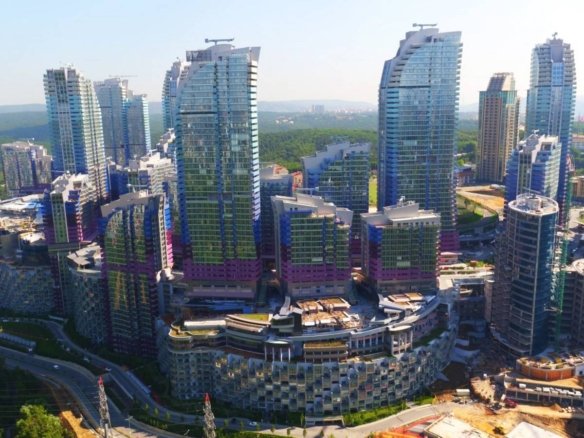
Apartments do exist, principally in the complexes above the highway in Kiziltas and around Ortaalan, and they are the entry point to the market. What Kalkan does not really have is the high-rise coastal development found in the larger resort towns further east, and the architectural restrictions in the old quarter make it unlikely it ever will in the historic core.
If you are weighing Kalkan against other stretches of the Turkish coast, our guides to Fethiye and Antalya cover the two nearest larger markets, and our overview of villas for sale in Turkey sets out how the regions compare on title, access and the checks that matter.
Looking at Kalkan seriously?
Tell us the district and the use you have in mind, and we will come back with what is actually available and what it will involve.
Buying in Kalkan — frequently asked questions
The questions foreign buyers ask most often about location, districts, rules and letting.
Where to go next
The rest of our coastal area guides and the foreign-buyer library behind them.
- Turkey property guides — the full index of our guides for foreign buyers.
- Property for sale in Fethiye — the nearest larger market along the coast.
- Antalya property for sale — the province capital and its districts.
- Villas for sale in Turkey — regions, title and the checks that matter.
- Buying property in Turkey: seven pitfalls — the due diligence behind any purchase here.
- Can foreigners buy property in Turkey? — rules, limits and restricted zones.
- Property management in Turkey — running a seasonal property from abroad.
- Property taxes in Turkey — the recurring costs of ownership.
Find the right side of the hill
Tell us which district appeals, whether you intend to let, and how you will travel. We will tell you honestly what is available in Kalkan, what it will involve, and what to check before you commit.

Join The Discussion