

Turkey Real Estate News: What the September 2026 Data Shows
Two official datasets landed in the middle of September 2026, and together they explain why the Turkish market feels contradictory right now. Prices are still climbing in lira and still falling against inflation. Sales volumes are down sharply. Rents are the outlier. Here is what each number means for a foreign buyer.
One market, two honest descriptions
If you have been following Turkish property coverage this month you will have read that prices rose 23 per cent over the year, and you will also have read that the market has been falling for nine months straight. Both statements are accurate, drawn from the same index, and the gap between them is the single most important thing a foreign buyer needs to understand about Turkey right now.
The Central Bank of the Republic of Turkiye publishes the residential property price index. For August 2026 it recorded a rise of 0.9 per cent month on month و 23 per cent year on year in nominal terms. Over the same twelve months, annual consumer price inflation stood at 31.51 per cent. Subtract one from the other and house prices fell 6.5 per cent in real terms — the ninth consecutive month in which they have lost ground against the cost of living.
The second dataset came from TurkStat, the Turkish Statistical Institute, and covers transactions rather than values. It reported 127,410 homes sold in August 2026, down 14.7 per cent on the same month a year earlier. So the market is not simply repricing; it is also transacting considerably less.
This briefing walks through both datasets, the rule changes that took effect for foreign buyers during 2026, and the parts of the picture that the published numbers simply do not answer. Where a figure comes from a specific publication we say so and date it. Where we could not verify a number to a source we retrieved, we have left it out rather than estimate — there is more on that below. For the wider context, see our Turkey real estate market overview for 2026 and our summary of Turkey property law changes in 2026.
August 2026 — The Numbers
As published in mid-September 2026
Why nominal and real prices tell opposite stories
In a low-inflation country the difference between nominal and real house prices is a technicality. In Turkey it is the whole argument. With consumer prices rising 31.51 per cent over the year to August 2026, an asset would need to appreciate by more than that simply to stand still in purchasing-power terms. At 23 per cent nominal growth, Turkish residential property did not manage it, and has not managed it in any of the past nine months.
That is not the same as a crash. Nothing in the August data suggests lira prices are falling; they rose again, modestly, month on month. What the real-terms figure describes is a market where sellers' asking prices are lagging behind general inflation — which is exactly the environment in which negotiating room appears, because a seller holding out for a price set eighteen months ago is increasingly out of step with what buyers will pay.
The city-level detail is worth noting because it cuts against the idea of a single national market. In August 2026 month-on-month price growth was 1.9 per cent in Istanbul, 1.5 per cent in Ankara و 2.7 per cent in Izmir. Izmir led the three largest cities that month; Ankara trailed. None of the three reached a monthly rate that would outpace inflation over a full year at that pace. For a longer view of how these numbers have behaved, our guide to house prices in Turkey sets out the pattern, and Istanbul apartments for sale covers the city stock in more detail.
One caution about applying any of this to a specific purchase. A national index is a weighted average of a very heterogeneous market. A sea-view apartment in a coastal resort, a new-build tower in Maslak and a 1990s walk-up in an inland province do not share a price trajectory, and the index does not claim they do. Use it to understand the direction of the whole market, then look at comparable local evidence for the thing you are actually buying.
Five ways to read this market as a buyer
None of this requires an economics background. It requires knowing which number answers which question, and refusing to let one figure stand in for the whole picture.
Separate the nominal figure from the real one
Ask which basis any price claim is quoted on. Nominal lira growth of 23 per cent and a real decline of 6.5 per cent are the same August 2026 market described two ways. If a source does not say which it means, you cannot use the number.
Read the transaction data, not just the price index
Prices tell you what sellers achieved; volumes tell you how many found a buyer at all. Total sales fell 14.7 per cent year on year in August 2026. Thin volume is where negotiating leverage comes from, and the price index will not show it to you.
Work out which side of the market you are in
The August contraction was very unevenly distributed. New-build sales fell 4.5 per cent to 44,378 units, while second-hand sales dropped 19.4 per cent to 83,032. The resale market took almost all of the decline. That distinction should shape where you look.
Treat the rental index as a separate signal
Rents are not tracking sale prices. The Central Bank's new-tenant rent index rose 34.5 per cent over the year in Istanbul, against 31.51 per cent inflation. If your case depends on rental income, that divergence matters more to you than the capital-value line does.
Confirm the rules that apply to your particular purchase
Market data tells you nothing about whether your transaction is compliant. Payment routing, valuation requirements and permit thresholds all changed during 2026, and several depend on why you are buying. Establish that before you shortlist anything.
Six developments foreign buyers should know about
The regulatory picture moved as much as the market did during 2026. Most of the movement was in the buyer's favour.
Secure payment became mandatory
From 1 July 2026, under a Ministry of Trade decree, purchase funds must move through Turkey's secure payment system rather than directly to the seller, and are released only once the transfer is registered.
The valuation rule narrowed
A licensed appraisal is no longer required for every standard foreign purchase, but it remains compulsory where the purchase supports a citizenship or residence permit application. Which category you fall into decides it.
Forest annotation relief
A forest law amendment created a route for certain privately registered properties lying within state forest boundaries to keep their title and have the annotation lifted, subject to conditions and official approval.
A property value floor for residency
Residence permits based on property ownership are subject to a minimum purchase value applied nationwide, with no cheaper regional rates. Check the figure that applies before assuming a purchase qualifies.
Neighbourhood permit closures
Migration authorities suspend new residence permit applications in neighbourhoods where the foreign-resident share passes a set threshold. Lists are revised without notice, and areas have both closed and reopened during 2026.
A smaller, more selective foreign buyer
Foreign purchases have fallen for three consecutive years to their lowest level in close to a decade, but the buyers still transacting are reported to be better capitalised and concentrated on premium stock.
The rental market is not following the sales market
The most striking number in the August 2026 release was not a house price at all. The Central Bank's new-tenant rent index — which tracks what incoming tenants actually agree to pay, rather than what sitting tenants pay under indexation caps — rose 34.5 per cent over the year in Istanbul, 28.3 per cent in Ankara و 25.5 per cent in Izmir.
Set those against 31.51 per cent annual inflation and the picture divides. Istanbul new-tenant rents grew in real terms. Ankara and Izmir did not, though both came closer to holding their value than sale prices managed. In a month when residential capital values fell 6.5 per cent in real terms nationally, Istanbul rents going the other way is a genuine divergence rather than a rounding difference.
Why would the two move apart? Because they answer to different pressures. Sale prices are sensitive to financing costs and to how many buyers can act at all — and with mortgage-financed purchases making up only 22,131 of August's 127,410 sales, roughly 17.4 per cent, this remains a largely cash market where high rates suppress demand. Rents respond to the more immediate question of how many people need somewhere to live relative to how much housing is available to let, and that pressure has not eased.
For a landlord, this is the favourable side of a difficult market: yields improve when rents rise faster than the capital values they are measured against. For anyone building a purchase case on rental income, though, the national figures are a starting point and not an answer. Rental performance is intensely local, seasonal on the coast, and now shaped by licensing — short-term letting requires a permit, which we cover in our guide to the short-term rental permit in Turkey. Our guides to renting out property in Turkey و property management in Turkey set out how the running side works in practice.
What moved in 2026, and what stayed where it was
A quick reference for the rules foreign buyers ask about most. Conditions attach to several of these, so treat the right-hand column as a prompt to check rather than as advice.
| Rule or requirement | Changed during 2026? | What applies now |
|---|---|---|
| How purchase funds are paid | Yes — materially | Payment through Turkey's secure payment system is mandatory for property transactions from 1 July 2026, with funds released after registration. |
| Valuation report for a standard purchase | Yes — narrowed | No longer required for every standard foreign acquisition, but still compulsory where the purchase supports citizenship or residency. |
| Forest-boundary title risk | Yes — a new route | A forest law amendment allows certain privately registered properties inside forest boundaries to retain title and have the annotation lifted. |
| Foreigners' right to buy property | No change | Foreign individuals may still acquire Turkish property subject to the existing reciprocity, zone and area limits. |
| Military and security zone restrictions | No change | Purchases in prohibited military zones remain barred, and clearance checks remain part of the standard process. |
| National and district ownership caps | No change | The per-buyer national area limit and the per-district share limit continue to apply and are checked at registration. |
| Compulsory earthquake insurance | No change | DASK cover must be in place before the Land Registry will register a transfer, and before utilities can be connected. |
| Residence permit neighbourhood closures | Yes — repeatedly | Neighbourhood open and closed lists were revised during 2026, including reopenings. Verify the current status for the exact address. |
Who is actually buying, and where
Foreign buyers are a small and shrinking share of the Turkish housing market. TurkStat figures reported in September 2026 put purchases by foreign nationals at 13,141 units for January to August 2026, down 6.3 per cent on the same period the previous year, and at roughly 1.5 per cent of all home sales. Foreign purchases have now declined for three consecutive years and sit at their lowest level in close to a decade.
The composition has been more stable than the volume. Russian nationals have consistently led foreign purchases through 2026 — 343 transactions in August, ahead of Ukrainian buyers at 147 and Iranian buyers at 140 in the same month. The geography is similarly concentrated: Istanbul, Antalya and Mersin attract the largest share of international transactions. Istanbul also leads the overall market by a wide margin, with 20,426 sales in August against 10,851 in Ankara and 6,532 in Izmir.
It is worth being careful about what a falling foreign share does and does not signify. It is not evidence that the market has become harder for foreigners to enter — if anything the 2026 rule changes made the transaction safer. The decline tracks the removal of the conditions that produced the 2022 peak, when currency movements and a very different citizenship-investment landscape pulled in a wave of volume buyers. What analysts and agents describe now is a smaller cohort of better-capitalised buyers concentrating on premium coastal residences and income-producing assets rather than entry-level volume stock.
If you are weighing where to look, our area guides for Antalya property for sale و Alanya apartments for sale cover the two busiest foreign-buyer markets on the Mediterranean coast, and best places to live in Turkey compares the options on lifestyle rather than transaction counts.
The numbers we have deliberately left out
Turkish property coverage has a persistent problem with figures that were true once. Thresholds, fees and tax rates change often, and a number repeated from an article written two years ago can send a buyer into a transaction on a false basis. So where we could not tie a figure to a source retrieved and dated for this briefing, we have left the figure out and said so.
Specifically, this page does not state the citizenship-by-investment threshold, the exact minimum property value for a residence permit, the population-share percentage that triggers a neighbourhood permit closure, any list of currently open or closed neighbourhoods, title deed transfer fees, VAT treatment, capital gains rules, earthquake insurance premiums, residence permit fees or processing times, rental yields, or price per square metre.
Several of those have dedicated pages on this site that are maintained for exactly this purpose, and they are the right place to look rather than a market briefing: شهروندی ترکیه از طریق سرمایه گذاری, residence permit costs in Turkey, property taxes in Turkey, taxes in Turkey for foreigners و mortgages in Turkey for foreigners.
The neighbourhood closure lists deserve a particular warning. During 2026 areas were both closed and reopened to new residence permit applications, and published lists from different months of the same year contradict each other. Migration authorities revise these without prior notice. Any list you read online, including one dated this month, should be treated as indicative only and checked against the current official position for the specific address before you commit to a purchase that depends on a permit.
Want this read against a specific property rather than the national average?
We run the title, zone and permit checks as standard, and every transaction settles through the secure payment system.
Turkey real estate news — frequently asked questions
The questions buyers ask most often when the headlines and the data appear to disagree.
Where to go next
The rest of our foreign-buyer library, from the market overview to the mechanics of a purchase.
- Turkey real estate market 2026 — the fuller market picture behind this month's figures.
- Turkey property law changes 2026 — the regulatory year set out in detail.
- Buying property in Turkey: seven pitfalls — the avoidable mistakes foreign buyers still make.
- Escrow accounts in Turkey — how the secure payment system protects your funds.
- Property valuation reports in Turkey — when an appraisal is required and when it is not.
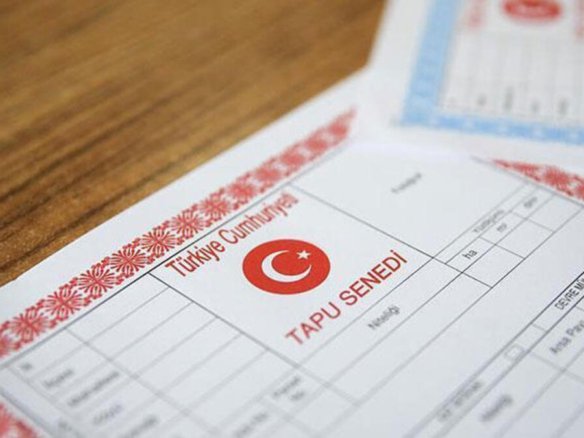
- Tapu: how the Turkish title deed works — reading the register before you pay.
- Forest annotations on a Turkish title deed — what the 2026 amendment changed.
- Turkey property guides — the full index of our buyer guides.
Get the numbers checked against a real property
Tell us what you are considering and we will look at the title deed record, the annotations, the zone and permit position, and what comparable local evidence actually supports. We work with licensed Turkish conveyancers and appraisers, and every transaction settles through the secure payment system.


پیوستن به گفتگو