

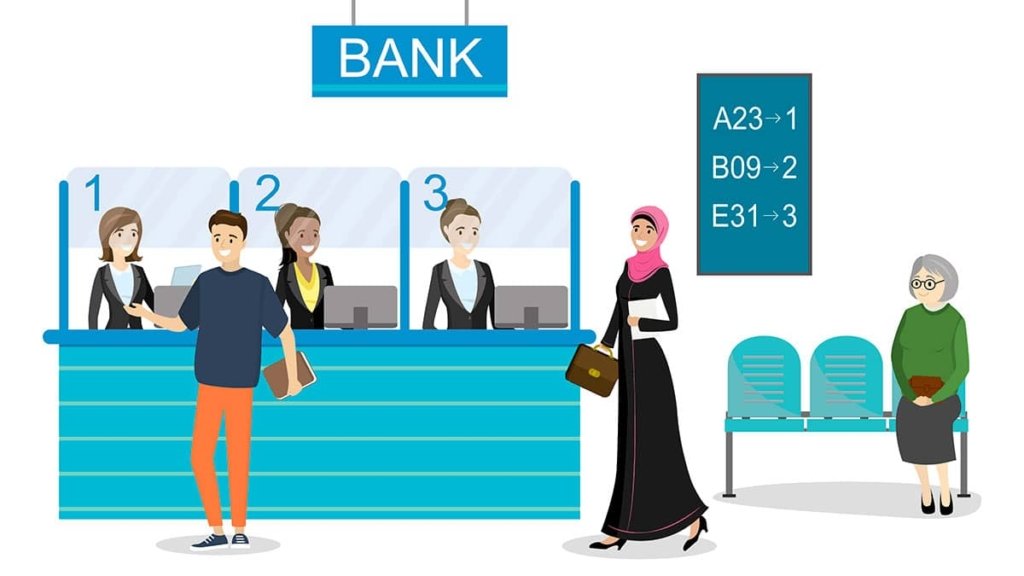
Getting a Mortgage in Turkey as a Foreign Buyer
Turkish banks do lend to foreign buyers, but a mortgage in Turkey behaves very differently from one in London, Dubai or Berlin. It is priced off a policy rate that has been in the thirties, it is written in lira, and it is decided on documents most overseas buyers have never been asked for. Here is how the process actually works.
The first question is not “can I borrow?” It is “should I?”
Most foreign buyers arriving in the Turkish market assume financing works the way it does at home: find the property, get a decision in principle, borrow perhaps two thirds of the price, and let the rental income cover the payments. Turkey does have a functioning mortgage market, and Turkish banks are permitted to lend to foreign nationals, including people who have never lived in the country. The mechanics exist. What surprises people is the arithmetic.
Turkish mortgage pricing is anchored to the Central Bank’s policy rate, and that rate has spent recent years at levels that would be unrecognisable in most European markets. The Central Bank of the Republic of Türkiye publishes its one-week repo auction rate — the headline policy rate — on its own website. At the time of writing, on 26 August 2026, that rate stands at 37.00 per cent, the level set on 23 January 2026. Retail mortgage rates are set by individual banks and sit above the cost of funds rather than at it, so no commercial mortgage in Turkey is going to be cheap while the policy rate is where it is.
That single fact reshapes the decision. In a market where borrowing costs are low, leverage magnifies a return. In a market where they are high, leverage can quietly consume one. This is why a large share of foreign purchases in Turkey settle without a bank involved at all, and why the genuinely useful question for most overseas buyers is not whether a Turkish bank will say yes, but whether a Turkish mortgage is the right instrument for what they are trying to do.
None of this means financing is a bad idea. It means it is a decision with more moving parts than it has at home, and one worth modelling properly before you commit to a property. Below we walk through who can borrow, what banks actually ask for, how the application runs, and the two alternatives — developer instalment plans and financing raised in your own country — that a lot of buyers end up preferring.
If you are still at the stage of working out budget rather than structure, our guides to house prices in Turkey و مد Turkey property buyer’s guide are the better starting points, and property taxes in Turkey covers what the property costs to hold once you own it.
Financing A Turkish Purchase — At A Glance
The structural facts, not the ones that change bank by bank
How a Turkish mortgage application actually runs
The order matters. Several of these steps have to happen inside Turkey, and a few of them can only be done once earlier ones are finished.
Get a Turkish tax number
Almost nothing financial happens in Turkey without one. It is the identifier that lets you open a bank account, hold utilities and appear on a title deed. It is issued to foreign nationals and is the first administrative step in any purchase, financed or not.
Open a Turkish bank account
The lender will want the loan to be drawn and serviced through an account in Turkey. Opening one is a separate exercise from the mortgage itself, with its own documentation and its own compliance checks. Our guide to opening a bank account in Turkey covers what that involves.
Assemble proof of income and identity
This is where overseas applicants most often stall. Banks will want to see income evidenced in a form they can verify — payslips, employer letters, tax returns, audited accounts if you are self-employed — usually translated and notarised, and sometimes apostilled. Documents from your home country rarely arrive in the format a Turkish credit committee expects.
Agree the property and get it valued
The lender commissions a valuation from an appraiser licensed by the Capital Markets Board. The bank lends against that appraised figure rather than the price you negotiated, so a valuation below the agreed price reduces the loan rather than the price. Build that possibility into your offer.
Receive and read the formal offer
A Turkish mortgage offer sets out the rate, the term, the repayment schedule, the fees and the insurance the bank requires. Read the insurance and early-repayment clauses specifically. If you expect to repay early — many foreign buyers do — the cost of doing so belongs in your model from the start.
Complete at the Land Registry with the mortgage registered
Ownership transfers at the Land Registry (Tapu ve Kadastro), and where there is a loan the bank’s charge is registered against the title at the same time. Compulsory earthquake insurance (DASK) must be in place before transfer. The mortgage annotation stays on the deed until the loan is cleared and the bank applies to remove it.
Six things that decide a foreign applicant’s outcome
Turkish credit committees weigh overseas applicants differently from domestic ones. These are the areas where applications are won and lost.
Verifiable income
Not how much you earn, but how cleanly you can prove it in a form a Turkish bank can check. Salaried applicants with a long employment record usually clear this faster than business owners.
Where that income comes from
Income earned outside Turkey is acceptable to most lenders but adds verification steps, translation and often notarisation. Expect the process to take longer than a domestic application would.
The property itself
Age, condition, location, and whether it has a proper occupancy permit all feed the appraisal. Lenders are more cautious about older stock, unpermitted alterations and properties still under construction.
The appraised value
The loan is calculated against the licensed appraiser’s figure, not the contract price. Where the two differ, the shortfall comes out of your own funds.
Existing debt and credit history
Turkish banks check domestic credit records. An applicant with no Turkish footprint is not penalised for that, but there is also nothing positive on file, so the documentary evidence has to carry more weight.
Your realistic timeline
Financed purchases take longer than cash ones. If you are working to a deadline — a developer completion date, a school year, a visa — the extra weeks a mortgage adds need to be in the plan, not discovered late.
Turkish mortgage, developer instalments or cash
Most foreign buyers end up choosing between three ways of paying, and the right answer depends far more on your circumstances than on the property.
| Turkish bank mortgage | Developer instalment plan | Cash / financed at home | |
|---|---|---|---|
| Available to non-residents | بله | Usually | بله |
| Priced off Turkish rates | بله | Varies by developer | نه |
| Currency mismatch risk | Yes, lira loan | Depends on the contract | نه |
| Formal income verification | Extensive | Lighter | هیچ |
| Charge registered on the deed | بله | Sometimes | نه |
| Works for completed resale property | بله | Rarely | بله |
| Adds weeks to completion | بله | Some | نه |
| Suitable for citizenship applications | Needs specific advice | Needs specific advice | Straightforward |
On developer instalment plans. Many new-build projects offer staged payments over the construction period, sometimes with a deposit and the balance spread to completion. These are commercial arrangements with the developer rather than regulated mortgage lending, so the protections are different and the terms vary enormously. Read what happens if the project is delayed, what happens if you miss a payment, and whether the deed transfers at the start or at the end. Our guide to the pitfalls foreign buyers fall into covers the checks worth running on any off-plan purchase.
On raising money at home. Buyers who own property in their own country sometimes find that releasing equity there — in a currency they earn in, at a rate set by a market they understand — is cheaper and simpler than borrowing in Turkey. It also turns the Turkish purchase into a cash purchase, which shortens the transaction. Whatever route you take, purchase funds still have to move through Turkey’s mandated secure payment system rather than passing directly to the seller.
If citizenship is the objective, take advice before assuming a mortgage is compatible with it. The citizenship by investment route has its own rules on qualifying value, appraisal and holding period, and how a registered charge interacts with them is a question for a licensed adviser on your specific facts — not something to infer from a general guide.
Want the financing question answered for your actual purchase?
We will tell you what is realistically available, what it will cost you in time, and whether a Turkish mortgage is the right instrument at all.
Mortgages in Turkey — frequently asked questions
What foreign buyers ask most often about borrowing, eligibility, currency and cost.
Get the financing question settled before you commit
Tell us the property you are considering and how you intend to pay for it. We will tell you what is realistically available to a buyer in your position, what it adds to the timeline, and where a Turkish mortgage helps or hurts. We work with licensed Turkish conveyancers and appraisers, and every transaction settles through the secure payment system.
Buyer’s Guide · Property Guides · شهروندی ترکیه



پیوستن به گفتگو