
Buying Property in Turkey: 7 Pitfalls Foreign Buyers Still Fall Into
Turkey’s purchase process is more regulated than it has ever been. Almost every problem foreign buyers run into now comes from skipping a step inside that process — not from the process itself. Here are the seven, and the checks that close each one.
The process is sound. The gaps are where buyers get hurt.
Foreign buyers arriving in the Turkish market often expect the danger to lie somewhere exotic — an unfamiliar legal system, an ownership right that turns out not to be real. In practice it is far more mundane than that. Ownership is recorded centrally by the Land Registry, the purchase sequence is standardised, and from 1 July 2026 purchase funds must move through a government-mandated secure payment system rather than passing directly from buyer to seller.
What actually goes wrong is that a buyer, usually under time pressure and often at a distance, skips one step. They look at the front of a title deed but never at the page listing what is registered against it. They accept an assurance that the occupancy permit is “coming”. They agree to send a deposit somewhere convenient. Each of these is recoverable if caught before the money moves, and painful afterwards.
This guide walks through the seven pitfalls we see most often, the documents worth insisting on, and the order in which to run the process. It is written for buyers who are not resident in Turkey and who are relying on other people to look at things on their behalf. For the wider purchase walk-through, see our Turkey property buyer’s guide, and for the legal mechanics of title and due diligence, our legal services overview.
Foreign Buyer — Key Checkpoints
What has to be true before ownership can transfer
Seven pitfalls, what goes wrong, and the check that closes each one
None of these require specialist knowledge to avoid. They require asking for a specific document, in a specific order, before money moves.
| Pitfall | What goes wrong | The check that closes it |
|---|---|---|
| Paying outside the secure payment system | Money sent straight to a developer's or seller's account, or handed over in cash. | Insist every payment goes through the Güvenli Ödeme Sistemi. Mandatory from 1 July 2026. |
| Assuming the valuation report rules have not changed | Buyers either pay for a report they no longer need, or skip one their citizenship application requires. | Establish the purpose of the purchase first, then commission an SPK-licensed appraisal if it is required. |
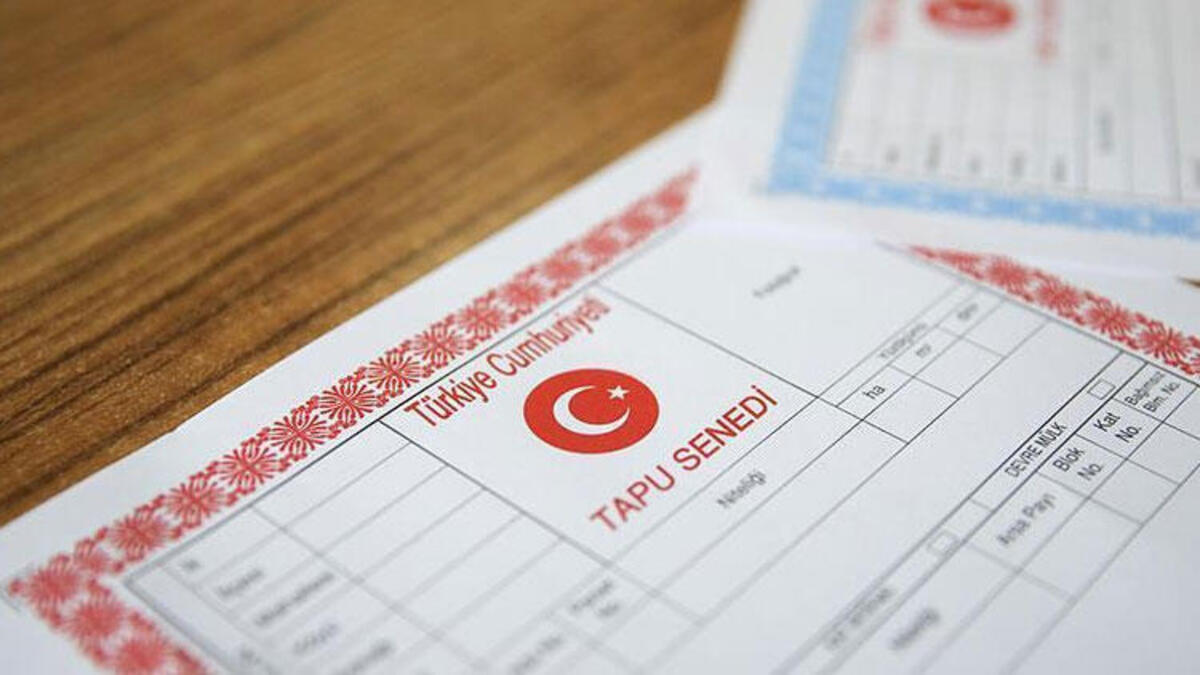
| Never reading the annotations page of the tapu | Mortgages, liens, disputes and şerh annotations surface after completion instead of before. | Obtain and review the full title deed record, annotations included, before any funds move. |
| Buying a building with no occupancy permit | The finished building was never signed off as matching its approved plans. | Ask for the iskan. If it does not exist, understand exactly why before proceeding. |
| Ignoring zone restrictions and ownership caps | The purchase cannot be registered because the property sits in a restricted zone or breaches a cap. | Complete the military clearance check early and confirm you are within the 30-hectare and 10 per cent limits. |
| Treating DASK as paperwork for later | Completion stalls at the Land Registry, and utilities cannot be connected. | Arrange DASK before the transfer date, and insure contents separately if you want more than structural cover. |
| Agreeing to under-declare the sale price | A lower figure on the deed to reduce tax leaves the buyer exposed and the record inaccurate. | Declare the real price. The valuation regime exists precisely to stop this practice. |
Paying outside the secure payment system
This is the newest of the seven and, for the moment, the most commonly misunderstood. Under a Ministry of Trade decree, use of Turkey’s secure payment system — the Güvenli Ödeme Sistemi — is mandatory for property transactions from 1 July 2026. Payments for the sale and purchase of residential property, land plots and other real estate must be made through it, and that covers partial payments as well as the full amount.
Mechanically it works as an escrow-style settlement. Your funds are held in a special account instead of being transferred to the seller on trust. They are released to the seller only once the transfer of ownership has been officially registered at the Land Registry. A commission is payable for using the system and is deducted from the amount passed on to the seller.
The practical consequence for a foreign buyer is a good one: the moment of greatest exposure — money gone, title not yet yours — is engineered out of the transaction. The pitfall is agreeing to route around it because it is faster, or because a deposit is being framed as somehow outside the sale. We covered the mechanics in more depth in our explainer on escrow accounts in Turkey, and the surrounding reforms in Turkey’s new investment law.
Getting the valuation report rule backwards
This one catches buyers in both directions, because the rule changed and a great deal of published advice did not keep up.
From 2019, a valuation report prepared by an appraiser licensed by the Capital Markets Board (SPK) was required for property purchases involving a foreign buyer. The purpose was straightforward: to have the correct price declared on the title deed rather than an artificially low one. Then, under Circular No. 2024/4 issued on 3 June 2024, that blanket obligation was lifted — foreign buyers are no longer obliged to obtain a valuation report for standard property acquisitions completed after 13 June 2024.
What did not change is the exception, and the exception is the part that matters to a large share of this site’s readers. A valuation report remains compulsory where the purchase is intended to support a شهروندی ترکیه از طریق سرمایه گذاری application or a residence permit application. Buyers pursuing either route who assume the 2024 relaxation applies to them will find the application incomplete.
Never reading the annotations page of the title deed
A Turkish title deed records more than who owns a property. Registered against it you may also find mortgages, liens, ownership disputes and formal annotations known as şerh. These are the constraints that travel with the property, and they are the reason a deed needs to be read rather than glanced at.
One example is worth knowing even if it does not apply to your own purchase, because it appears frequently in the resale market. A property acquired through the citizenship by investment route carries an annotation preventing its sale for three years. That restriction lapses automatically once the period ends — but the annotation itself stays on the deed until the owner formally applies to have it removed. A buyer who sees the annotation and assumes the property is unsellable may walk away from a perfectly available home; a buyer who does not check at all may agree to purchase one that genuinely is restricted.
Ask for the complete title deed record, including the page listing encumbrances and annotations, and have someone competent read it before any funds move. Of all seven pitfalls, this is the one that most reliably pays for the time it takes.
Occupancy permits, restricted zones and ownership caps
The occupancy permit — the iskan — certifies that a finished building matches the plans that were approved for it and passed final inspection. Buying a building that does not have one is a legal and safety risk rather than a paperwork inconvenience, and “it is being processed” is an answer that deserves a follow-up question.
Zone restrictions are more absolute. Foreign individuals cannot acquire property inside prohibited military zones or military security zones. Property within special security zones may be acquired only with the permission of the governor’s office. A military clearance check confirming the property is not in a restricted zone forms part of the standard purchase process for foreign buyers, alongside obtaining a Turkish tax number.
There are also nationwide ceilings on how much a foreign individual may hold. The total area acquired cannot exceed 30 hectares across Turkey, and cannot exceed 10 per cent of the area of the relevant district. These rarely bind an apartment purchase, but they matter a great deal to anyone assembling land or buying at scale — and they are checked at registration, not at offer.
Earthquake insurance, and the price you write on the deed
DASK, Turkey’s compulsory natural disaster insurance, is not an optional add-on to be sorted out after moving in. Without valid cover the Land Registry will not allow the transfer of ownership to complete, and utility subscriptions — electricity, water, gas — cannot be opened either. Buyers who leave it to the last week discover that their completion date was never really theirs to set.
It is equally worth understanding its limits. DASK covers structural damage to the building caused by earthquakes and by directly related events such as fire, explosion, tsunami and landslide. It insures the structure. It does not insure your contents. Treating it as the legal minimum and arranging separate cover on top is the sensible reading.
The last pitfall is the oldest one in the market: agreeing to declare a lower sale price on the title deed than the price actually paid, usually presented as a way to reduce tax. It leaves the buyer with an official record that does not match reality, and it is precisely the practice the valuation regime was introduced to stop. Declare the real price.
Three documents worth insisting on
If a seller or agent cannot produce these, that is information in itself.
The full title deed record
Not a photograph of the front of a tapu — the complete record, including the page that lists encumbrances and annotations registered against the property.
The occupancy permit (iskan)
The certificate confirming the finished building matches its approved plans and passed final inspection. Its absence is a question that needs a good answer.
Proof of DASK cover
Compulsory natural disaster insurance must be valid before the Land Registry will register the transfer of ownership into your name.
The order to run it in
The checks are not difficult. Running them in the wrong order — or after a payment — is what turns them into problems.
Get a Turkish tax number
A tax number is the entry requirement for almost everything that follows — opening a bank account, paying for the property and registering the transfer. It is straightforward to obtain, and doing it first prevents delays later in the process.
Pull the full title deed record and read the annotations
Confirm who legally owns the property and, just as importantly, what is registered against it. Mortgages, liens, disputes and şerh annotations all live here. This single step prevents more foreign-buyer problems than any other.
Run the zone and clearance checks
Confirm the property is not in a prohibited military zone or military security zone, and that a special security zone does not apply. Check that the purchase keeps you inside the 30-hectare national cap and the 10 per cent district cap for foreign individuals.
Establish whether you need a valuation report
For a standard purchase completed after 13 June 2024, foreign buyers are no longer obliged to obtain one. If the purchase is intended to support a citizenship by investment or residence permit application, an SPK-licensed valuation report is still compulsory.
Check the occupancy permit and arrange DASK
Ask to see the iskan, which certifies that the completed building matches its approved plans and passed final inspection. Put compulsory earthquake insurance in place — the Land Registry will not transfer ownership without it.
Pay through the secure payment system and register the transfer
Funds go into the secure account rather than to the seller. Ownership is transferred at the Land Registry, and only once that registration is confirmed are the funds released. This is the order that protects you.
Want a second pair of eyes on a property before you commit?
We run the title, zone and permit checks as standard, and every transaction settles through the secure payment system.
Buying property in Turkey — frequently asked questions
The questions foreign buyers ask most often about risk, paperwork and what has to be true before completion.
Where to go next
The rest of our foreign-buyer library, from the full purchase walk-through to the citizenship route.
- Turkey property buyer’s guide — the complete purchase walk-through for foreign buyers.
- Buying a home in Turkey — the residential purchase from search to keys.
- Escrow accounts in Turkey — how the secure payment system protects your funds.
- Legal services — title deed work, due diligence and power of attorney.
- شهروندی ترکیه از طریق سرمایه گذاری — the property route and what it requires.
- چرا ترکیه — the investment case for foreign real estate buyers.
- Property management and rentals — running a Turkish property from abroad.
- Turkey real estate FAQ — answers for international property buyers.
Have the checks run before you commit
Tell us the property you are considering and we will run the title deed record, annotations, zone and permit checks before anything is signed. We work with licensed Turkish conveyancers and appraisers, and every transaction settles through the secure payment system.