Best Places to Live in Turkey: A Region-by-Region Guide
Turkey is not one country to live in. It is a metropolis, three very different coastlines and a large inland interior, and the version you meet on holiday is rarely the version you live in. Here is how the regions actually compare once the season ends.
Choose for the winter, not the photograph
Almost every foreigner who regrets where they settled in Turkey made the same decision the same way: they chose the place where they had the best holiday. It is the most reliable route to an unhappy first year, because the Turkish coast in August and the Turkish coast in February are not the same product. One is a dense, noisy, brilliantly alive resort economy. The other is a handful of open shops, a lot of shuttered frontage, and rain.
This is not an argument against the coast — hundreds of thousands of foreign residents live very happily along it. It is an argument for choosing on the quieter nine months rather than the loud three. The questions that decide whether a place works are unglamorous: does the town have a resident population that stays; is there a hospital you would be willing to be taken to at three in the morning; is the airport open in January; and is there anyone to talk to when the season ends.
Worth separating early, too: living in Turkey and buying in Turkey are different decisions with different rules, and merging them is expensive. Residence runs on a permit tied to a registered address, and a long-term tenancy supports an address just as ownership does. If you are set on buying, our guide to whether and where foreigners can buy property in Turkey covers the restrictions that apply first.
The most useful thing you can do before committing to any Turkish town is to spend a week there in February. It costs very little, it is the only honest test of the place, and it removes almost every unpleasant surprise that shows up in year one.
What follows deliberately avoids quoting prices, rents, permit fees or running costs, because those figures move fast in Turkey and a stale number is worse than none. Where you need them, we have linked to the pages we keep current.
Before you commit to a location
The checks that decide whether a place works year-round
On neighbourhood restrictions. Turkey has for several years operated a density policy under which a mahalle whose registered foreign population passed a set share of the total was closed to new foreign address registrations, which in practice blocked new residence permit applications at those addresses. The Presidency of Migration Management lifted that restriction in Istanbul with effect from 10 June 2026. Because the policy is density-driven rather than fixed in legislation, the position can change, and the reported lifting was specific to Istanbul. Always confirm the status of the exact address at the time you apply.
Istanbul: the only place in Turkey that is a full city
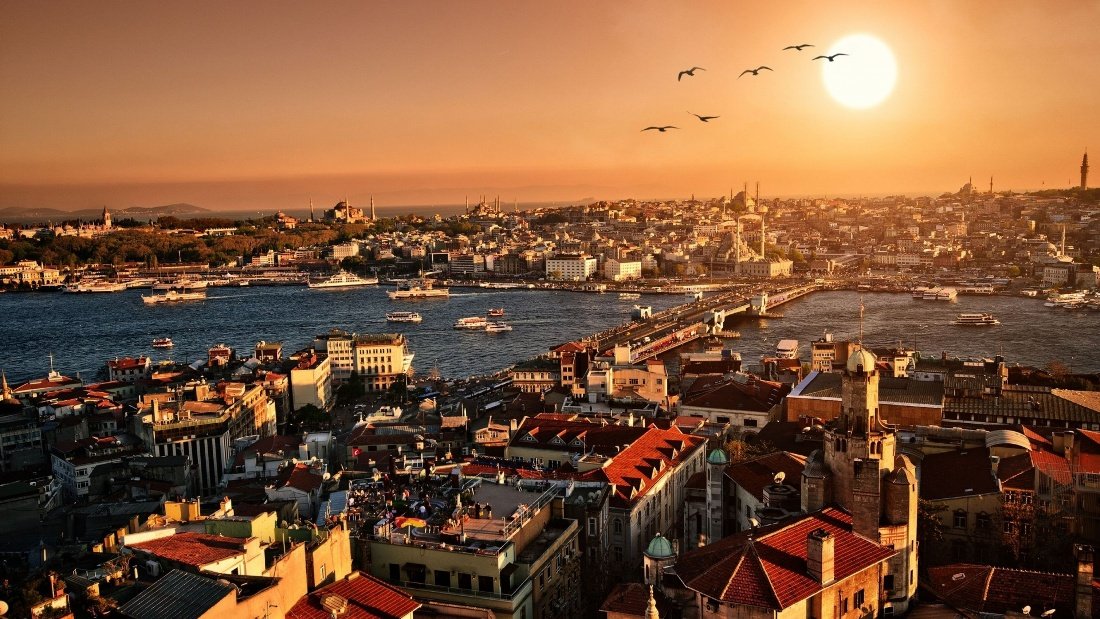
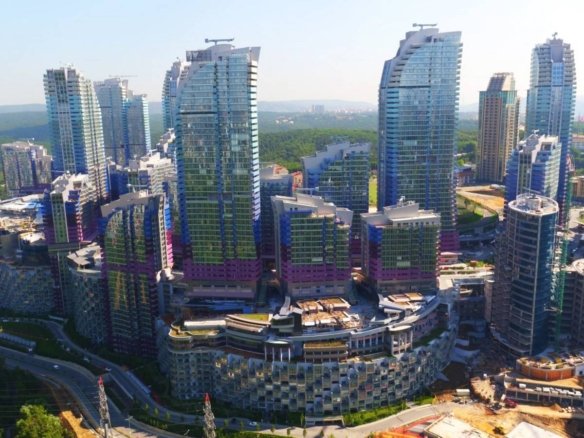
Istanbul is in a category of its own, and comparisons with the coastal towns are close to meaningless. It is a genuine world city straddling two continents, with the country's deepest professional job market, its largest concentration of internationally accredited private hospitals, the widest choice of international and bilingual schools, two major airports in Istanbul Airport and Sabiha Gokcen, and a cultural life that runs at full volume every month of the year. If your requirement is that life continues in January exactly as it did in July, very little else comes close.
What it asks in return is tolerance for scale. The commute is a real factor rather than an inconvenience: living twenty minutes from where you need to be and an hour and twenty are two entirely different lives. The weather is the other surprise. Istanbul is not Mediterranean; it is a cool, damp, often grey city for a good part of the year. People who move there for the sunshine they saw in Antalya photographs are consistently disappointed.
Where foreign residents actually live
On the European side, Besiktas, Sisli, Nisantasi, Etiler and Bebek carry most of the established international population, at the highest prices in the country. On the Asian side, Kadikoy and Moda have become the default for younger arrivals and remote workers, offering a walkable, cafe-dense neighbourhood culture at a meaningful discount; further east, Atasehir and the Bagdat Caddesi corridor are more suburban and family-oriented.
Istanbul is also where the neighbourhood restriction question mattered most. For several years a substantial number of Istanbul mahalles were closed to new foreign address registrations under the concentration policy, making otherwise sensible neighbourhoods unusable for new arrivals. According to the Presidency of Migration Management that restriction was lifted with effect from 10 June 2026, and the e-ikamet system now accepts applications across the city's districts — a significant change for anyone who had written Istanbul off, though the policy remains density-driven and should be confirmed at the point of application. On the purchase side, our overview of apartments for sale in Istanbul covers the districts in detail.
The Mediterranean coast: Antalya, Alanya and Side
If Istanbul is the answer for people who need a city, the Antalya province coastline is the answer for the far larger group who want mild winters, a real town underneath the tourism, and a foreign community big enough that daily life does not depend on fluent Turkish.
Antalya city
Antalya is frequently mis-sold to foreign buyers as a resort. It is not; it is a large provincial capital with a resort economy attached to one edge, and that distinction is why it works so well for year-round living. It has universities, a full spread of public and private hospitals, a large airport that operates through the winter, and an old town that is genuinely lived in. Konyaalti, on the western side, is most often chosen by foreign residents who want the beach and the mountains in sight and a normal Turkish neighbourhood around them. Lara, to the east, is newer, flatter and more resort-oriented. Muratpasa covers the dense central core around Kaleici. Our Antalya district guide goes through the differences.
Alanya
Ninety minutes east of Antalya, Alanya has the highest concentration of long-settled foreign residents of any Turkish town relative to its size, with well-established Scandinavian, German, Russian and, more recently, Middle Eastern communities. The practical consequence is that Alanya is unusually easy to arrive into: there are foreign-language doctors, agents, accountants and social clubs, and a newcomer can function from day one. It is also the most affordable of the major coastal centres. The trade-off is that the centre is heavily built up, the summer is intense, and the town's own airport at Gazipasa is small — many residents still use Antalya. See our guide to Alanya apartments for sale.
Side and the Manavgat coast
Side is a smaller, more concentrated proposition built around a Roman site and a stretch of coast almost entirely given over to hotels. It is beautiful and it is seasonal in a way that Antalya and Alanya are not; a meaningful share of the town closes out of season. It suits holiday-home owners better than full-time residents. Our guide to property for sale in Side sets out what the market there looks like.
The Lycian coast: Fethiye, Kalkan and Kas
West of Antalya the coastline changes character completely. The mountains come down to the sea, the towns get smaller, the roads get slower and the landscape becomes the reason people are there. This stretch — Fethiye, Oludeniz, Kalkan, Kas and the villages between them — has the longest-established British and northern European residential communities in Turkey.
Fethiye
Fethiye is the practical centre of the region and the one place on this coast that functions as a normal town rather than a resort. It has a large working harbour, a proper market, hospitals, schools and a resident Turkish population that does not leave, so the shops, the doctors and the social life carry on through the winter. The foreign community is long-settled rather than transient, and Dalaman airport is close enough to be genuinely convenient. Around the town, Calis is the flatter beachside option, Ovacik and Hisaronu sit up the hill and are more seasonal, and Uzumlu is the inland village choice. Our Fethiye buyer's guide covers each.
Kalkan and Kas
Further east, Kalkan and Kas are the most scenic places on this list and the most seasonal. Kalkan is a steep, white-washed town of villas stacked above a small bay, heavily oriented towards high-end holiday letting, and in winter it is very quiet indeed. Kas is larger, more bohemian and more year-round, with a diving and outdoor culture that gives it life beyond the season. Both are two and a half to three hours from either Dalaman or Antalya airport, the single most underestimated factor in living there. They are wonderful places to own and demanding places to live full-time, particularly if you need regular medical care. Our Kalkan guide is honest about that trade-off.
The Aegean: Bodrum, Izmir and Cesme
The Aegean coast has a different social character to the Mediterranean. It is where affluent Turkish families from Istanbul and Ankara have their second homes, which means the summer culture is domestic rather than package-tourist, the food and design standards are noticeably higher, and the prices reflect it.
Bodrum peninsula
Bodrum is not a town but a peninsula of a dozen distinct villages, and the differences between them are larger than between some of the regions on this page. Yalikavak is the marina and luxury end, Turkbuku the fashionable summer scene, Gumusluk the low-rise sunset village; Bodrum town itself is the working centre with the castle and the ferries. Milas–Bodrum airport serves the whole peninsula. The seasonal swing is the thing to understand: Bodrum in August is one of the most expensive and crowded places in Turkey, and in January the outlying villages are close to empty. Our overview of property in Bodrum goes village by village.
Izmir and Cesme
Izmir is the most consistently underrated option for foreign residents in Turkey. It is the country's third city, on the water, with a long cosmopolitan history, a seafront promenade people actually use, a full range of hospitals and universities, its own international airport at Adnan Menderes, and a cost base well below Istanbul's. Alsancak, Karsiyaka and Bostanli carry most of the urban residential interest, while the Urla and Cesme corridor to the west offers vineyard country, sailing and a weekend-house culture within an hour of the city. For people who want city infrastructure without Istanbul's scale, Izmir is frequently the right answer and almost nobody looks at it.
A word on Ankara, Bursa and the interior
Very few foreign residents choose inland Turkey, and those who do usually have a specific reason: work, study, family, or a deliberate decision to live somewhere not organised around foreigners at all. For the right person it is the best value in the country by a wide margin. Ankara is the capital and a large university city, well connected by air and high-speed rail; Bursa sits at the foot of Uludag with a ski season and thermal springs; Eskisehir is a young, walkable, tram-served university city rated among the most liveable in Turkey by Turks themselves. The caveats are real winters with snow and heating bills that matter, far less spoken English, and a foreign community small enough that you will build a life among Turkish neighbours rather than join an existing expatriate structure.
A note on earthquakes. Turkey is seismically active and the risk is not evenly distributed, but building quality matters at least as much as location. Whatever region you choose, the age of the building, its construction date relative to the current building code, and whether the structure has been properly assessed are more informative than any general regional statement. Ask for the construction date and the occupancy permit, and have a qualified engineer look at anything you intend to buy.
How to test a place before you commit to it
Six steps that between them remove most of the surprises foreign residents report in their first year. None of them are expensive, and almost nobody does all six.
Visit in February, not August
Go in the wettest, quietest month, walk the same streets you walked in summer, and see how many are open. If the place still appeals in February, it will appeal all year. If not, you have saved yourself an expensive discovery.
Rent for at least six months before you buy
Renting in the specific neighbourhood you are considering converts a near-irreversible decision into a reversible one, and lets you compare shortlisted areas properly rather than from photographs.
Walk the routes you would actually walk
From the flat to the food shop, the pharmacy, the bus stop, the hospital — on foot, in the heat. A sea view four hundred metres up a steep hill is a different proposition in daily life, and gradient is invisible in photographs.
Check the residence position for that exact address
Residence permits attach to a registered address, and neighbourhood-level policy has historically determined whether new foreign registrations were accepted in a given mahalle. Confirm the status for the specific building with the Presidency of Migration Management or a licensed adviser before you sign, not after.
Price the whole year, not the holiday
Work out what twelve months costs, including winter heating, building maintenance charges, insurance, transport and the flights home you will actually take. Our cost of living guide and our residence permit cost breakdown are the places to start, and both are kept current.
Inspect the building, not just the apartment
Ask when it was built, whether it has an occupancy permit, what the heating is, whether there is insulation, and what the monthly building charge covers. The gap between a good and a bad building at the same price is enormous, and invisible in interior photographs.
Six factors that matter more than the view
When foreign residents move again within Turkey, it is almost always because of one of these rather than because they stopped liking the scenery.
Climate and seasonality
The Mediterranean climate concentrates its rain into the winter, so December and January deliver long wet spells rather than occasional showers. Inland and at altitude, snow is normal. Check the worst month, not the best.
Healthcare access
Turkey has a strong public system and a large private hospital sector, but both concentrate in the cities and larger coastal centres. In the small resorts the nearest serious hospital may be an hour away. If you have an ongoing condition, this outranks every other factor.
Airports and winter routes
Coastal airports thin out dramatically once the summer charter season ends, and a route that runs three times a day in July may not run at all in January. Check the winter schedule, and how long the drive really takes.
Schools and study
International and bilingual schooling concentrates in Istanbul, with narrower options in Ankara, Izmir and Antalya. Elsewhere the realistic choices are Turkish state schools, a few private Turkish schools, or home education. Decide this before the location.
Language and community
In Alanya, Fethiye and parts of Antalya you can function in English from day one. In inland cities and most Turkish neighbourhoods you cannot. Neither is better, but underestimating the difference is the most common cause of early isolation.
Building stock and safety
Construction date, building code compliance and the presence of an occupancy permit tell you more about a Turkish property than the district does. Older stock in a good area can be a worse risk than newer stock in an ordinary one.
The regions compared
A quick orientation across the places foreign residents most often shortlist. The winter and community columns are our own field judgements rather than official ratings, and they are generalisations about the town as a whole.
| Region | On the coast | Airport in the province | Busy through winter | Large established foreign community |
|---|---|---|---|---|
| Istanbul | No | Yes | Yes | Yes |
| Antalya city | Yes | Yes | Yes | Yes |
| Alanya | Yes | Yes | Yes | Yes |
| Side / Manavgat | Yes | Yes | No | No |
| Fethiye | Yes | Yes | Yes | Yes |
| Kalkan / Kas | Yes | No | No | Yes |
| Bodrum peninsula | Yes | Yes | No | Yes |
| Izmir | Yes | Yes | Yes | No |
So where should you actually live?
If you need a career, international schooling and a city that never switches off, the answer is Istanbul. If you want mild winters, a functioning town underneath the tourism and a foreign community large enough to make arrival easy, it is Antalya or Alanya. If you want landscape, a slower pace and a place that still works in February, Fethiye. If you want the most beautiful setting on this page and accept a very quiet winter and a long drive to the airport, Kalkan or Kas. If you want design, sailing and a domestic Turkish summer culture, the Bodrum peninsula. And if you want a real city on the water at a fraction of Istanbul's cost, Izmir — which almost nobody considers and probably should.
What none of that tells you is how a place feels on a wet Tuesday when the season is over, and that is the only test that matters. Go in winter, rent before you buy, check the address, inspect the building, and price the whole year. If the shortlist has narrowed to a purchase, our guide to house prices in Turkey covers what the official numbers say, and the Turkey property guide library collects the regional guides in one place.
Please confirm current figures before you rely on them. This guide deliberately does not quote permit fees, running costs, rents or property prices, because Turkish figures and rules change frequently and a stale number is worse than none. Residence policy in particular is administrative rather than legislative and can move quickly. Confirm anything cost-related, tax-related or permit-related with a licensed Turkish adviser, and confirm the residence position for your exact address with the Presidency of Migration Management at the time you apply.
Narrowed it to two or three places and want a second opinion?
Tell us how you want to live and we will tell you honestly which of them fits, including the ones we would talk you out of.
Living in Turkey — frequently asked questions
The questions foreign residents ask most often when they are choosing where in Turkey to settle.
Where to go next
The regional guides and the practical cost and process pages behind the decisions on this page.
- Cost of living in Turkey — what a month actually costs, kept current.
- Residence permit in Turkey — the routes, the process and what it costs.
- Antalya property guide — Konyaalti, Lara, Muratpasa and the rest, district by district.
- Alanya apartments for sale — the districts, the process and the practicalities.
- Fethiye property guide — Calis, Ovacik, Hisaronu and Uzumlu compared.
- Property in Bodrum — the peninsula village by village.
- House prices in Turkey — what the official 2026 numbers actually say.
- Turkey property guides — the full library in one place.
Tell us how you want to live
Give us your requirements — work, schools, healthcare, budget, winter tolerance — and we will tell you which regions actually fit and which ones we would steer you away from. We have offices and people on the ground, and we would rather you moved once than twice.

Join The Discussion