BlackRock Meets Erdoğan:
Why Turkey Is the World's Next Big Investment Story
When the world's largest asset manager flies to Istanbul for a private meeting with Turkey's President, the message to global investors is clear — Turkey is open, reformed, and ready.
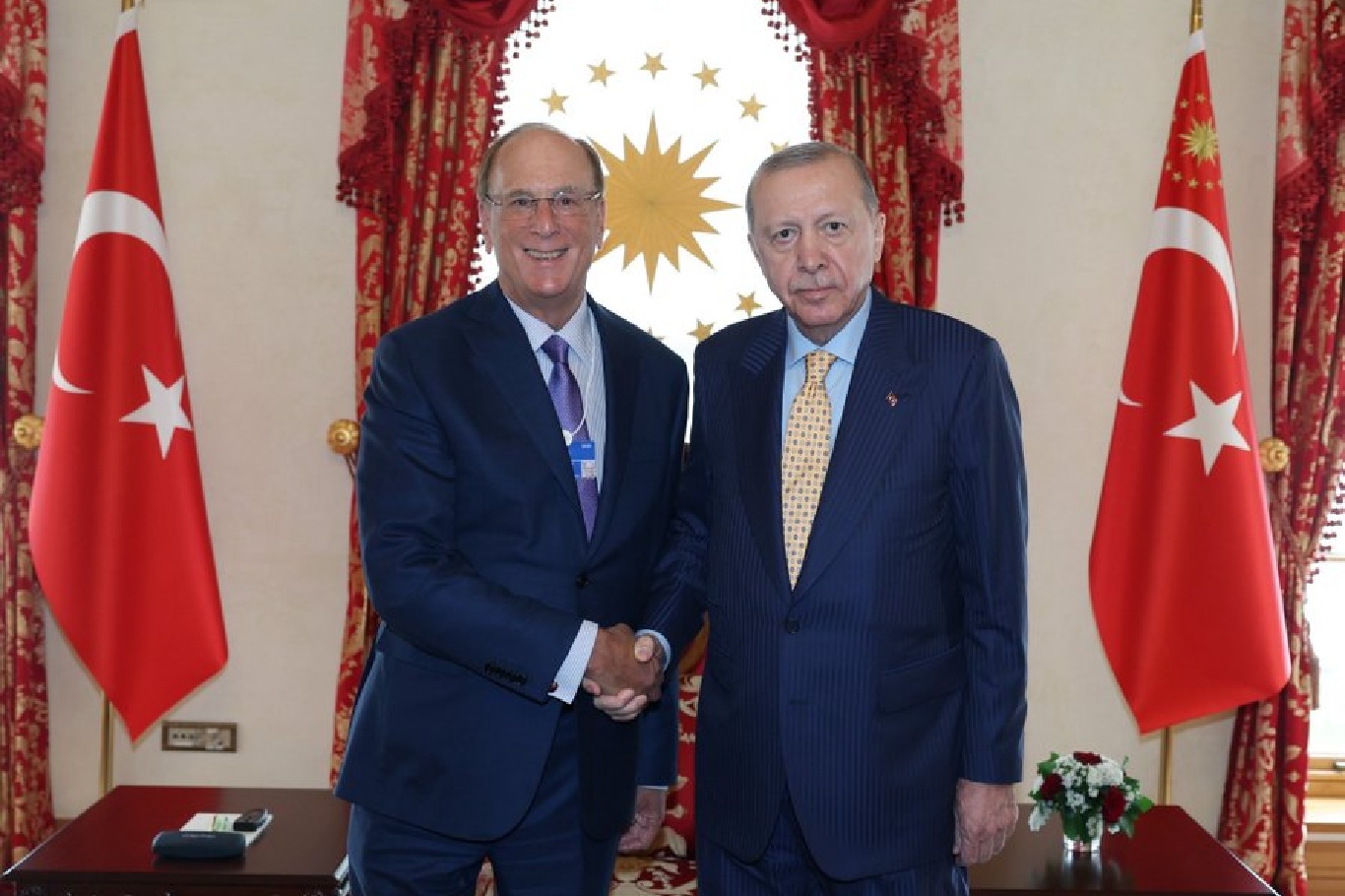
27 March 2026, Istanbul: BlackRock CEO Larry Fink — chairman of the world's largest asset manager with over $10 trillion under management — met privately with President Recep Tayyip Erdoğan at the Dolmabahçe Presidential Office, ahead of a WEF summit that brought together 50 global CEOs representing $1.2 trillion in investment capital.
In This Article
1. What Happened in Istanbul
On 27 March 2026, Istanbul became the temporary capital of global finance. Larry Fink — Chief Executive of BlackRock, the world's largest asset manager, and co-chair of the World Economic Forum — arrived in the city for a private, closed-door meeting with President Recep Tayyip Erdoğan at the Dolmabahçe Presidential Office.
The meeting was not a coincidence. It was the centrepiece of a WEF Country Strategy Meeting on Türkiye, held under the theme "Growth at a Global Nexus: Strengthening Competitiveness and Resilience." Alongside Fink and Erdoğan, the summit brought together the most powerful names in Turkish economic policy:
- Mehmet Şimşek, Minister of Treasury and Finance — presented Turkey's macroeconomic reform agenda and medium-term investment targets
- Hakan Fidan, Foreign Minister — addressed Turkey's role in regional stability and its unique geopolitical positioning
- Alparslan Bayraktar, Energy Minister — outlined Turkey's energy transformation and investment opportunities in renewables
- Cevdet Yılmaz, Vice President — co-hosted discussions on long-term economic vision
- Fatih Karahan, Central Bank Governor — presented the disinflation programme and monetary credibility
After the private session, a broader investor forum brought together 50 global CEOs and Chairs — representing a combined $1.2 trillion in capital — for public-private dialogue on investment in Turkey. The WEF formally concluded that Türkiye is "well-placed to deepen its role in global value chains, draw foreign investment, and build economic resilience."
"Türkiye is well placed to deepen its role in global value chains, draw foreign investment, and build economic resilience."
— World Economic Forum, Istanbul Country Strategy Meeting, March 20262. Why This Meeting Is a Signal You Can't Ignore
To understand why this meeting matters to you as an investor, you need to understand who Larry Fink is. BlackRock manages over $10 trillion in assets — more than the GDP of every country in the world except the United States and China. When BlackRock's CEO boards a plane to meet a country's president, it signals one thing: that country has become a serious, credible destination for major capital.
This is not a diplomatic courtesy visit. BlackRock is a profit-driven institution. Its CEO does not make international trips unless the potential return justifies it. The Istanbul summit, framed as a strategy meeting rather than a political event, was designed to communicate one message to global investors: Turkey is not just a market — it is the market of this decade.
The WEF has officially identified Türkiye as "a key node in shifting global supply chains" — meaning as the world reorganises away from China-centric manufacturing and US-Europe dependency, Turkey sits at the crossroads of the reorientation. This is a once-in-a-generation positioning.
For individual investors — particularly those looking at real estate, business, and citizenship opportunities — this meeting marks a validation point. When the world's most sophisticated institutional investors begin moving capital into a market, private investors who move early capture the greatest upside.
3. Turkey's Economic Transformation: The Numbers Behind the Story
The Fink-Erdoğan meeting didn't happen in a vacuum. It is the culmination of a two-year economic reform programme that has fundamentally changed Turkey's investment credentials. Under Finance Minister Mehmet Şimşek — a former Merrill Lynch economist and widely respected figure in global markets — Turkey has executed one of the most impressive economic turnarounds in its history.
Inflation Falling Fast
86% → 16%Inflation peaked at 86% in 2022. It is projected to reach 16% by end-2026 and single digits by 2028 — the fastest disinflation in Turkey's modern history.
GDP Growth 2026
3.7% – 3.8%Turkey's economy is projected to grow 3.7–3.8% in 2026, faster than most European economies, driven by manufacturing, tourism, and services exports.
Central Bank Credibility
1.13x IMF TargetTurkey's reserve adequacy ratio rose from 0.71 to 1.13 — above the IMF's 1.0 threshold for sufficiency, demonstrating restored monetary credibility.
FDI Inflows
$25 BillionTurkey received $25 billion in foreign direct investment between 2023 and 2025, with the pace accelerating as the reform programme gained credibility.
Economic Target
16th GloballyBy the end of the programme, Turkey targets becoming the world's 16th and Europe's 6th largest economy, with national income approaching $1.9 trillion.
Per Capita GDP Target
$21,000Turkey's per capita income target of $21,000 by end of the medium-term programme represents a near-doubling from current levels — driving strong consumer demand.
Turkey's reform programme has already passed what Finance Minister Şimşek described as a "major stress test" — navigating global uncertainty, regional instability, and domestic political challenges while maintaining the course. That resilience is what convinced Larry Fink to fly to Istanbul.
4. Where the Global Money Is Going in Turkey
The WEF Istanbul summit was not a general goodwill meeting. It had specific investment themes — and they represent the most promising sectors for foreign capital in Turkey right now.
Turkey's Four Investment Pillars for 2026–2030
These are the sectors that Erdoğan, Şimşek, and Fink discussed — and where institutional capital is being deployed.
🏗️ Real Estate & Infrastructure
Turkey's residential real estate market is projected to grow from $110 billion in 2025 to $187 billion by 2030. Urban regeneration, tourism resorts, and branded residences are the key growth segments driving premium returns for foreign buyers.
⚡ Clean Energy
Energy Minister Bayraktar presented Turkey's renewable energy roadmap — solar, wind, and geothermal. Turkey has set targets to generate 60% of electricity from renewables by 2030, creating massive infrastructure investment opportunities.
🏭 Manufacturing & Supply Chains
The WEF identified Turkey as a "key node in shifting global supply chains." As multinationals de-risk from Asia, Turkey's manufacturing base, young labour force, and EU customs union access make it the natural nearshoring destination.
✈️ Tourism & Hospitality
Turkey targets $75 billion in tourism revenues by 2030. With 60+ million visitors annually, demand for holiday homes, serviced apartments, and boutique hotels is outpacing supply — creating exceptional yield opportunities for property investors.
5. The Turkish Real Estate Opportunity Right Now
For private investors, real estate remains the most accessible, tangible, and proven route into the Turkish investment story. And the data makes an exceptionally compelling case for acting in 2026 specifically.
| Market Indicator | 2025 Position | 2026–2030 Outlook |
|---|---|---|
| Residential Market Size | $110 billion | $187 billion by 2030 |
| Property Price Growth | Real prices bottoming | 10–18% projected annually |
| Foreign Buyer Share | Significant & growing | Key driver of premium segment |
| Central Bank Rate Path | High (stabilising) | Cutting to 25% in 2026, 15% by 2027 |
| Vatandaşlık Yatırım Eşiği | $400.000 ABD Doları | Expected to rise — buy now |
| FDI into Turkey | $25B (2023–2025) | Accelerating post-BlackRock visit |
What makes this moment particularly compelling is the combination of two factors: real prices are at or near their cyclical low (inflation-adjusted property values declined slightly in 2025 as the disinflation programme took hold), while institutional interest is surging following the WEF summit. This is the classic early-cycle entry point — when prices are relatively low but confidence is inflecting upward.
Key insight: As institutional investors — funds, REITs, sovereign wealth vehicles — begin allocating capital to Turkey following events like the BlackRock summit, demand in premium segments (Istanbul, coastal resorts, branded residences) tends to accelerate significantly. Individual investors who position ahead of this wave capture the most value.
Istanbul in particular is seeing renewed international interest — not just from the usual buyers in the Gulf, Russia, and Central Asia, but increasingly from Western European investors and fund managers who previously overlooked Turkey. With interest rates set to fall progressively from 2026 onwards, the Turkish market is entering what analysts describe as an early recovery cycle — historically the optimal period to acquire.
6. Citizenship by Investment: A Window That May Not Stay Open
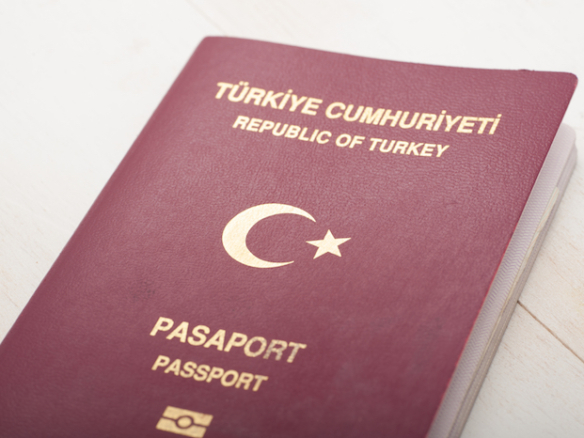
Alongside the pure investment case, Turkey's Citizenship by Investment programme remains one of the most compelling in the world — and the BlackRock summit has reignited discussion about whether the $400,000 threshold may be raised as Turkey's global profile rises.
- $400,000 USD minimum investment in Turkish real estate — held for 3 years, then freely sellable
- Full Turkish citizenship for you, your spouse, and all dependent children — issued in 3–6 months
- 110+ visa-free countries including Japan, South Korea, Singapore, and all of Latin America
- No residency requirement — you do not need to live in Turkey to obtain or maintain citizenship
- Çifte vatandaşlık izin veriliyor — keep your existing passport alongside your new Turkish one
- E-2 Investor Visa pathway to the USA — Turkish passport holders can apply for the US E-2 visa, a major route into the United States
As Turkey's economy grows and its international standing rises — reinforced by events like the BlackRock meeting — the citizenship programme's investment threshold will almost certainly be revised upward. Investors who act at $400,000 today are buying into a programme that may cost significantly more in 12–24 months.
7. Why 2026 Is the Optimal Moment to Invest in Turkey
Institutional Validation
BlackRock's CEO visiting Turkey signals to global markets that this is a credible, mature investment destination — bringing in a wave of institutional capital that lifts all asset classes.
Early-Cycle Property Pricing
Real (inflation-adjusted) property prices are near cyclical lows in 2025–2026. Entering at the bottom of a cycle — before institutional flows push prices higher — is the proven strategy for maximum returns.
Falling Interest Rates
Turkey's Central Bank is on a rate-cutting path — from current levels toward 25% in 2026 and 15% by 2027. Falling rates are the single most powerful driver of property price appreciation.
Citizenship Window
The $400,000 citizenship threshold is almost certainly subject to upward revision as Turkey's economy grows. The current price offers exceptional value for what is one of the world's most accessible second passport programmes.
Geopolitical Positioning
As global supply chains shift away from Asia, Turkey's position as the EU's eastern neighbour with a customs union makes it the natural beneficiary — driving long-term demand for commercial and residential property.
Structural Demand
Turkey has a young, growing population with a strong housing demand deficit. Combined with urban regeneration programmes in Istanbul and tourism-driven demand in coastal areas, the structural case for real estate is extremely strong.
8. How to Position Yourself — Starting Today
The BlackRock-Erdoğan meeting is a signal, not a starting gun. The investors who benefit most from Turkey's next phase of growth will be those who move thoughtfully but decisively — before institutional capital fully reprices the market.
At Tru Property Turkey, we have been placing foreign investors into premium Turkish real estate for years. We understand the market, the legal framework, the citizenship programme, and the specific properties that deliver the best combination of capital appreciation, rental yield, and citizenship eligibility.
- Property selection — We identify and vet properties that meet citizenship criteria and offer the best long-term investment profile, across Istanbul, the Aegean coast, and key resort markets
- End-to-end citizenship management — From property purchase through TAPU registration, valuation, and Presidential Decree — we manage the entire citizenship application process
- Legal & due diligence — Our trusted legal partners ensure full title deed verification, contract review, and compliance with Turkish investment law
- Post-purchase support — Property management, rental income optimisation, and ongoing advisory to maximise your investment returns throughout the holding period
The Opportunity Is Now. Let's Talk.
Book a free, confidential consultation with a Tru Property Turkey investment specialist. We'll walk you through the best opportunities for your goals — whether that's capital growth, rental yield, or Turkish citizenship.
Tru Property Turkey Team
International property investment specialists · Turkish Citizenship by Investment experts · Istanbul & Coastal Turkey

Tartışmaya Katıl